The publication of the last issue was suspended, so this time there is a lot of stuff. I just counted it and it turned out to be 5,500 words! Among the many announcements, there are two articles, one is about the optimization of the e-commerce list page (PLP), and the other is about the communication issues between SEO personnel and other teams in the company. I recommend that everyone read the original article when you have time, so that it will resonate more!
- [News] The fifth product review algorithm update
- [News] Google Search On 2022 Summary
- [Official] GSC new report: HTTPS
- [Official] GSC new report: Merchant Listing
- [Share] Comprehensive news of recent major SEO seminars
- [Good Article] 11 Optimization Orientations for E-commerce Product List Pages by Ahrefs
- [Resource] E-commerce website SEO checklist
- [Good article] Why SEO is a communication problem and how to solve it
- [Summary] Non-HTML files on the web
- [Abstract] Early Google Search Center
[News] The fifth product review algorithm update
In August and September, Google launched three "announced" algorithm changes in succession. The following are the start and end dates of these three updates.
- 「Helpful Content Update」- 8/25~9/9
- 「September 2022 core algorithm changes」 - 9/12~9/26
- "2022 September Product Review Algorithm Changes" - 9/20~9/26

The launch of three algorithms one after another makes it difficult to analyze which update is for which problem, but I personally think it is not that important, because the conclusions are usually far from "Produce content that is truly beneficial to users” This general principle is not far off. If you still want to see more in-depth research,SistrixandLily RayThe analysis article summarizes the trends observed by third-party tools and feedback from the community, and recommends it to those who need it.
about"Product review updates”, Danny said on Twitter that his scope of influence is usually at the “webpage” level, that is, independently judging the comment content on the webpage; but for websites with a large amount of comment content, this algorithm may also be sent to high-level and target the entire “website”.

Link: Product Review Algorithm Update (#1 / #2 / #3 / #4) / Google's Guide to High-Quality Reviews
[News] Google Search On 2022 Summary
Search On is an event where Google announces major progress and prospects in the field of "search" every year. For example, the combination of MUM and search, orFragment information retrieval (Passage Retrieval)These are all milestones shown at this event in the past.
1. Google Shopping (article)
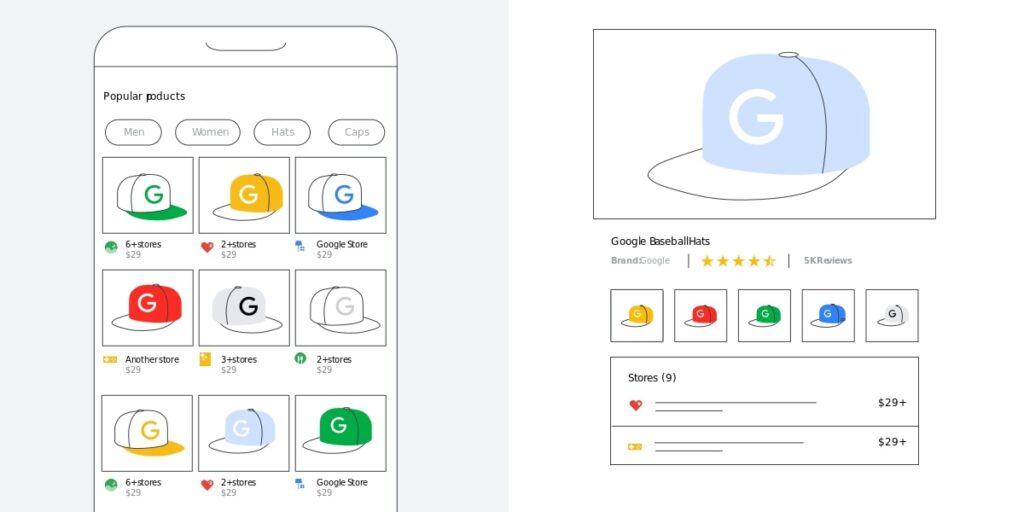
It has been said before that Google is actively attacking online shopping. Several new features displayed by Search On this time have once again confirmed this trend. The picture below shows three of the new features that can be used on search results. It is highly recommended that you read the original article or video! (Note: Many features are currently only available in the United States)

2. Richer search results (article)
This time, some features that enrich search results were also demonstrated, including Google's ability to translate news in other languages (only available in English, French, German, and Spanish), forum results (only available in the United States), and a more enhanced version of the knowledge graph (example)...etc.

3. Sustainability (article)
"Sustainability" is a hot topic nowadays, and even John said that they have considered how to ""environmental protection" as a ranking indicator. This year's Search On has set aside a segment to talk about this topic, which includes providing more environmentally friendly route options on Google Maps, recipe search results listing the environmental impact of ingredients, and highlighting second-hand products in shopping search results (which is expected to be implemented before the end of this year).

link:Search On 2021 Summary / Search On 2020 Summary / Search On 2022 event page
[Official] GSC new report: HTTPS
Google Search Console has launched an HTTPS report. The purpose is to let webmasters know which web pages included by Google are HTTP (unsafe), and why the HTTPS versions of these web pages are not included. Common problems include "HTTPS is redirected to HTTP", "HTTP is set to canonical", "Sitemap points to HTTP URL"... etc.
This should be a fairly easy-to-understand report, but many people report that they see the "HTTPS not evaluated" warning on their website but can't find any problems. After John's confirmation, this warning may only mean that Google has not crawled the web page, rather than a real problem, and said that corrections will be made to avoid confusion. The reason why HTTPS is not evaluated is explained in the

It is also worth mentioning that the report is in Experience > Page Experience > HTTPS, or canClick hereAfter entering, you will not see the link in the navigation bar on the far left.
link:official announcement / official document / Confusion caused by HTTPS reports
[Official] GSC new report: Merchant Listing
Google willShopping becomes a free platformhas been moving frequently since then, and recently added a Merchant Listing Report in GSC, allowing webmasters to know whether products are eligible to appear on the SERP, including "Popular Products」「Compare Buying Options"...Waiting for the results.
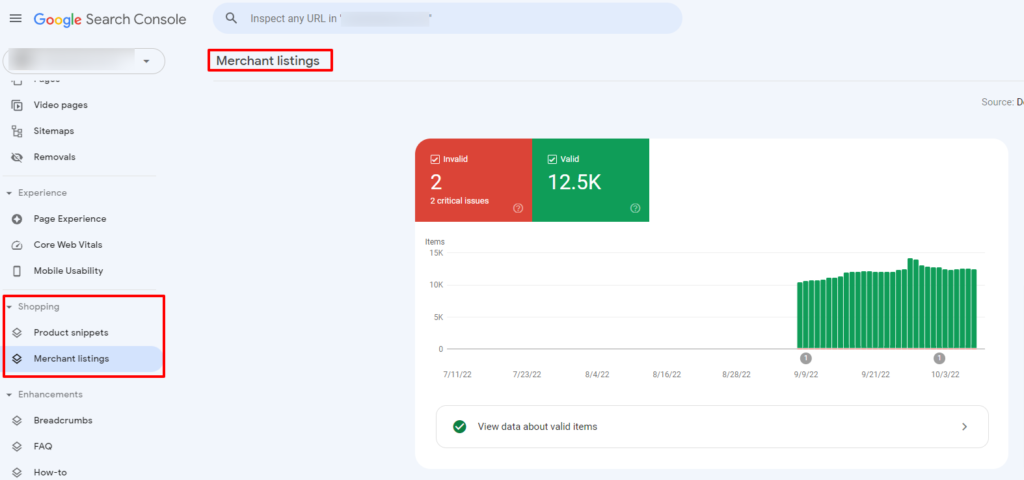
In addition to GSC, Merchant Center alsohas a report, which can analyze the effectiveness of products whether they are ads or organically appearing on Google searches, including the results of Introduced by"Relative visibility", page overlap rate (Page overlap rate)"... three indicators.
It is also worth noting that Google’sStructured data file for "Product"has also been significantly updated, and now includes "color", "material", "pattern", and even "EnergyConsumptionDetails"...all included in the recommended attributes.
link:official announcement / official document
[Share] Compilation of news from recent major SEO seminars
The well-known SEO forum SEJ (Search Engine Journal) has consolidated more than 20 digital marketing forum activities known until the end of 2023. As of this e-newsletter, 3 have been held this month. I hope that the suspension notice at the beginning of the month will be in time for those who want to participate. There will be nearly 10 seminars until the end of next year. Here are 2 known free activities for your reference, which will be held online from 10/20 to 10/21.Brighton SEO, and next March in Los AngelesB2B Marketing Expo 2023。

If time and space do not allow it, you can consider itAdobe Summit’s pageTake a look, they have released more than 200 videos recorded in 2022 for everyone to watch for free. Or you can also take a look at the seminars previously reported by Digital Engine.
link:SEJ 2022-2023 Forum Summary / 2022 BrightonSEO Spring 64 briefing reports / 2021 BrightonSEO Spring 50+ briefings compiled
[Good article] Optimization of 11 e-commerce product list pages by Ahrefs
this articleprovides solid optimization strategies for 11 e-commerce list pages (category pages). SEO and UX/Design often have different opinions on PLP optimization. The former believes that the more text content, the better; the latter believes that the page should be streamlined and clean. In fact, both parties should take a step back and take user needs as the biggest optimization goal. For example, the list page can provide FAQ content to answer common questions and help users make purchasing decisions, instead of telling irrelevant information such as the history of the product, just for SEO.
The article also mentioned several experiments on optimizing PLP. One was to delete and refine nearly a thousand words of content into dozens of short articles, and observe the changes in traffic and rankings; the other was to change the URL structure of PLP, challenging the generally accepted principle of "don't change the URL randomly if you have nothing to do". Although both tests have seen success, the author also emphasizes that testing and monitoring are very important links. Do not blindly believe that absolutely correct and risk-free answers are rare in the SEO field.
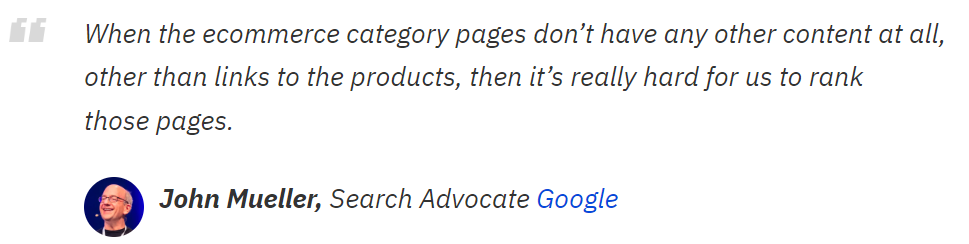
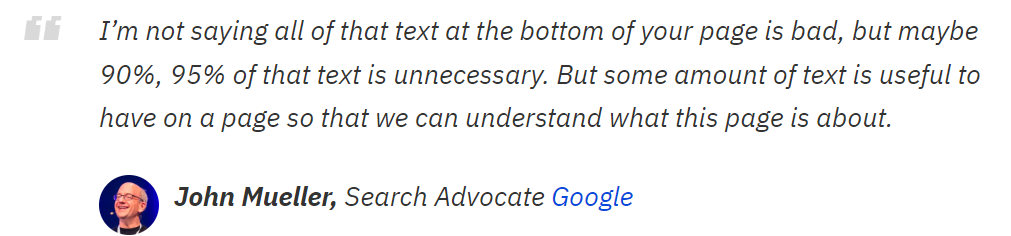
This article also has general optimization techniques (such as H tag planning), and the cited sources and content are very precise. Even if you are not a reader who operates an e-commerce website, I still recommend reading it if you have time!
link:Original text link
[Resource] E-commerce website SEO checklist
netizenFreddie Chatthas made a 97-point SEO checklist for e-commerce websites. Readers who run e-commerce websites may wish to browse it for reference.
Personally, I think this list is quite good. I can’t say it’s absolutely complete, but after reading it for a while, I couldn’t think of any key points that the author missed. A lot of it is easier said than done, but it’s better than not knowing what else to do.

This list originally requires registration to save you a step by backing it up. However, if you run an e-commerce website or read it well, you are also welcome to hiswebsiteSign up and receive other e-commerce SEO tips and information.
link:List backup link
[Good article] Why SEO is a communication problem and how to solve it
This article is suitable for SEO people working in inhouse to read. The author Adam Gent works in Atlassian (the parent company of Jira, Confluence...etc.). The team communication problems described in the article may actually occur in any department, but inhouse SEOs often need to communicate with other departments to promote the project, so it is particularly engaging to read.
In terms of technology, many SEOs do not have an engineering background, but they need to communicate with engineers because of website modifications. Due to the cognitive differences between the two, there will occasionally be situations where they are talking to each other. To give two personal examples, I once confused the difference between URL rewrite and redirect (Reference), or because I need to do log analysis and the engineer requests log files, but I can’t tell “whose” logs I want. These misunderstandings will increase communication costs, but in the worst case, they will reduce the SEO's credibility within the company, causing subsequent comments to be ignored.

Now I will spend more time on ensuring that the language used by both parties and their interpretation are consistent. This is the concept of "ubiquitous language" mentioned by the author. There are more sharings in the article, but they tend to be soft articles and chicken soup, and it is meaningless to summarize them. Therefore, I recommend that anyone who feels something after reading this take the time to read this article!
link:Why SEO is a Language Problem
[Abstract] Non-HTML files on the web
In this podcast episode Gary and Lizzi discuss non-HTML files in the online world and how Google handles them.
Gary said that Google's mission is to organize the information in the online world in a useful way, so ideally Google would want to index all different file formats, but in practice, resources are limited, so it will only select files that are used by more people, such as PDF, DOCX, etc. Files that are relatively niche, or files that require specific programs to open, may not meet the information that most users are looking for, so Google will not index them.
Gary wrote an article in 2011 aboutHow Google indexes PDF files, inprevious podcast: Google does not index PDF directly, but converts it into HTML internally, and then indexes the content in the HTML. This conversion action is not only used for PDF, but also includes all .doc and other non-HTML text files.
For multimedia files such as pictures and videos, Google uses different indexers, so there is no need to go through the above process of converting to HTML. Gary said a concept that few people know,Google will not only index images, it must index the web page and then index the images on the web page.; In other words, as long as an image on the Internet does not appear in HTML or other text files, the image will not be indexed, that is, it will not appear in the search.
link:verbatim draft
[Abstract] Early Google Search Center
The guest in this issue is Vanessa Fox. Most people may not have heard of his name, but she is a major contributor to the establishment of Google Webmaster Central and is also the predecessor of John Mueller. John left Google shortly after joining Google and is currently active in the SEO field. Founders includeKeylime Toolbox(Personally, I don’t think it’s very useful) and it also provides consulting services on a regular basis. There isn’t much SEO knowledge in this issue, it’s mainly about ancient times, but it’s quite interesting!
Vanessa joined Google in 2005. At that time, the company had only about 2,200 people. The atmosphere was very liberal, and there was no real supervisor. She had to find projects by herself, and she chose xml sitemap.
sitemap can help search engines understand the website faster, so she cooperates with other search engines to turn xml sitemap into a network standard, that ishttps://www.sitemaps.org/, this website is an HTML page that Vanessa typed out using notepad. At that time, it was just a prototype. Unexpectedly, it was directly adopted in the end, which is why it looks so original and continues to this day. What’s also funny is that it was introduced laterhttps://schema.org/also uses the same color and appearance as a "tribute"!
Having this standard is not enough, they must promote sitemap for webmasters to adopt, so one incentive is "launches aplatformallows everyone to submit a sitemap and provide some information", and this platform is what everyone knows now"Search Console」, formerly known as "Webmaster Tools", but its original name is actually just "Sitemaps」。
But "Sitemaps"This name is very confusing, so I decided to change it to "Webmaster Tools". However, Vanessa said that there were many discussions at the time during the name change process, such as: "Does the person who manages the website have to be the website owner?", "Will only engineers or marketers use this tool?"...etc. At that time, the internal name of Vanessa's group was "Webmaster Happiness", so even though I know it's not perfect, I still use the word webmaster.
These stories are the first time for me to hear them, so they feel very fresh. I recommend readers who have time to listen to them at some time~
link:verbatim draft
One month after the last podcast was released, Google posted a few days agoannouncedThe word "webmaster" is no longer used~
Related reading
E-commerce product list page: striking a balance between SEO and user needs
summarizes the key points of an e-commerce category page optimization article, explaining that PLP should not stack irrelevant text for SEO, but should use content, navigation and testing to serve purchasing decisions.