The biggest news recently is that Google Shopping will allow merchants to list products for free. This update has not yet been expanded to Taiwan, but merchants should prepare as early as possible to win at the starting point. Here in the United States, merchants have less than two weeks to respond. The content of this issue also includes some research, articles, skill sharing, and SERP appearance changes. I hope it will be helpful to everyone. If you have any ideas, please leave a message!
- Google Shopping becomes a free platform
- Google: We couldn't find any matching results for our search
- GSC update – reduced page coverage & new URL copy function
- SEO experiment, exiting featured snippets caused 12% traffic loss
- "How-to" tag search appearance changes
- Left navigation bar of Google search results
- Google removed 2.7 billion ads for policy violations in 2019
- Tool Sharing – Compare Two Lighthouse Results
- Good Article Sharing (Part 2) – UX Indicator: CLS Score
- Tips – Add annotations to Google Data Studio reports
- Google webmaster Q&A – Apr 3 & Apr 9 & Apr 14
- NNgroup Research: How people browse the web
- Official Video: How Google Handles 301 Redirect
- Official Video: Can JavaScript be used to handle Links?
Google Shopping becomes a free platform
Google has opened its shopping platform free of charge to all e-commerce merchants to publish their own products. Before this, Google Shopping could only publish products for a fee. This update is equivalent to an additional exposure platform for sellers for free, and an additional battlefield for SEO. Launching it at this time is quite in line with today's needs.
As you can see from the screenshot below, the top is still the advertising slot, but the bottom is the result of natural sorting. This update was launched in the United States at the end of April, and Google also expects to launch it worldwide before the end of the year.

link:official announcement / registration process / related reports (Chinese)
Google: We couldn't find any matching results for our search
Starting from 4/23, when Google cannot find highly matching search results, it will display a new message to confess to users - "It looks like there aren't any great matches for your search」。
The search results represent the quality of the search engine to a considerable extent. Google is dealing with all kinds of search terms every second. When it cannot find the appropriate results, instead of giving a hard answer, it is better to proactively admit that the search results are not perfect.
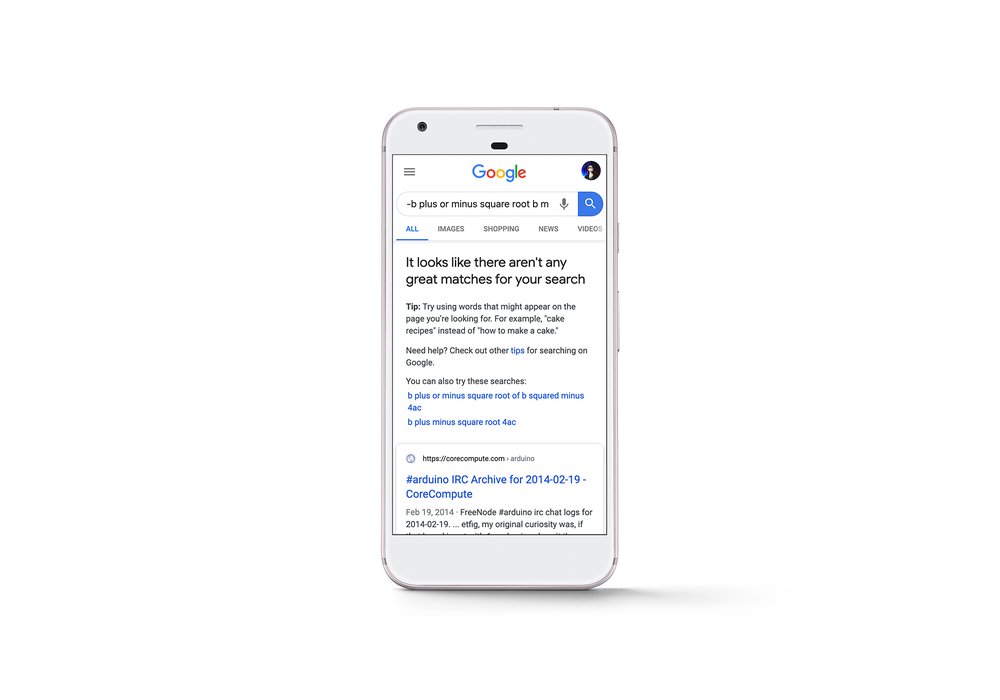
link:Google Announcement
GSC update - reduced page coverage & added URL copy function
Google Search Console has two updates. The first point is that starting from 4/12, the pages covered by reports in GSC will be reduced, which will help improve the performance of GSC.

The second point is to add a small icon next to the URL that can copy the URL. This must be the optimization that many SEOs dream of.
Twitter/X Post
View original post on Twitter/X
link:official document
SEO experiment, exiting featured snippets causes 12% traffic loss
E-Newsletter Issue 1introduced - "web pages that appear in Featured Snippets will no longer appear in the general search results below.". Many people are worried that content appearing directly in search results will lead to a loss of traffic. Therefore, foreign SEO agency Moz conducted an experiment. They selectively removed some web pages that originally occupied featured snippets from this position. They made the following three findings: The
nosnippettag can quickly remove web pages from the featured snippet position- Loss of featured snippet position results in approximately 12% traffic loss
- will
After the
nosnippettag is removed, the web page does not quickly return to the featured snippet position.

link:Moz original text
"How-to" tag search appearance changes
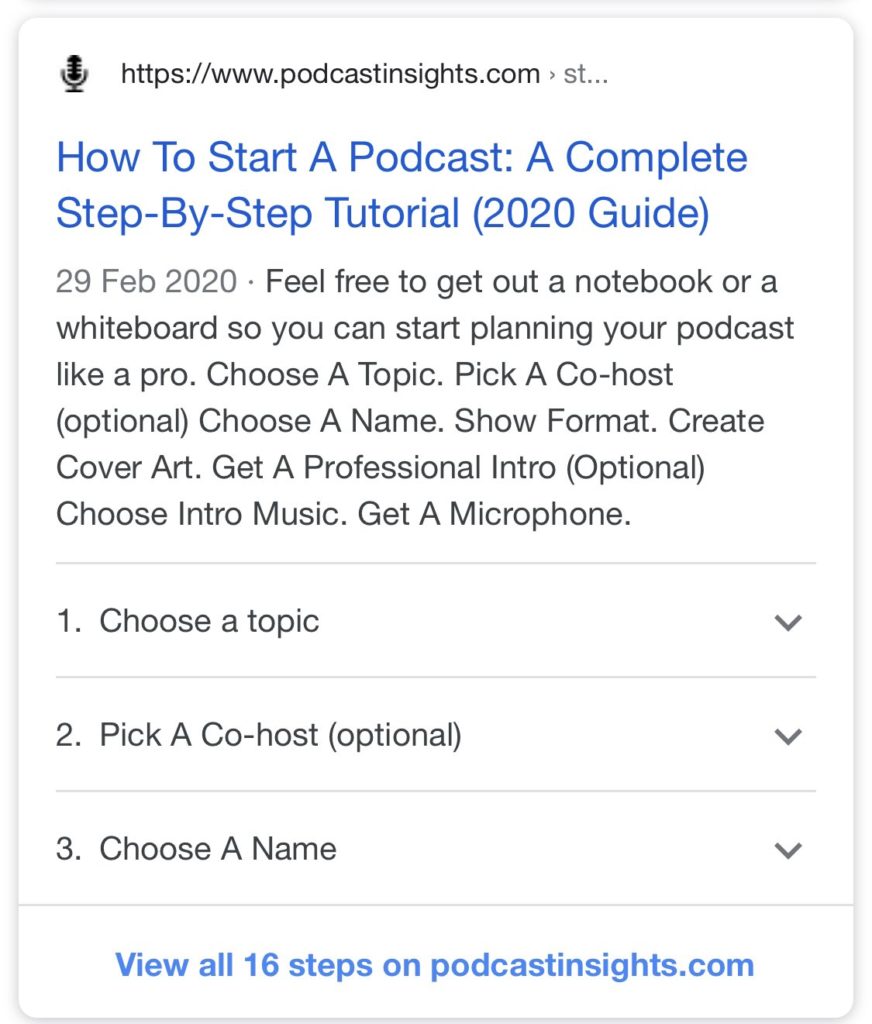
Some foreign SEOs discovered that the "How-to" structured data has changed in the appearance of search results. This is structured data that was only supported in August 2019. It is mainly used for content webpages with clear steps.previous articleshas been introduced.
Below are several possible appearances of several "How-to" tagged pages in search results.
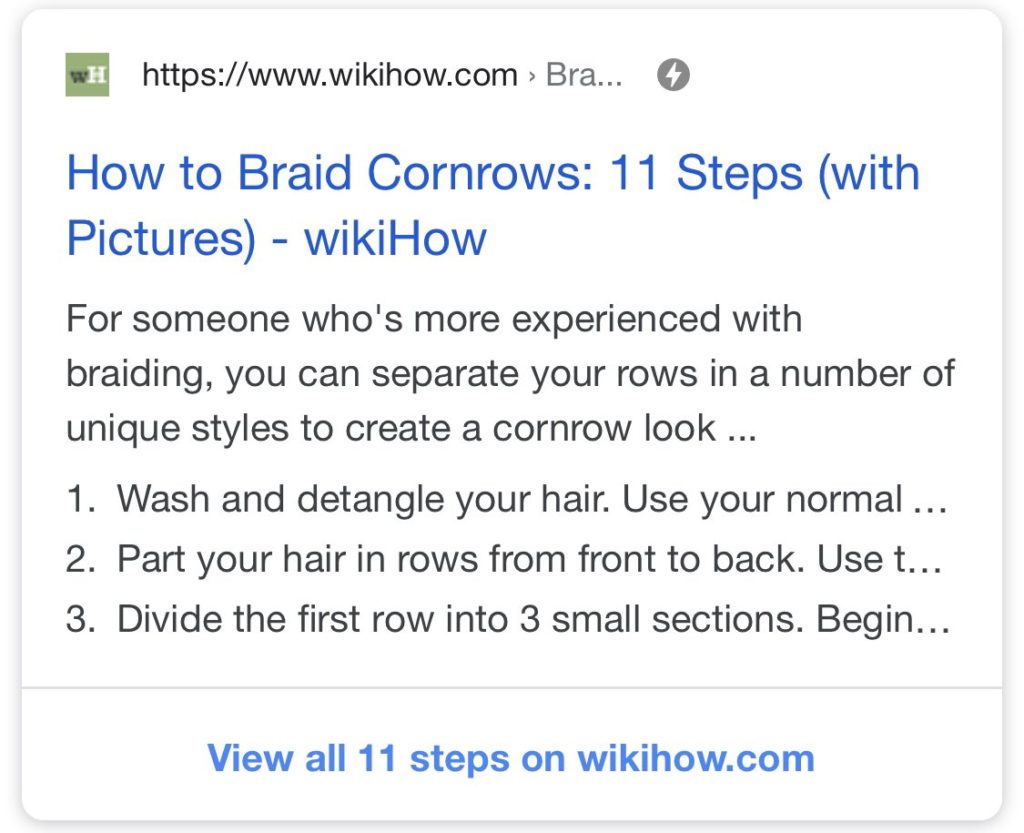
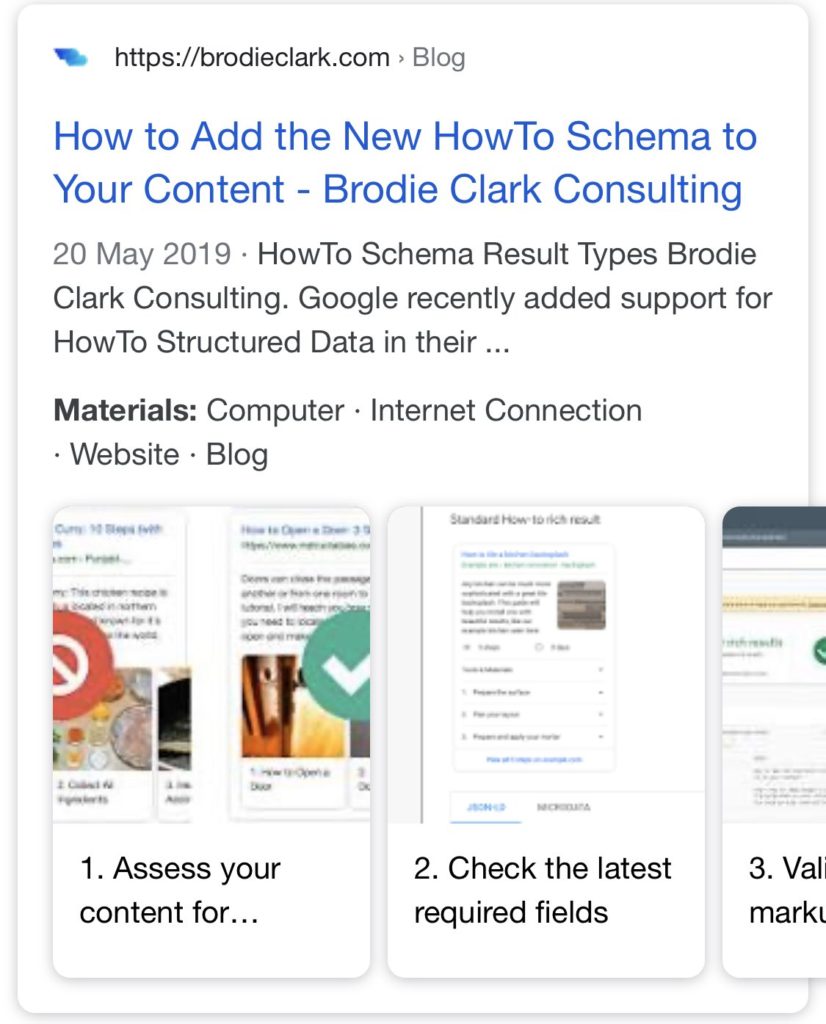
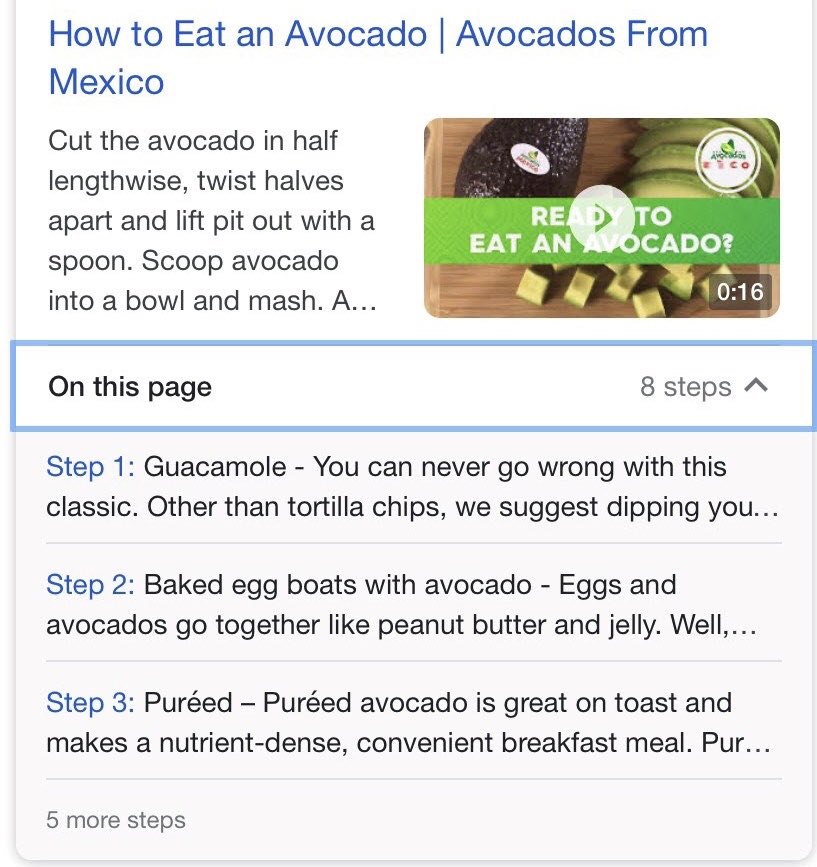
Link: Picture source ( 1 / 2 ) / related reports
Left navigation bar of Google search results
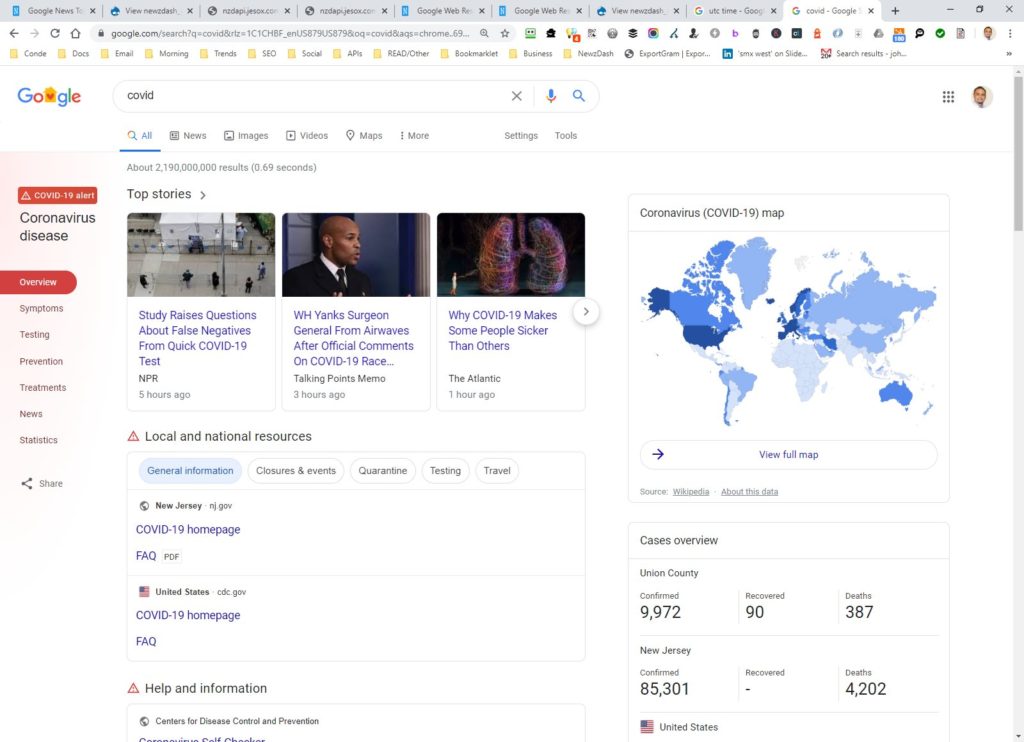
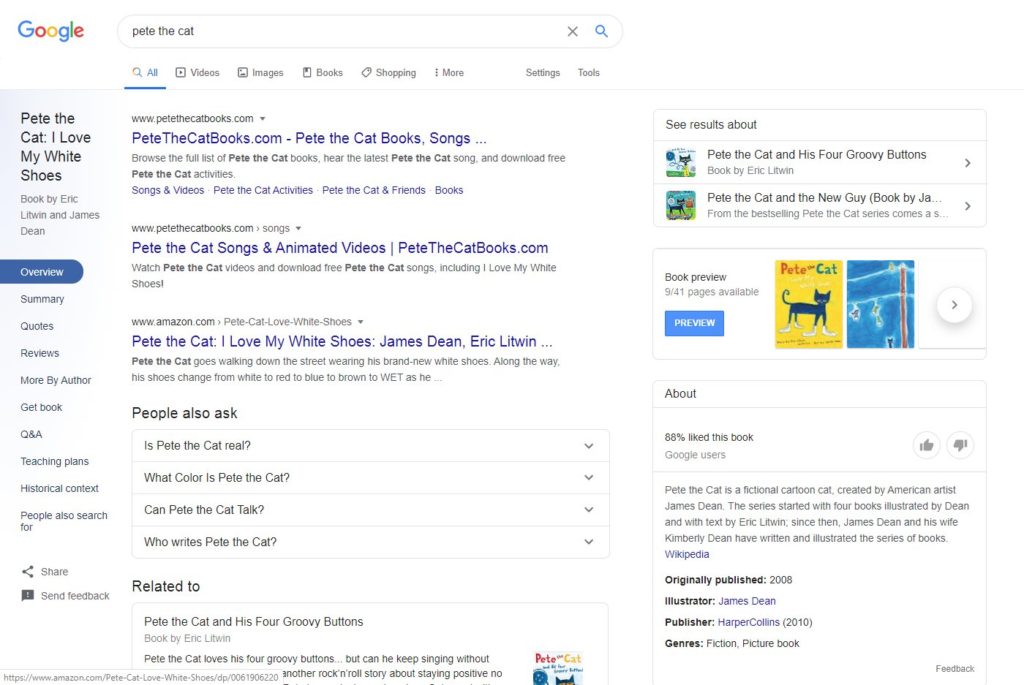
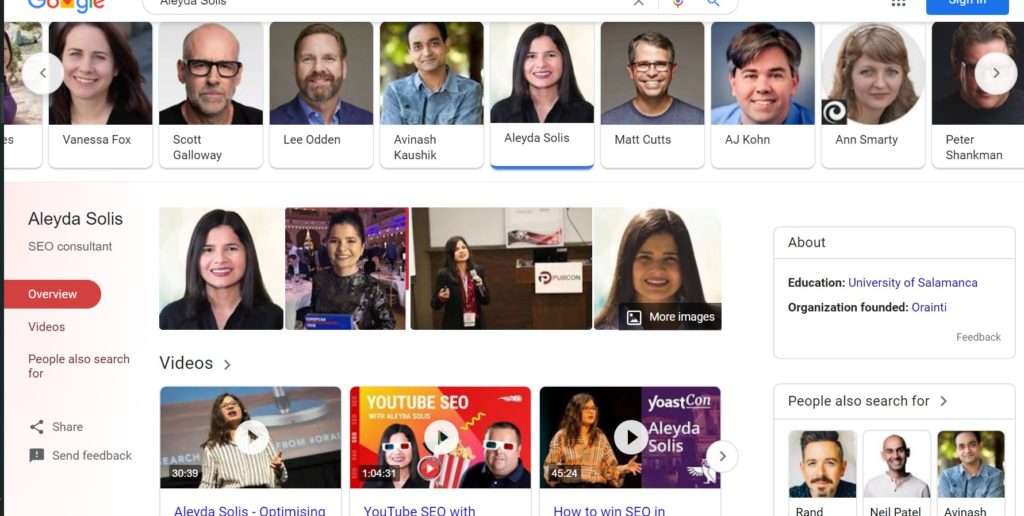
Some netizens found that for some search terms, the left navigation bar appeared in Google's search results (SERP). This situation mainly occurs when the search term is a clear subject, such as: book title, person's name, movie...etc.
Link: Picture source ( 1 / 2 / 3 )
Google removed 2.7 billion ads for policy violations in 2019
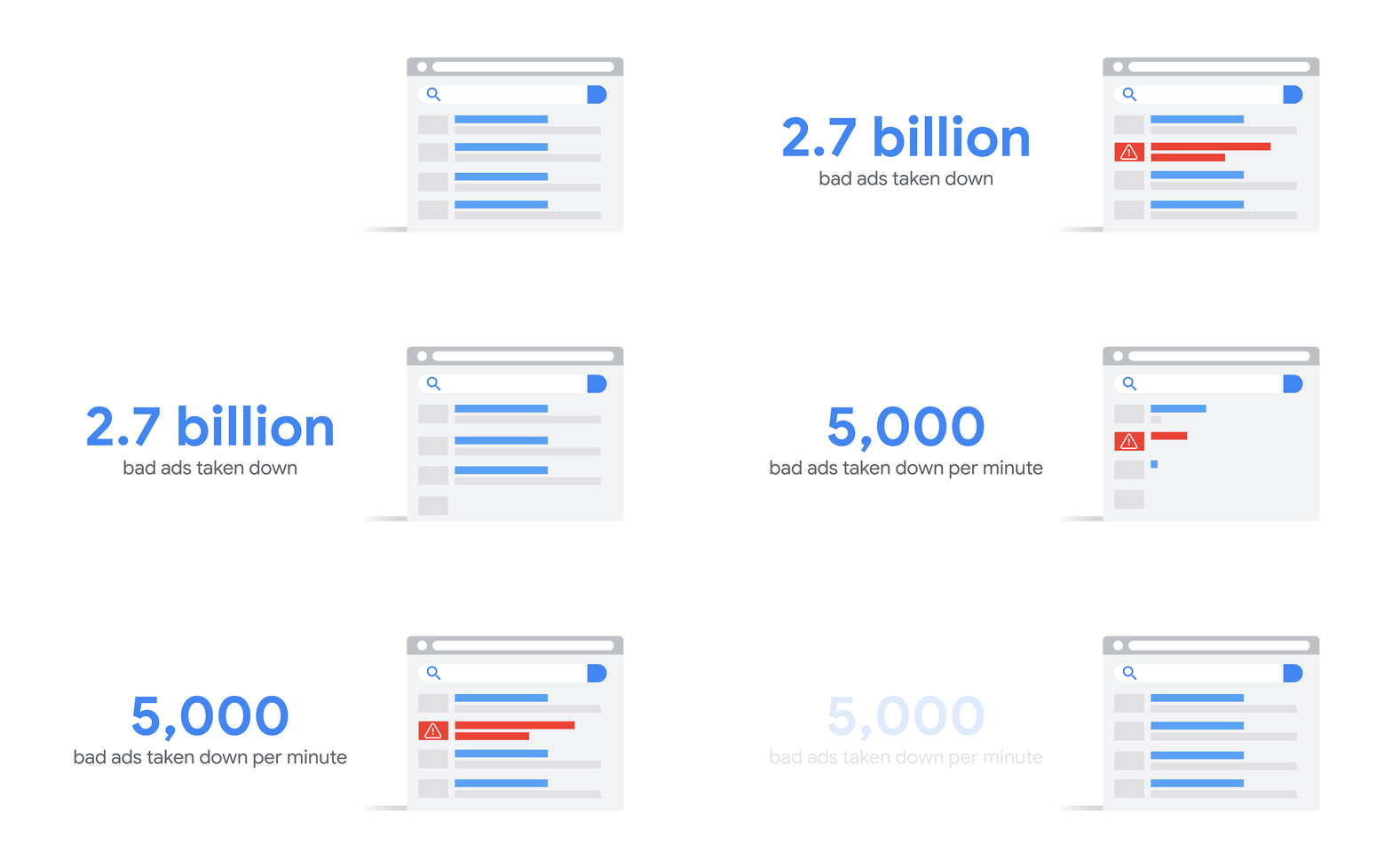
Google mentioned in a recent article that they have considerable requirements for the quality of ads. In 2019, they removed 2.7 billion ads that did not meet the standards (an average of 5,000 ads were removed every minute) and 1 million ad accounts. In the past few months, tens of millions of coronavirus-related ads have been removed for policy violations.
Tool Sharing - Compare Two Lighthouse Results
The Chrome team has developed a very practical tool that allows users to compare the report results run by two Lighthouses. This tool can be used to compare the performance of "before optimization vs. after optimization" or "your own website vs. other websites."
Twitter/X Post
View original post on Twitter/X
link:Lighthouse comparison tool / source code
Good Article Sharing (Part 2) - UX Indicator: CLS Score
Most people should have this experience. When they go to a web page, the pictures start to load halfway through browsing, the page starts to jump around, and then they have to scroll down to find where they see it. Pixnet, which is loved by many people in Taiwan, has such a problem.
CLS (Cumulative Layout Shift) is one of the UX indicators used to measure whether there is a section shift on a web page. This article by Paul clearly explains this concept, the calculation method of CLS Score, and how front-end engineers can avoid this problem. Recommended reading!
link:Paul Li article / digital engine introduction / CLS calculation tool
Tips - Add annotations to Google Data Studio reports
Google Data Studio does not have a native function that allows you to annotate charts. This article explains in detail a small step to achieve such an effect - "Use Google Sheets and Data Blending!", which is quite practical for GDS enthusiasts!
link:Original text
Google webmaster Q&A – Apr 3 & Apr 9 & Apr 14
Google Webmaster Hangout is an official Q&A event held from time to time. DeepCrawl helps organize the content each time and is also a regular source of information for the author. Here are a few interesting highlights:
- The AMP version of the URL must be on the same domain
- <lastmod> helps Google understand which pages to crawl first
- For very large sites, reducing the number of pages can help
- User Reviews and Critic Reviews should use structured markup
link:4/3 Notes / 4/9 notes / 4/14 notes
NNgroup Research: How people browse the web
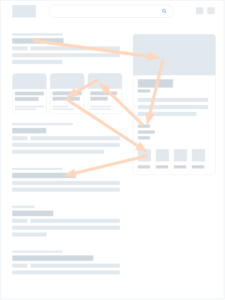
This is a study released by Nielsen Norman Group, which uses eye tracking technology to sort out how ordinary people scan web pages to absorb information, and the different behaviors when different web pages are typeset. Quite an interesting report, recommended reading.

link:NNGroup report
Official Video: How Google handles 301 Redirect
In this episode of the video, John Mueller was asked - "I have moved 301 from web page A to web page B, why does web page A still appear in the search results?" This is a very common question. For Google, 301 is only one of the factors in choosing a canonical URL. There are several other factors that affect canonical URLs. Let's take a look at John's answer!
Bonus: John told an interesting trivia in the video, that is, there will be people from other groups within Google asking this kind of SEO questions, but as Search Analysts, they are actually not allowed to answer their own questions, even if the answers are public.
Official Video: Can Links be Handled with JavaScript?
WMConf Lightning Talks is a new series, the content is mainly a short version of the content of webmaster seminars held by Googler in various places. This is the first episode of this series. Martin Splitt explains how Googlebot views "links". It seems to be a simple concept, but it is complicated by JavaScript and the SPAs that have flourished in recent years.
The author has joined a non-profit organization "NEX Foundation Taiwan Future Foundation”, the purpose is to connect overseas Taiwanese and establish a talent mutual aid circle. Recently, our media laboratory was officially launched.first articlePosted by Vivi Lin, who is well-known for Tedros’ disclosure a while ago and is also a member of NEX. If you work overseas, or are interested in issues such as overseas work and the future of Taiwanese talents, please follow us!
Related reading
Search Console search statistics: What pages is Google crawling recently?
Organizes discovery and reorganization concepts in Search Console search statistics, linking crawler behavior back to sitemaps, duplicate URLs, and troubleshooting of site-embedded pages.