
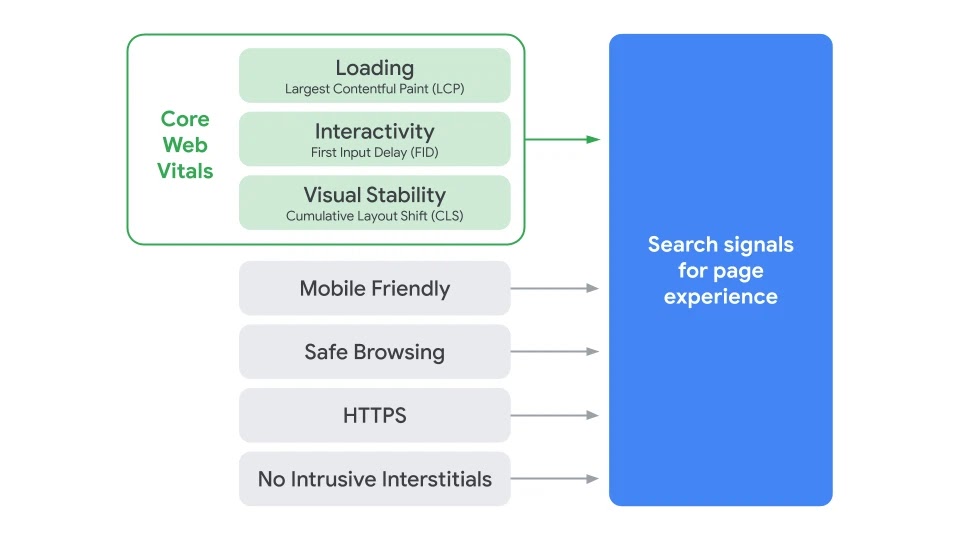
Core Web Vitals continue to be a hot topic in this issue, and Google has further announced that it will list LCP, FID, and CLS as ranking factors for web pages as soon as 2021. If you are not familiar with these three indicators, you can refer to the e-newsletter of the previous issue and this issue. There is also some news about Bing webmaster tools. It must be said that they have added many functions after the revision and deserve more attention. The following is the content of this issue:
- The core indicators of website user experience will become Google ranking factors
- Non-AMP pages will be able to appear in Top Stories
- Lighthouse 6.0 released (added web vitals, score ratio reconfiguration...)
- The research science behind website experience indicators (Web Vitals)
- Bing’s new webmaster tool adds three new features
- Tips: Bing Webmaster Tools can see the performance of each ranking position
- Bing Webmaster Tools built-in keyword planning tool
- Official article: AI application for Bing search
- Official article: GSC report "recipe" structured markup
- Official Video: How Google judges user-generated content (UGC) on websites
- Googlers Podcast for Webmasters – “SEO Off the Record”
- Official video: Google News Collection - May 2020 issue
The core indicators of website experience will become Google ranking factors
Algorithm changes are divided into knowable and unknowable, such asChanges in early MayThere are not many official clues to explain what has been changed, but this time it is different. Google has clearly announced that Web Core Vitals will be listed as an SEO ranking factor. This algorithm change will not be rolled out this year, but webmasters should diagnose and optimize it as early as possible.
Core Web Vitals are the biggest news since early May,Previous issueand this issue of the newsletter have quite a few introductions.
Non-AMP pages will be able to appear in Top Stories
In the past, only AMP webpages could appear in the Top Stories section of search results. With the implementation of Web Vitals, in the future, as long as webpages can provide users with a good experience, meaning that their scores reach excellent standards, they will have the opportunity to appear in this section.
Lighthouse 6.0 released (added web vitals, score ratio reconfiguration...)
Lighthouse is an open source website diagnostic tool and the core behind Google's website speed tool. Version 6.0 was recently released and is already available for use. The diagnostic tools in Chrome will also start using the new version of Lighthouse in v84 (expected to be launched in mid-July).
changes include the following:
- Added website experience indicators - LCP, TBT, CLS
- Scoring method changed
- New fraction calculator
- "Audit" in Chrome Dev Tools will be renamed to "Lighthouse"
Twitter/X Post
View original post on Twitter/X

The eighth e-newsletter introducesMany website core indicators (Web Core Vitals) For news related to, please refer to it!
link:web.dev article / GitHub change log
The research science behind website experience indicators (Web Vitals)
Evaluating website user experience (User Experience) is not a simple matter. In addition to some things that are not good or even quantifiable, which indicator is representative also requires a considerable degree of research.
Chromium Team published this article to explain the research process and scientific basis behind these indicators. It is highly recommended to read! If you are too lazy to read, there is a key point in the last paragraph: "When the three indicators of a web page are all "excellent", the possibility of users giving up loading the web page is reduced by 24%」。
link:Chromium Blog
Bing’s new webmaster tool adds three new features
Bing’s new webmaster tool adds the following three new functions, which are different from Google’sCrawl Limit (Crawl Control) In thesection, the webmaster can set to reduce the crawling frequency in a specific time period.
- URL Submission Tool (URL Submission)- Actively submit URLs to Bing. Each account has a different daily limit.
- URL removal tool (Block URL)- Temporarily removes a URL from search results. Like Google, it is only valid for 90 days.
- Crawl Limit (Crawl Control)- Limit the crawler crawling frequency, and you can set the crawling speed at different times.

Bing Webmaster Tools built-in keyword planning tool
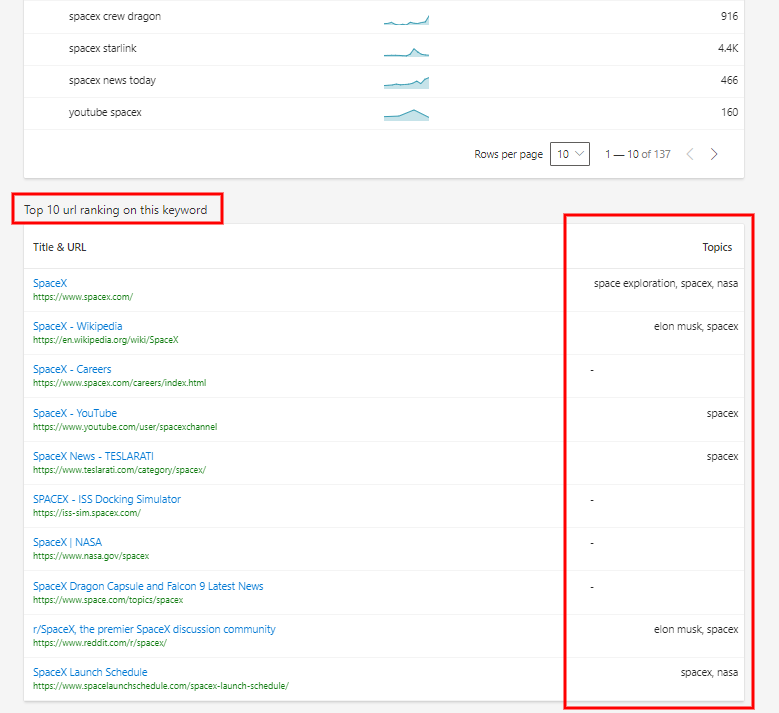
I’m not sure if this feature is new, but there is a keyword planning tool in Bing Webmaster Tools, where you can enter a keyword and then see its exposure and trends, searches in each country, the top ten web pages ranking for this keyword, similar words, related questions, and newly emerged related keywords.
What I think is very special is that trends have accurate exposure numbers, which is just a relative index from 0 to 100 on Google Trends. In addition, the top ten web pages have a "Topics" category, which may represent what kind of "topics" the web pages have in Bing's eyes, which is quite interesting!

Tips: Bing Webmaster Tools can see the performance of each position
In the new version of Bing's webmaster tools, you can see the reach, clicks, and click-through rate of a specific keyword in each ranking, which is not available in Google Search Console.
Twitter/X Post
View original post on Twitter/X
link:Bing Webmaster Tools Revision Introduction
Official article: AI application for Bing search
Bing published an article telling everyone how they apply AI technology to search results. An example in the article is, in "Can dogs eat chocolate? "" For this search, Bing used to give a longer answer; now it has a clear "No!" and then cites other article sources.
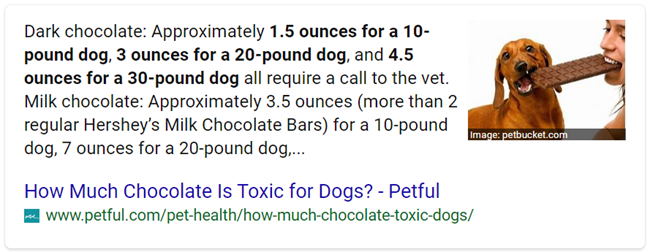
Before AI application After 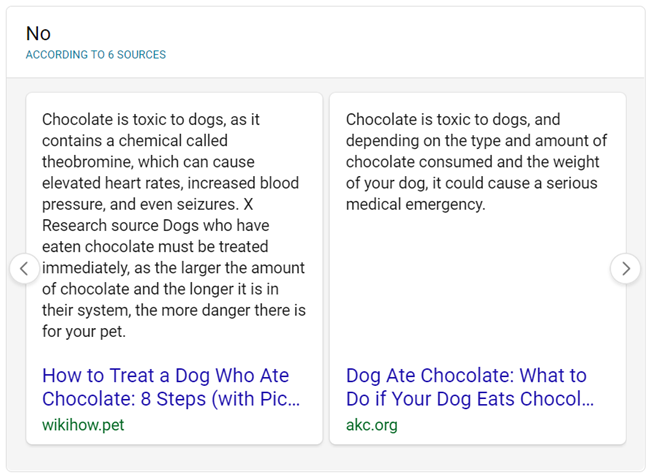
AI application


Official article: GSC report "recipe" structured markup
There is a new "Guided Recipe" structured data report in GSC, which allows webmasters to see whether there are errors or warning messages in Schema Markup of recipe type. In addition, inCompound search results testing toolYou can also see the representation of this mark on Google Voice Assistant.

link:official announcement / Recipe Structured Markup Installation Guide
Official Video: How Google judges user-generated content (UGC) on websites
In this episode of the newbie video, John Mueller was asked, if there is user-generated content (UGC) on a website or webpage, how will Google view it, such as comments, messages, etc.? Let’s take a look at John’s answer.
Short answer: UGC that appears on a web page or website is considered part of the content, and webmasters must be responsible for the content that appears on their websites, regardless of the source of the content.
Googlers' Podcast for webmasters - "SEO Off the Record"
SEO introduces three Googlers who are familiar to everyone - John Mueller, Gary Illyes, and Martin Splitt. They have opened a new podcast called "SEO Off the Record" to talk to you about hot topics in the SEO circle, the functions of GSC, interesting stories... and so on.
These three people are full of humor. There is not much information in the first episode. They are just introducing this new project to everyone, but it only takes less than three minutes to listen to and watch!
Twitter/X Post
View original post on Twitter/X
link:Podcast Episode 1 Complete Version
Official video: Google News Collection - May 2020 issue
In this video, John Mueller helps you sort out recent news and new documents related to Google Search...etc., and share them with you!
Last week, after a long absence, I wrote a basic SEO article, introducingCrawler is retrieving (crawling) the website The process ofseems to be a simple concept but there are some noteworthy details. I recommend that you read it when you have time to get a good grasp of the concept!
Related reading
FID to INP: Historical conversion of interactive response speed metrics
Save the 2023 record Core Web Vitals indicator conversion instructions, from user interaction to the next screen drawing, to understand the experience issues that INP wants to measure.
Core Web Vitals official Q&A: historical notes on scores, information and rankings
Save the official Q&A compiled before the launch of Core Web Vitals in 2021, focusing on the data calculation methods and ranking impact boundaries of LCP, FID, and CLS.