This note preserves the original context of the Facebook post. Some tools, interfaces, and external links may have changed.
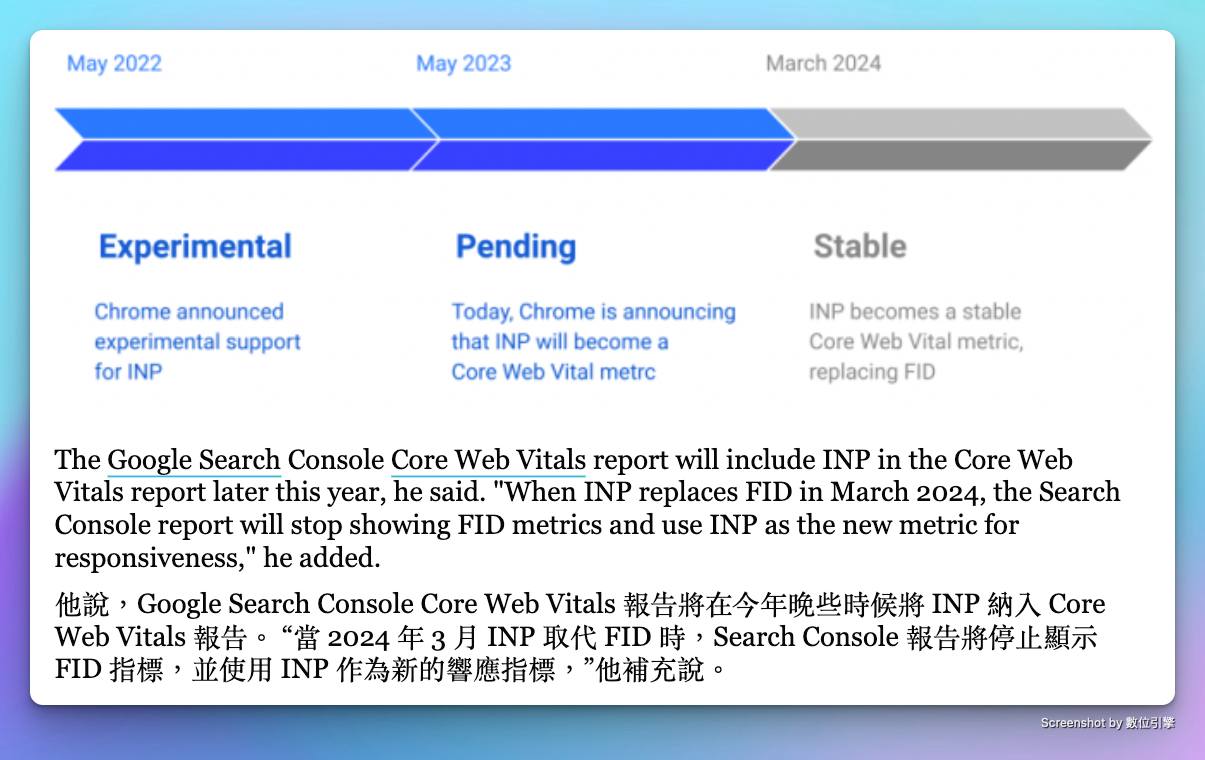
This 2023 post documents the background to Core Web Vitals’ move from FID to INP.
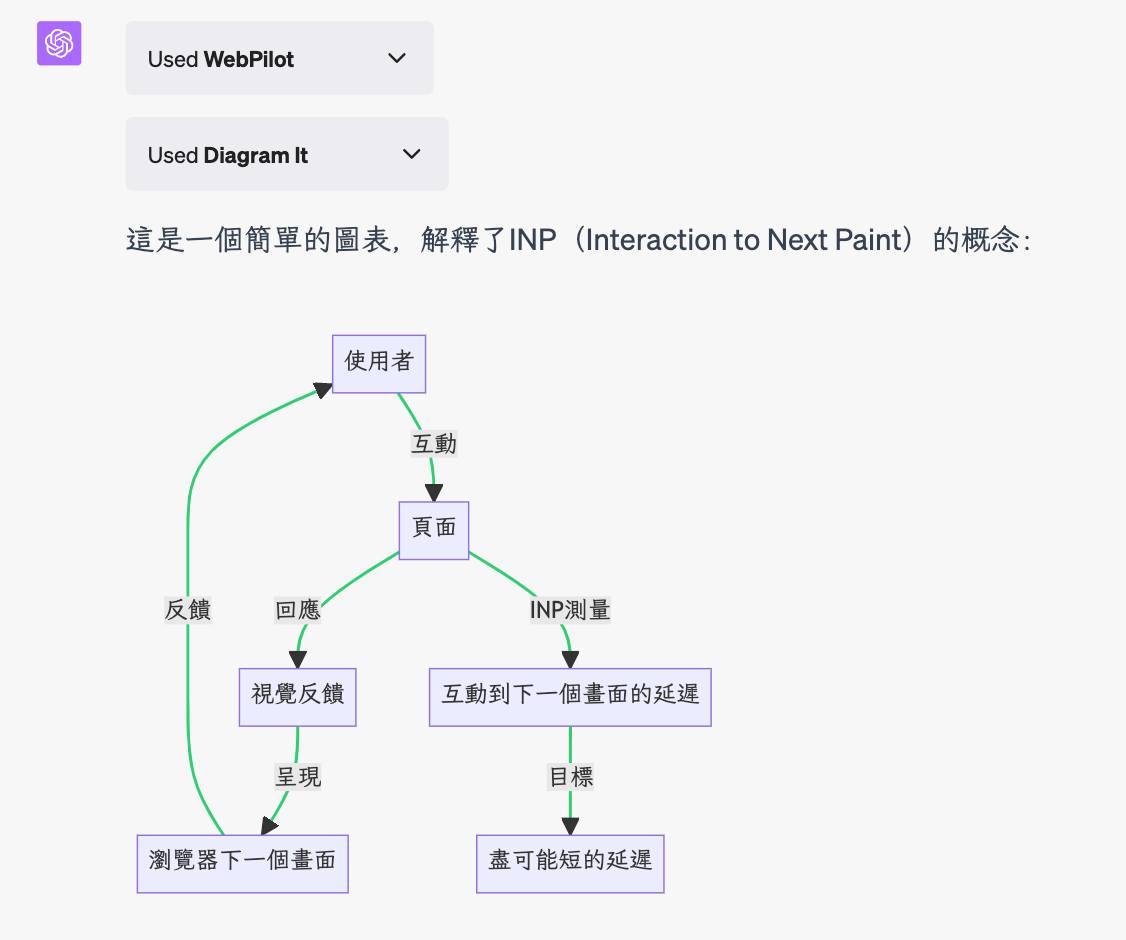
INP focuses on how long it takes for a page to generate a visible response after a user clicks, touches, or uses the keyboard.
This concept is closer to the interaction latency experienced by the user throughout the browsing experience than an FID that only observes specific interactions.
The original post used the shopping cart, mobile navigation menu and login form as examples to explain why “no response after operation” can make users mistakenly think that the website is broken.
This page is for historical preservation and conceptual organization, not an operation guide for today’s Core Web Vitals.
If you want to implement or interpret the threshold, you should still refer to the current Chrome, CrUX, PageSpeed Insights and Google official documents.
Links mentioned in the original post
Related reading
Three core indicators of website experience - LCP, FID, CLS
Website experience indicators (Web Vitals) were proposed by Google in May 2020, with the aim of developing a set of UX measurement indicators suitable for all websites. This article introduces this project and various measurement methods.
SEO e-Newsletter Issue 8 – 2020.05.01~2020.05.15
The two biggest pieces of news in the eighth e-newsletter are Google’s core algorithm updates and three major UX indicators. In addition, this issue also shares some templates, interesting facts, and Google’s Question Hub plan. Welcome to read!
SEO e-Newsletter Issue 9 – 2020.05.16~2020.05.31
The Core Web Vitals of website experience are incorporated into Google ranking factors, and some unpopular practical tools of Bing webmaster tools. SEO e-newsletter compiles the latest industry information!
Core Web Vitals official Q&A: historical notes on scores, information and rankings
Save the official Q&A compiled before the launch of Core Web Vitals in 2021, focusing on the data calculation methods and ranking impact boundaries of LCP, FID, and CLS.
Guess.js: Use data to predict the next page and then decide whether to prefetch it
A historical note discussing prefetch, user behavior data and machine learning together. The key point is that prefetching should be based on a balance between probability and cost.
Bad Cloaking Experiment: Do search engines see the same content as users?
Save an SEO experiment summary about cloaking. The focus is not on imitating black hat techniques, but on understanding the experimental variables, traffic changes, and the causal relationships that cannot be over-interpreted.