This note preserves the original context of the Facebook post. Some tools, interfaces, and external links may have changed.
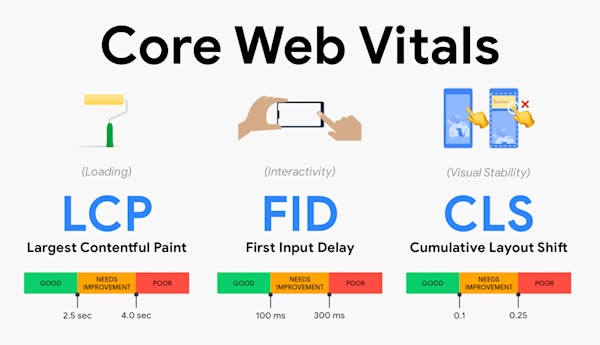
This post summarizes several key points from Google’s official Q&A before Core Web Vitals officially becomes the focus of search-related discussions in 2021.
The Q&A at the time stated that LCP, FID and CLS were measured separately, and that the page experience data would be based on actual user data over a period of time.
It also reminds webmasters that Core Web Vitals are part of the ranking signal, but that all SEO efforts should not be reduced to chasing PageSpeed scores.
The indicator names and search environments in this note belong to the historical context of 2021.
To diagnose a website today, it should be read alongside current Web Vitals metrics, CrUX data, and real user experience.
Links mentioned in the original post
Related reading
Three core indicators of website experience - LCP, FID, CLS
Website experience indicators (Web Vitals) were proposed by Google in May 2020, with the aim of developing a set of UX measurement indicators suitable for all websites. This article introduces this project and various measurement methods.
SEO e-Newsletter Issue 8 – 2020.05.01~2020.05.15
The two biggest pieces of news in the eighth e-newsletter are Google’s core algorithm updates and three major UX indicators. In addition, this issue also shares some templates, interesting facts, and Google’s Question Hub plan. Welcome to read!
SEO e-Newsletter Issue 9 – 2020.05.16~2020.05.31
The Core Web Vitals of website experience are incorporated into Google ranking factors, and some unpopular practical tools of Bing webmaster tools. SEO e-newsletter compiles the latest industry information!
FID to INP: Historical conversion of interactive response speed metrics
Save the 2023 record Core Web Vitals indicator conversion instructions, from user interaction to the next screen drawing, to understand the experience issues that INP wants to measure.
Mobile content-first indexing: Dynamic Serving Don’t forget Vary
Save a working case that explains why HTTP's Vary: User-Agent may become an important cache signal when Dynamic Serving returns different HTML based on User-Agent.
Guess.js: Use data to predict the next page and then decide whether to prefetch it
A historical note discussing prefetch, user behavior data and machine learning together. The key point is that prefetching should be based on a balance between probability and cost.