This note preserves the original context of the Facebook post. Some tools, interfaces, and external links may have changed.

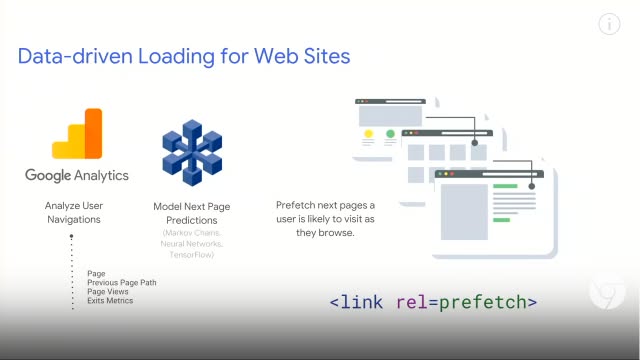
If all possible next pages are prefetched, it can theoretically make the post-click experience faster, but it will also consume a lot of user network traffic.
The real question worth discussing is how to determine which pages are most likely to be visited next.
The original post suggested two directions.
The first is for developers to determine the pages that users are most likely to go to, and then prefetch those resources.
The second is to use the website’s usage behavior data to infer the probability that links on different pages are clicked.
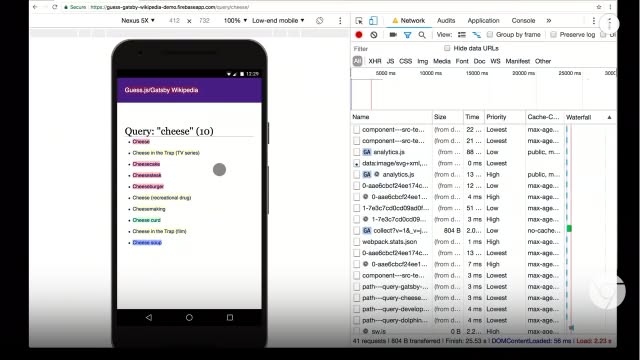
Guess.js has been used to demonstrate the second approach.
It combines Google Analytics data to analyze the likelihood of links on the page being clicked, and then places prefetch on links that are more likely to be visited.
The point of this idea is not to “add more prefetch, the better”, but to consider the prefetch cost, bandwidth and the path that the user will actually take.
This post was published in 2019, and related tools and examples may have changed or ceased maintenance.
Therefore, this page preserves the design ideas and research context at that time, and does not guarantee that the tools in the link are still suitable for direct use.
Links mentioned in the original post
Related reading
Three core indicators of website experience - LCP, FID, CLS
Website experience indicators (Web Vitals) were proposed by Google in May 2020, with the aim of developing a set of UX measurement indicators suitable for all websites. This article introduces this project and various measurement methods.
SEO e-Newsletter Issue 41 – 2021.09.16~2021.09.30
This newsletter has three contents that I like very much - the second one is Screaming Frog’s update, which allows users to automatically monitor the SEO of websites with a small budget; the third one is about content pruning, which is a relatively rare optimization direction, and it is quite rare to see how large websites do it; and the fourth one is 103 Early Hints, which is new to me, and it also gives me a good topic to talk to engineers about!
FID to INP: Historical conversion of interactive response speed metrics
Save the 2023 record Core Web Vitals indicator conversion instructions, from user interaction to the next screen drawing, to understand the experience issues that INP wants to measure.
Can search engines really see the content generated by JavaScript?
Saves a practical note on using the Search Console URL inspection tool to confirm whether JavaScript content is rendered, and links back to the basic article on search engine crawling and indexing.