I have always wanted to use e-newsletters to share news, news, case studies, and my experiences in the SEO world. In this way, it is easier to organize and share in a systematic way. Currently, it is tentatively scheduled to be once a month. If the response is good, we will consider increasing the frequency.Facebook pagewill still publish SEO-related content from time to time. The e-newsletter will tend to be a streamlined version that reviews what happened in the past few weeks, so there will not be too detailed explanations. If there is anything unclear, please leave a message for discussion.
- Google algorithm changes in January
- Chrome 80 will default to not allowing push notifications
- Rich Result Test Tool update
- Appearance changes to Google Desktop search results
- Google will no longer support Data-vocabulary.org's structured markup
- "Backend classification" for index coverage reports in GSC?
- Featured Snippet will no longer appear repeatedly in general search results
- Websites using TLS 1.0/1.1 will be marked as "Not Secure"
- GSC newly added URL removal tool
- official video - "How to read the Performance Report (Performance Report)?"
- Official Video - "How to optimize image search results?"
- Official Video - "What is Search Console and why do you need it?"
Google algorithm changes in January
In mid-January, Google announced a major search engine update. This update is global. If there is a sudden increase or decrease in website traffic, it is likely to be affected by this.
Twitter/X Post
View original post on Twitter/X
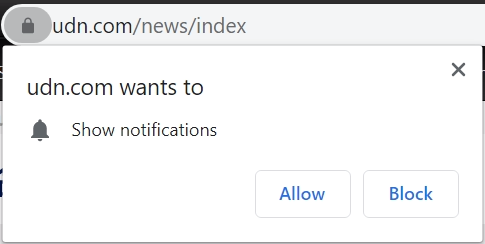
Chrome80 will be preset to not allow push notifications
Everyone must have had this experience. Just browsing a web page, a bunch of pop-up messages like "Can I know your location", "Can I send notifications"... etc. pop up. Chrome 80 (expected to be released in February) will have this feature turned off by default.
Rich Result Test Tool update
Google's Rich Result testing tool can now see the resources that have been inserted, and if these resources are not allowed to be crawled, the reasons will be listed in detail.
Twitter/X Post
View original post on Twitter/X
Appearance changes to Google Desktop search results
Around mid-January, Google changed the search results of the computer version to be similar to the mobile version - put the website's logo (favicon) on the far left, and then changed the color of "advertising" to black. This change caused many people to complain, so Google updated it again to remove the logo, but now it seems that the presentation method of URLs has become breadcrumbs.
Twitter/X Post
View original post on Twitter/X

Google will no longer support Data-vocabulary.org's structured markup
Data-vocabulary is an early "vocabulary" standard of Structured Data, and is now replaced by Schema Markup. After April 2020, data-vocabulary tags will not generate any possible compound search results.
If you are interested in the historical origin of data vocabulary, you can read itthis article。
Twitter/X Post
View original post on Twitter/X
"Backend Classification" of Index Coverage Report in GSC
Netizen JR Oakes dug into the code of Google Search Console and found that there are the following categories for URLs in the background of the Index Coverage Report.
Twitter/X Post
View original post on Twitter/X
Featured Snippet will no longer appear repeatedly in general search results
Starting from 1/22, the featured snippet belongs to a natural search result and will be ranked first in the GSC report. Web pages that appear in featured snippets will not be repeated in the general search results below.
Twitter/X Post
View original post on Twitter/X
Twitter/X Post
View original post on Twitter/X
Websites using TLS 1.0/1.1 will be marked as "Not Secure"
Websites are not necessarily secure because of HTTPS. The website's security credentials must now use TLS 1.2 or above to avoid being marked as an unsafe website by Chrome.
Twitter/X Post
View original post on Twitter/X
official announcement / TLS version detection tool
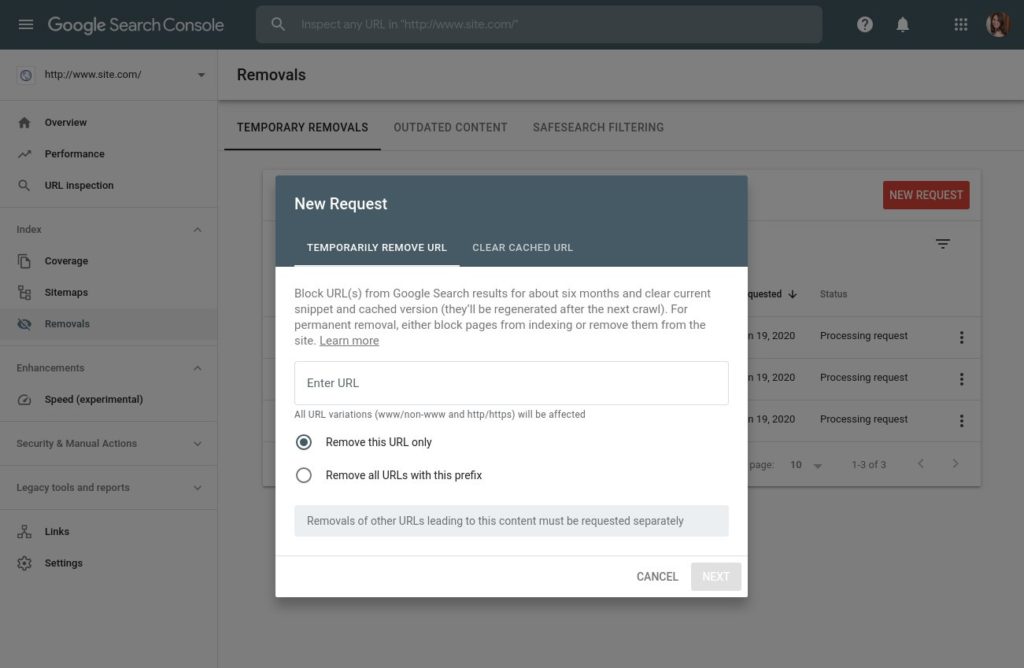
GSC newly added URL removal tool
This URL removal tool was finally moved after the GSC revision. This block is divided into three items:
- temporarily removed: Allows webmasters to "quickly" remove URLs from search results "temporarily". (Note: Validity period is only six months).
- Outdated content: This can be used to submit outdated web pages. It is used when the content on the web page no longer exists but still appears in the search results. Anyone can report here.
- Safe Search:When there is content on the website that is reported as adult content by users, it will appear here.
Official Video - "How to read the Performance Report (Performance Report)?"
In this video, Googler Daniel Waisberg teaches how to use Search Console to view website performance and how to read performance reports.
Official Video - "How to optimize image search results?"
In this #AskGoogleWebmasters video, John Mueller received the question "How to optimize image search results?", let's take a look at John's answer!
Official Video - "What is Search Console and why do you need it?"
This series of videos for SEO beginners explains what the Search Console tool is and why webmasters should learn to use it. It is suitable for engineers or bosses who have never been exposed to SEO.
The author is currently on a road trip. This e-newsletter was compiled in the trivial time every morning and evening. During the period, I delayed the onset of the disease and wanted to start again in February XD. So if it helps you, please help forward and share it with other people who may benefit. This will be my motivation to continue this e-newsletter!