The epidemic is spreading and the world is in panic, and the Bay Area where I am located is no exception. Recently, something happened to me personally. It can be said that the house is leaking and it rains all night. The next few weeks will become very busy. I compile the SEO news I see in an e-newsletter every few days, and finally make a page and write this introduction, so most of the content of this e-newsletter has been compiled before.
The next issue of the e-newsletter may need to be paused if the things we are currently busy with do not slow down or if other new tasks appear... Here is a preview for you. But if you/you want to talk about SEO, you are very, very welcome to leave a message or send me a private message, because this is something that can bring me a little happiness! (Compiling the newsletter is not yet XD), without further ado, here is the content of this issue, Enjoy!
- Google will implement "mobile content-first indexing" for all websites in September 2020
- Necessary information update for "Product" structured data
- Google updates its FAQ Snippet guide
- Good Article Sharing – Notes on Mobile Version Content Priority Indexing (Chinese)
- Google Lighthouse releases Firefox browser plug-in
- Moz Controversial Article – Change of No. 1 Position on SERP
- Tips – Links that appear in compound search results will be recorded in GSC
- Free Tool – Desktop vs Mobile Web Comparison Tool
- Google webmaster Q&A – Feb 21 & Mar 3 & Mar 6
- "Hey Google, read it!" - Google Assistant reads it to you
- Firefox launches DNS over HTTPS
- Official Article – Best Practices for News Websites and AMP
- Official Video – Site Map
- Official Video – How to Change How Your Page Appears on Google Search
Google will implement "mobile content-first indexing" for all websites in September 2020
Google has issued an official announcement that it will implement "Mobile-First Indexing or MFI" (Mobile-First Indexing or MFI) for all websites in September this year. Simply put, the quality of a website will be mainly determined by the browsing experience of the website on a mobile phone. If your website looks like the Kaohsiung Middle School website below on a mobile phone, you should consider optimizing it.

link:official announcement / Official Documentation - Best Practices for Mobile Content-First Indexing System
Necessary information update for "Product" structured data
Some foreign netizens have noticed that Google’s official guide to “product” structured data has the following updates to the necessary data:
To make the structured data of Product type valid, you must add "review","aggregateRating"、or"offers "At least one of the three attributes. When you add one of them, the other two become optional." Screenshot of
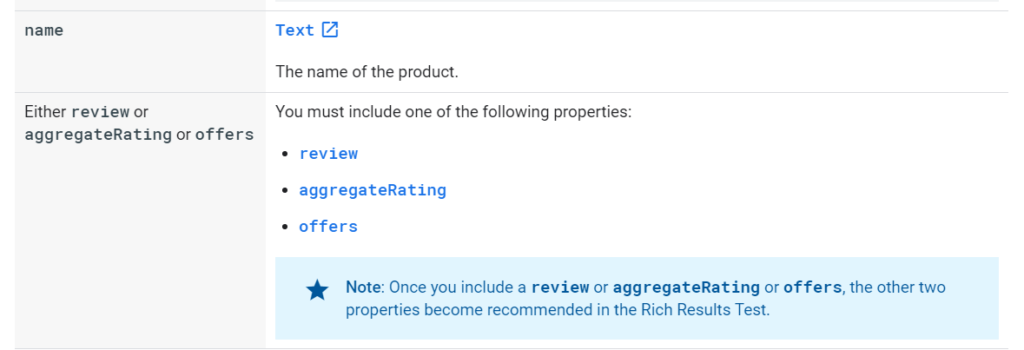
Twitter/X Post
View original post on Twitter/X
At present, the Chinese guide has not been updated, and the structured data testing tool will not display errors yet, but this is a very important update, and those who operate e-commerce websites should pay attention to it.
link:Product Structured Data Guide (English)
Google updates its FAQ Snippet guide
Google pairFAQPageGuide to structured data now has the following new paragraph.
If your site has duplicate FAQ content (that is, the same question and answer appears on multiple pages on your site), you only need to flag one of the instances on your site.
In addition,FAQPageandQAPageThese two marks are easily confused. If you are not sure about the difference between the two, you can take this opportunity to learn more. The link is below for you to check.
link:Frequently Asked Questions (FAQPage) / Questions and Answers (QAPage)
Good Article Sharing - Precautions for Mobile Version Content Priority Indexing (Chinese)
The author Paul Li is a front-end engineer at Yahoo!. This article shares some background about MFI and what to pay attention to, as well as Paul's own experience at work. It is worth reading.
In addition, the author also shared an easily overlooked point about Adaptive Site (adaptive website/dynamic service website) on the Digital Engine Facebook page - Vary HTTP Header. If you are interested, you can go and take a look.
link:Mobile-First Indexing, Seriously ?! by Paul Li / Digital Engine Discussion Vary Header
Google Lighthouse releases Firefox browser plug-in
Lighthouse is an open source tool developed by Google. It can detect a website's speed, SEO, accessibility... and so on. In addition to API and Chrome plug-ins, Firefox plug-ins are now added.
SEO often needs to check the website, so installing several more browsers and plug-ins can save a lot of time!
Twitter/X Post
View original post on Twitter/X
link:Lighthouse Documentation / Github / Chrome plug-in / Firefox plug-in
Moz Controversial Article - Change of No. 1 Position on SERP
Dr. Pete from Moz wrote an article, which roughly stated that the first-ranked webpage on the SERP appeared on average 375px below the SERP in 2003. Due to the emergence of various search appearances, its position has become lower and lower. In 2020, they found that it can even appear at a position as low as 2938px."first webpage ranking"。
The title of this article is "How Low Can #1 Go?" (How low can your first position be?), which triggered a war of words on Twitter. Google spokesperson Danny Sullivan believes that the title (and even the content) of this article is to arouse people's sentiment that SEO is becoming more and more difficult to do. Although the web page results have become lower, videos, photos... and other elements should also be considered part of the natural search results.
Dr. Pete believes that although web pages and other components have natural traffic, the data shows that most people still click on the web page results on the SERP, so it will have an impact that the web page results become lower and lower, and this is the research direction of his article.
Twitter/X Post
View original post on Twitter/X
The author thinks Danny is right. SEO should not only care about web page results, but Dr. Pete’s point is not wrong. The more components on the SERP, the more likely the traffic is to go elsewhere, because it is unlikely that a website will occupy all the positions of these components. This article and the views of both sides are worth thinking about for SEO people. Some well-known figures in the SEO field have also expressed their opinions in the discussion thread. You can go and see how foreign folks write!
Tips - Links that appear in compound search results will be recorded in GSC
The author saw in GSC that a URL on the website that should not be indexed had a large number of exposures and clicks. After some investigation, it was found that the source may be because a well-known figure's tweet appeared in the search results, and the content included the URL. After asking John, it was confirmed that such a situation would indeed cause the URL to be recorded in GSC.
Twitter/X Post
View original post on Twitter/X
Free Tool - Desktop vs Mobile Web Comparison Tool
In response to the comprehensive MFI update in September, foreign SEO agency Merkle launched this free tool that allows everyone to enter a URL and compare its various data on the desktop and mobile versions, including HTTP Headers, content, links, speed, structured data...etc., if you are interested, you can play it.
Twitter/X Post
View original post on Twitter/X
link:Desktop vs mobile version web page comparison tool
Google webmaster Q&A – Feb 21 & Mar 3 & Mar 6
This is a note provided by SEO tool manufacturer DeepCrawl. It is quite well organized and is also a source of information that the author regularly reads. Here are some of the key points I saw this time:
- The Google Discover data provided by GSC is more accurate than general website analysis tools🔗
- Google currently has no way to prevent a website from appearing in a specific country🔗
- Sudden large changes in traffic are usually related to algorithm changes rather than technical issues on the website.🔗
- Google will not render a noindex page🔗
- Google can follow more than five redirects in one crawl🔗
- The crawl frequency report in GSC is very accurate, but it contains crawl logs for more than one Google product🔗
- After MFI, Google will only use the content of mobile web pages to index🔗
link:2/21 Q&A notes / 3/3 Q&A notes / 3/6 Q&A notes
"Hey Google, read it!" - Google Assistant reads it to you
"Hey Google, read it!", Google Assistant will be able to read the content on the web page to you on your mobile phone in the future. This new feature will be launched in 42 languages (Chinese is one of them). Users can choose different "people" to help read according to their tone preferences, and can even translate it into your language first and then read it aloud.
Something related to SEO is that if you don’t want the content on the web page to be read, you can add the following command:<meta name="google" content="nopagereadaloud" />
Firefox launches DNS over HTTPS
This is a progress in network information security. In the past, even with HTTPS, the records of which websites users visited were still exposed because the DNS resolution process was not protected by encryption. Firefox cooperates with Cloudfare to solve the above security considerations so that users' browsing records will not be eavesdropped/modified.
This article has less to do with SEO, but it is very suitable for people who want to know more about network operations and information security to strengthen their knowledge in this area.

link:Firefox Announcement / Diagram DNS Over HTTPS
Official Article - Best Practices for News Websites and AMP
Information in the journalism industry changes very quickly, so its SEO practices also have some special considerations. Google released this official article to compile some common SEO best practices, including adding BroadcastEvent structured data to videos so that they have a LIVE tag in search results, how to deal with AMP cache for articles that are updated in real time... and so on.

link:official article / BroadcastEvent structured data
Official Video - Site Map
In this Search Console tutorial video, Daniel Waisberg explains what a sitemap is, whether you need one, and how to submit a sitemap to Google and track results.
Official Video - How to change the way your page looks on Google Search
This is the tenth episode of Google’s official SEO novice series. It mainly talks about how to write Title and Meta Description, the appropriate length, how Google decides...etc. Although it is very basic, I really like watching this series of videos to understand how the official conveys the concept of SEO to novices.
The e-newsletter is now in its fourth issue. Some readers wrote in to give suggestions and report problems, and some simply said thank you. Some people helped me like or share on Facebook. No matter what, it is a great source of motivation for me. Thank you all. It feels good to know that the time you put in has achieved something! Recently, I want to try to get the super fan function of the Facebook page, so I would like to invite everyone to come.Comments placeWrite down your thoughts on digital engines!