This episode contains quite a lot of content and is quite long. You can find time to read and digest it slowly. If you have to choose, I suggest you pay close attention to the news that GA4 is preparing to completely replace the old version of GA, and we will continue to share more tips and tools in the next few weeks. In addition, the seventh point of content brief seems to have been rarely mentioned before. If you need to manage content output at work, it is highly recommended to refer to this method.
- [News] The old version of GA will expire in July 2023
- [Announcement] The URL parameter tool in GSC will be invalid
- [News] 2022 March Product Review Algorithm Update
- [PR] The story of Google search spokesperson Danny Sullivan
- [Presentation] Three quick and effective SEO opportunities
- [Good article] Google Discover’s new features in testing
- [Template] Content Brief providing writing direction
- [Course] Brian Dean’s content SEO course is available for free
- [Interesting Fact] Google once thought of including "environmental protection" as a ranking indicator
- [Abstract] Google Search Podcast – De-SEOing
[News] The old version of GA will expire in July 2023
The new version of Google Analytics (GA4) is inLaunched in 2019, nearly 3 years ago, Google finally announced that it will retire the generally familiar current version of GA (Universal Analytics, GA3).Starting July 1, 2023, the free version of Universal Analytics will no longer collect data(360 account can be used until October of the current year). After this,users will lose access to the current version of GA in as soon as six months。
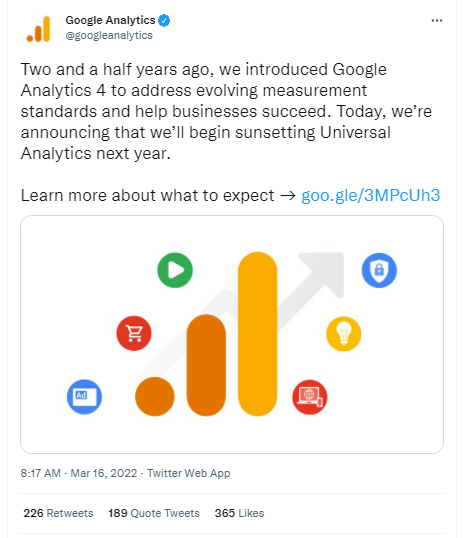
If the website has not put the GA4 tracking code yet, it is strongly recommended to do this step as soon as possible. There are still about 15 months until July next year. If you need to compare YoY data by then, you must start taking action now. The other thing is, of course, to become familiar with the functions of GA4 and the differences with GA3 as soon as possible.
Website analysis is mainly divided into session-based model and event-based model. The change this time is from the former to the latter. I first came into contact with the event-based website analysis tool (Amplitude) when I joined a new company a few years ago. At that time, I thought I was familiar with GA3 (session-based), so I was not used to it at first and was even a bit repelled. But after I become familiar with it, it will open up a whole new world.
link:official announcement / GA3 retirement details
[Announcement] The URL parameter tool in GSC will be invalid
This news was released at the end of March. The URL Parameters tool in the old version of GSC will become invalid in one month, at the end of April.
URL parameter tool in2009was launched in 2016. Its main purpose is to allow webmasters to inform search engines of the importance of different parameters. Because if the website uses parameters and sets them poorly, it will cause too much waste of crawl budget. For details, please refer to " This paragraph of "Crawler Catch"。
Note:https://darrenhuang.com/mens-clothing?size=XL&brand=nike&color=red, in this URL, the URL parameters are after the question mark.

The announcement stated that Google has been able to accurately determine which parameters are useful. Only 1% of the settings submitted by webmasters through this tool are helpful, so they decided to remove them. If you want to avoid the problem of duplicate content, you can still userobots.txtorhreflangand other related tools.
link:Announcement / About URL Parameters Tool / SEO search engine principles – crawler crawling
[News] 2022 March Product Review Algorithm Update
After the "Product Review Algorithm" was launched in April and December 2021, another wave of algorithm updates was released in March this year. This series of updates are aimed at combating low-quality review websites. They will also focus on English content first and will take a few weeks to be fully launched. the past two times The impact ofis quite obviousIf you manage a review site, you can keep an eye on the fluctuations.
In this announcement, Google representative Alan Kent clarified three common questions -
- The new algorithm is applicable to all kinds of review content, including product rankings, product comparisons, etc., and is not only used for single product reviews
- For content like "the best XX product", please provide enough content to tell readers the difference between this product and other similar products, why it is the best, and it is best to provide first-hand evidence and experience (rather than reusing information collected from the Internet)
- You can review many products in one article and write more in-depth reviews of each product separately. If you do this, make sure the article contains enough useful content.

Link: Official Announcement (1, 2) / launched in April / launched in December / Guide to high-quality review writing
[PR] The story of Google search spokesperson Danny Sullivan
Google's official blog "The Keyword" published a life story of Google search spokesperson Danny Sullivan. Danny joined Google in 2017 as "Google’s Public Liaison for Search"Before, I spent 25 years in the SEO field and was also the well-known founder of Search Engine Land.

This is an excerpt of Danny’s interesting words and opinions from several articles. You are welcome to read them yourself when you have time.
- In the early days, people blamed themselves for not being able to find what they wanted, but now more and more people tend to blame search engines.
- Danny hopes everyone will know more about Google’s efforts in search. In 2021 alone, there will be more than 800,000 tests and 5,000 optimizations
- Over the past seven years, internal data shows that irrelevant search results have dropped by more than 50%
- Since 2015, more than 60% of search terms use natural language, using a more colloquial way to search.
link:official blog / Video of Danny interviewing Google search boss
[Presentation] Three SEO opportunities that are quick and effective
This briefing comes fromAleyda SolisA recent online meeting in support of Ukraine The speech at#SEOforUkrainewas titled "SEO Low Hanging Fruit". The briefing talked about three relatively simple and effective SEO strategies, namely (1.) Optimizing the CTR of ranked web pages, (2.) Strengthening the internal links of web pages that are slightly less ranked, and (3.) Monitoring the relevance of website topics and current events.
In addition to the main theme, another reason why this newspaper clipping is recommended is that it talks about a lot of tools, techniques, and decision charts, such as "How to judge whether web page metadata is worthwhile?", "How to use Google Sheets or free tools to grab SERP results"... etc. Even if you already know the above three methods, it is worth spending time to scan the briefing.
link:Presentation link / SEOforUkraine campaign
[Good article] Google Discover’s new features in testing
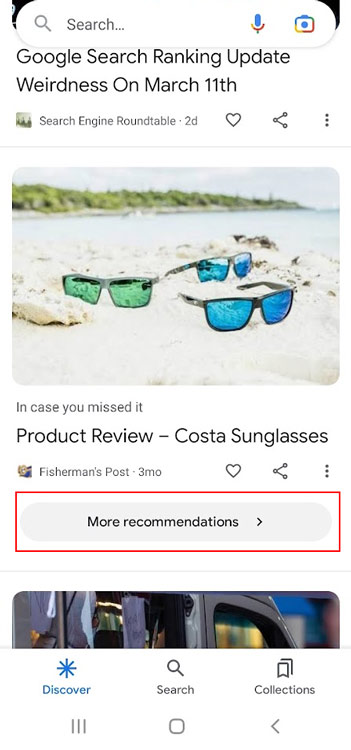
2018 has one copyofficial documentIt is said that Google Discover is used by 800 million people every day. The author of this article, Glenn Gabe, recently saw a test function on Discover, which is quite powerful. He believes that this may indicate that Google will have a more unshakable position in the user's "shopping experience" in the future.
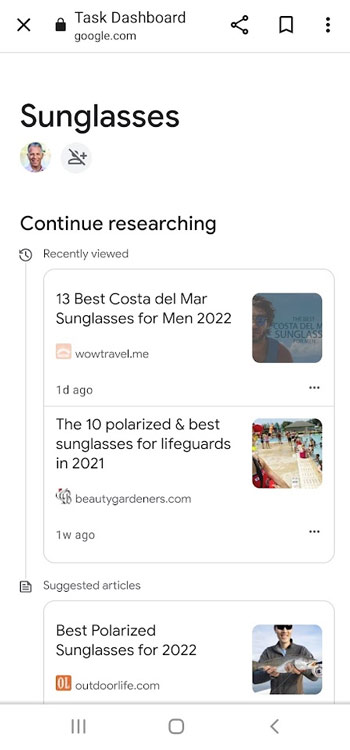
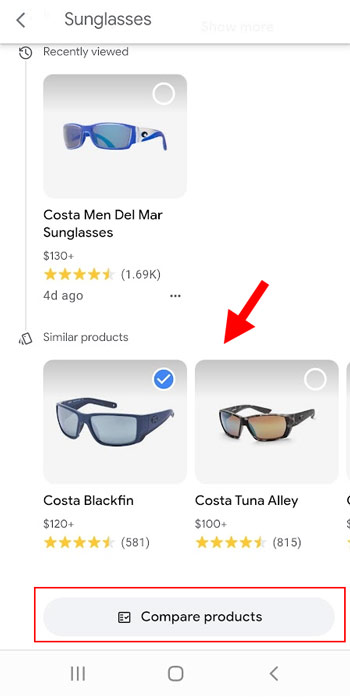
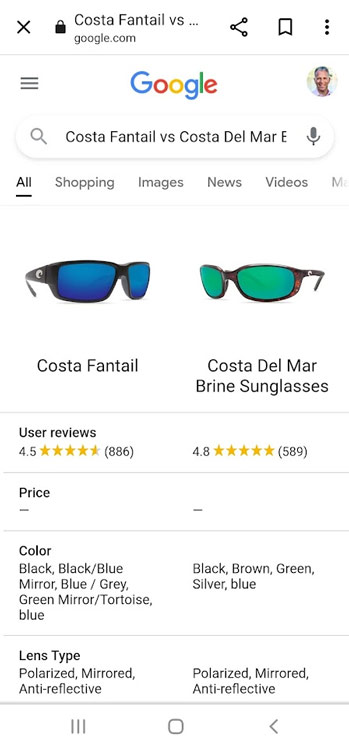
Below are several screenshots from the article. Click on "More Recommendations" on Discover and you will see a "Task Dashboard" that contains articles you have read about the product, other related articles, product videos, People Also Ask, and a function that allows you to select products to compare on the SERP. It is quite interesting!
[Template] Content Brief providing writing direction
Managing blog articles and content writing direction is a part of SEO work, but many times SEO only gives a general direction and a few keywords, resulting in a gap between expectations and the final content produced by the writer. Therefore, in a generally more systematic process, in addition to the title and keywords of the article, a document called a "Content Brief" will be given to give the writer more direction when writing.
This article introduces several elements that a content brief should have, and provides a template at the end of the article. Although the article touts its own products, the content theme ideas, keyword research, writing precautions, etc. are all explained in quite detail.

If your content production process is not very stable, or you often cooperate with new writers, it is highly recommended to use content brief to make the writing goals and motivations clearer.
link:Article link / template link
[Course] Brian Dean’s content SEO course is available for free
Backlinko In mid-January this yearwas acquired by SEMRush, the content SEO course with the original price of $100 is now open to all SEMRush users for free. You do not need to be a paid member of SEMRush. You only need to register an account to take this approximately 4-hour course for free.

In addition to Brian Dean's class, SEMRush Acadmey is also a very good resource. If you have not studied SEO systematically or want to review, you can refer to it.
[Interesting Fact] Google once thought of including “environmental protection” as a ranking indicator
John Mueller was recently asked an interesting question on Twitter, "Can the Google algorithm give environmentally friendly company websites a little ranking boost?" John replied that the Google Search team had indeed considered several options, but it was quite tricky.

I think this is interesting. Environmental protection and sustainability are hot topics now, and it is especially important for large companies to show their efforts in this field. Last year, Google CEO announcedan article, talks about what Google does, includingGoogle Flights reveals carbon emissions、Google Maps shows eco-friendly routes。
When a company's general direction is environmental friendliness, various departments will start to think about how to incorporate it into their group's plans, and Google Search is no exception. Although boosting rankings doesn’t seem feasible (difficult to quantify or verify), it wouldn’t be surprising to see more environmentally-related features on search in the future.
[Abstract] Google Search Podcast – De-SEOing
This episode was hosted by Martin, Gary, and Lizzy. The topic discussed was "De-SEOing". They coined the term themselves, so don't be surprised if you haven't heard of it, but despite this, the concept is still quite interesting.
Lizzy is a writer responsible for Google search documents. She said that a problem she encountered recently is that the traffic from organic searches is often not the target audience of the document. For example, "How to delete content on Google "" This page is intended for the website owner, but because it ranks high in the generic search terms, it attracts many people who "want their personal information to be deleted on other people's web pages", causing a disparity in visitors' expectations.
Most of the time, SEOs believe that the higher the traffic, the better, but if you attract the wrong traffic, it may cause more confusion. In Lizzy's case, the way the group measures content is to ask everyone at the end of the page whether they were helped after reading it. As a result, this KPI was lowered, negative feedback increased, and some people even asked Google to remove this page so as not to mislead.
One way to solve this problem is to use a more precise title and description, and add the customer group targeted by the page in these two places to prevent non-TA people from clicking in by mistake. The natural traffic of this page later successfully dropped from the original 40% to 20%.

Gary added that Google is not perfect. When the search terms are too broad, such as "remove content," Google will not know whether the searcher is the content owner or a general passerby, or wants to remove web pages, YouTube content, or community content.
The gap between search intent and web page intent is the source of user dissatisfaction.Therefore, the so-called deoptimize does not mean to deliberately worsen the performance of the web page, but it means not to blindly pursue big words, but to take a step back to optimize for the right audience.
link:verbatim draft
Chrome has been released to v100.This websitelists 100 important moments since its inception in 2008!
Related reading
Can search engines really see the content generated by JavaScript?
Saves a practical note on using the Search Console URL inspection tool to confirm whether JavaScript content is rendered, and links back to the basic article on search engine crawling and indexing.
Trailing slashes and duplicate content: What really needs to be unified is the entire URL signal
Organizes the differences between URL trailing slashes, HTTP/HTTPS, www and non-www versions, and explains that canonical, redirects, internal links, and sitemaps should all point to the same version.