The biggest news in this issue is the launch of the API of the URL detection tool. Don’t worry when you hear about the API. I will first introduce the API in three paragraphs, then talk about the aspects in which it can help SEO, and finally list the tools that have been developed for everyone to use. In addition, the black hat SEO article in point 7 is also worth reading. You can get a glimpse of how the links to the so-called "high DA websites" of the external link allocation company come from.
- [News] Google launches URL detection tool API
- [Application] Practical application of Google URL detection tool API
- [Tools] Google URL Detection API related tools
- [News] SERP New Features – People Search Next
- [News] Web pages with good user experience may not have special SERP tags
- [Good article] Common SEO problems of e-commerce websites
- [Good article] Three linking techniques of black hat SEO
- [Official] How Google Maps Reviews Work
- [Official] AI in Google Search
- [Abstract] Google Search Podcast – Designing a new search engine Steve
[News] Google launches URL detection tool API
The URL Inspection Tool in GSC has finally launched the API after long calls! Before this, webmasters could only inspect a single URL in GSC, but now they can inspect a large number of web pages at once The status ofin the Google index database The result returned by the。
API contains four blocks: (1.)indexStatusResult- Displays the inclusion status of web pages, (2.)ampResult- Displays whether the AMP version of the web page has errors, (3.)mobileUsabilityResult- Displays whether the webpage is suitable for browsing on mobile devices, (4.)richResultsResult- The page contains compound search results supported by Google.

The most important of these isindexStatusResult, where you can see whether the web page is included, the last crawl time, the status in the coverage report, canonical as determined by Google... and so on.
Details in

In terms of usage restrictions, the current upper limit is (1.) 2,000 queries per day, and (2.) 600 queries per minute, but this upper limit is based on GSC resources.In other words, if you register the subfolder of the website as a new resource, you will have more quota!
link:official announcement / API Documentation
[Application] Practical application of Google URL detection tool API
The launch of this API has caused a lot of response in the community, because it makes a lot of SEO analysis easier. The following are various analysis scenarios and applications that I have seen shared by the community. You are also welcome to leave a message to share your thoughts!
- The User-Declared Canonical and Google-Selected Canonical of those web pages are inconsistent
- Those webpages are declared to be included but not included, or those pages are declared not to be included but are included
- The last crawl date of those pages is too far back to cause concern.
- What are the number of internal links for web pages that are included but not included? Are they included in the sitemap?
- Are there any errors in the AMP and structural data of the web page?
- Observe the update status of Google index when creating a large number of new URLs or redirects
- Observe and monitor whether Google crawls the web page after the content is updated.
- Regularly detects the status of the web page and records it, and pops up a notification when an exception occurs
- How long does it take on average for subfolders on a website to be crawled by Google (Example)
link:Twitter thread
[Tools] Google URL Detection API related tools
The last section shares the various tools that have been developed. Within a few days after the API was launched, many new tools were shared, or existing tools were quickly integrated into their own platforms. Although some of the following recommended tools require payment, there are also some that are free. You only need a few more steps to get the API key to use.
- Screaming Frog v16.6 - A paid tool that can combine the number of in-site links, robots.txt, meta robots tag... and other data from crawled websites to more completely see whether the status of the web page recognized by Google matches the actual status of the web page.
- Sitebulb v5.7- Same as above
- web version tool- can be authorized and executed directly on the browser, free and without API Key
- DataStudio visualization template- A pretty good template, but it requires data exported by Screaming Frog. You can also design your own version based on this.
- Google Sheets Template- Running a large number of URLs at one time may be unstable, but it is convenient for subsequent analysis and sharing. API Key is required
- Python script + tutorial- Recommended for people who are worried about data leakage and have a certain foundation
- Node.js Script + Tutorial- Same as above
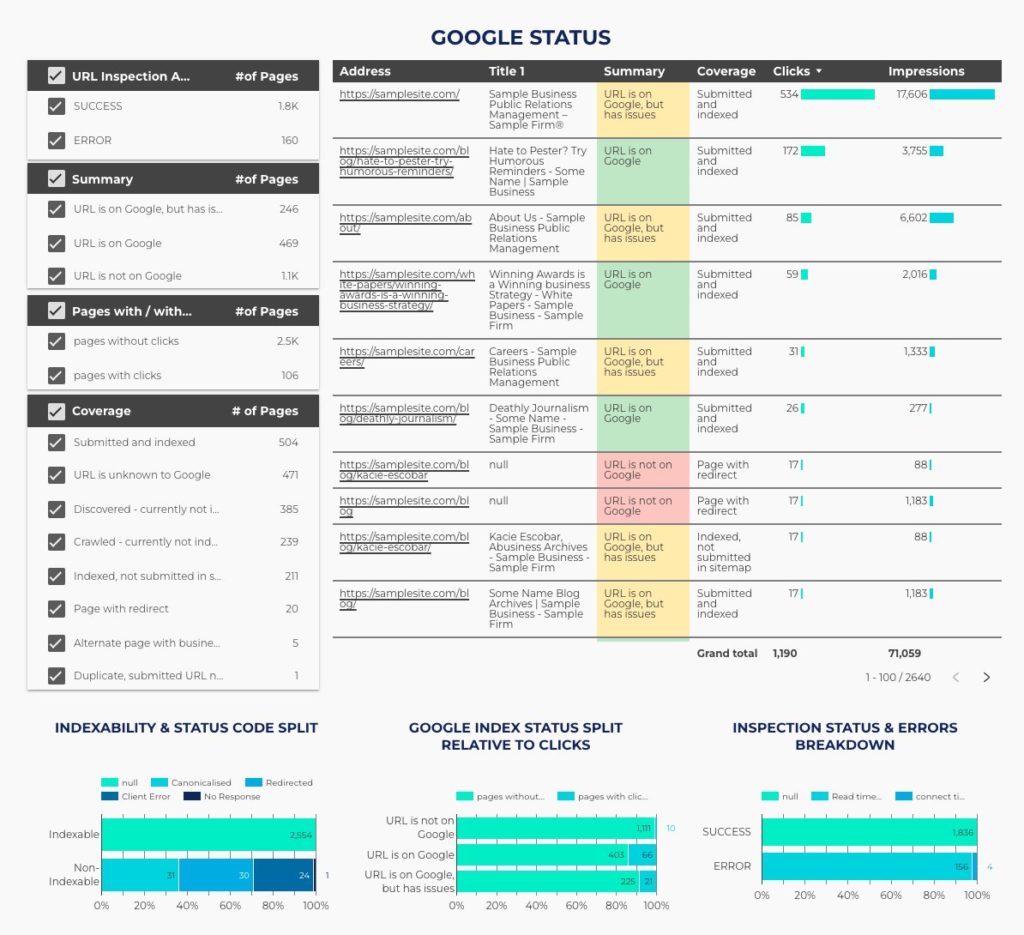
There is currently no tool that can submit a batch of URLs and check them regularly, but I believe it will be developed in the future!
link:SEL finishing
[News] SERP New Features - People Search Next
At the bottom of the mobile version of the Google search results page (SERP), a new module called "People Search Next" appears, located under the general search results and above "Related Searches".This feature has been confirmed by a Google spokesperson and is therefore not a general SERP functionality or appearance test.currently only appears in English search results in the United States.

It can be clearly seen from the above picture that the original search term is "family dentist near me". The recommended search terms in the "People Search Next" module are more likely to "guess" topics that the user may be interested in than "Related Searches". I believe that in the future, major SEO tools will also have the function of crawling the recommended words in this new module, so that SEOs can use this to come up with topics for content writing.
link:SEL report / new function demonstration video
[News] Web pages with good user experience may not have special SERP tags
on Google in November 2020officially announcedwill transform the user experience ( Whencore web vitals) is included as a ranking factor, the official announcement said that a label will appear on the SERP to mark web pages with good user experience.

wasFound by sharp-eyed netizens, but then nothing came to an end. It was not until John was asked this question in a recent Q&A that he replied that this thing has been talked about for a long time but has not been implemented. He thought it would not happen, but John did not dare to die. After all, the entire Google Search team is very large. If this label is proven to be beneficial to users in the future, he will not be surprised.
link:SER report
[Good article] Common SEO problems of e-commerce websites
There are several technically quite common SEO problems for e-commerce websites, such asfaceted navigation, products out of stock or discontinued, seasonal sales pages, etc.; also due to the commercial nature, the design of website information architecture, sparse content on category pages, duplicate content on product pages, etc., are all SEO challenges that have to be faced in the e-commerce industry.
This article talks about these common points quite completely. It also has links to articles that discuss it in more depth. It is recommended that you read it. You may also wish to ask yourself how you would deal with these situations while reading. I personally think these topics are very suitable for interview questions!

[Good article] Three linking techniques of black hat SEO
Of course, I don’t recommend everyone to touch black hat stuff, but occasionally it’s helpful to know these techniques, which can help you avoid becoming a victim. In this article, the author talks about 3 common black hat SEO methods.
The first one is a method commonly used by companies that specialize in selling external links, providing links from high domain authority (DA) domains. DA is an indicator that many people use to measure the value of external links, but this informal SEO indicator launched by Moz is very easy to manipulate. The following figure is an example,I can easily make a link from google.com to my website, if you do a few more and find ways to let crawlers (especially crawlers of third-party analysis tools) know, the DA of darrenhuang.com will increase accordingly.

The second and third tactics are "negative SEO" techniques. They create a large number of web pages that will almost certainly be punished, and then redirect them or put links pointing to the opponent's website. The opponent's website will be judged by Google to have problems and be hit. This will make it difficult for the opponent to analyze the source of their real external links.
The way to deal with negative SEO is to submit a disallow list. The author provides a bad domain list in the original article for everyone to download.
link:Original English text / disavow list
[Official] How Google Maps Reviews Work
Google published this article to give you a glimpse into the review and operation behind Google Maps reviews. It is difficult for this type of official public articles to have any information that is too secret, but the general direction is to rely on machine learning to scale up + manual review to provide training data to review millions of comments every day.
After pressing Submit, a review will first go through a round of machine review. If it passes, it will be posted within a few seconds. However, there will be other algorithms and human reviews later to ensure that there are no other abnormalities in the review. These abnormalities include but are not limited to: "A merchant has received a large number of one-star or five-star reviews in a short period of time", "Whether the merchant has been exposed on social media or in the news", "whether the reviews of the same merchant come from the same batch of accounts"...etc.
In addition, Google will also take further protective measures for upcoming events and locations (such as elections) to prevent comments from being abused.
Another potential reason why Google will publish this article is that the FTC (Fair Trade Commission) in the United States has suddenly taken a few swings at the review area. Some e-commerce websites have been criticized for only displaying positive reviews.was issued a huge fine, there are also someComment management website received warning。
link:official article / Google Maps User Generated Content Specifications
[Official] AI in Google Search
The author of this article is Pandu Nayak (VP of Google search department). He talks about how Google search went from exact text matching in the early days to laterTypo correctionmechanism, and now more complex AI algorithms continue to optimize search results. In the article, Pandu briefly discussed four of Google’s most representative AI systems in recent years.
- RankBrain - Launched in 2015, it is the first deep learning* system applied to search, allowing Google to connect text and concepts. For example: "what’s the title of the consumer at the highest level of a food chain"。
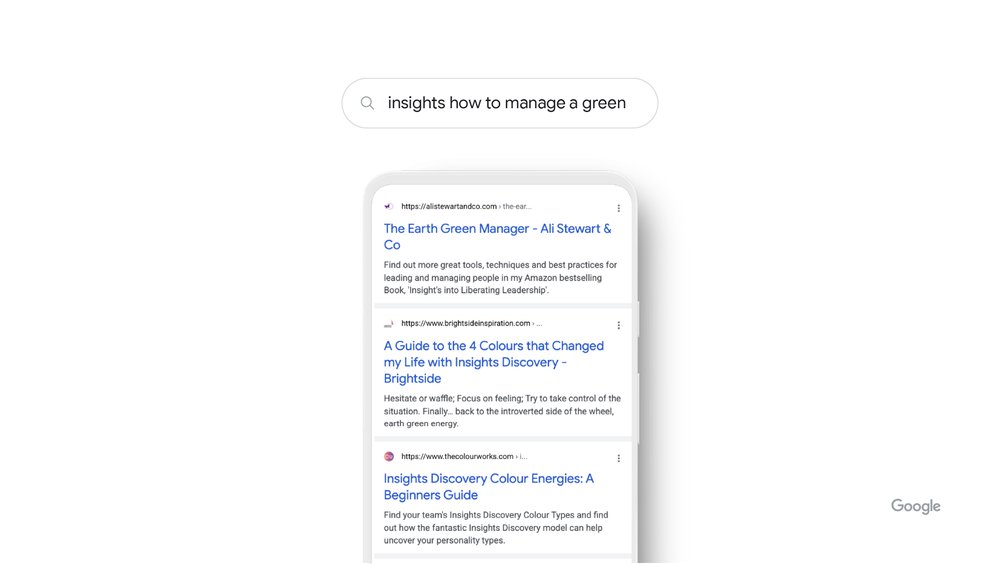
- Neural Matching- Launched in 2018, allows Google to understand the concept behind a vague search term or web page. For example: "insights how to manage a green"。
- BERT - Launched in 2019, it allows Google to learn that different combinations of words represent different meanings and intentions. For example: "can you get medicine for someone pharmacy "。
- MUM - Launched in 2021, allowing Google to understand the information behind it across languages and formats (ex: text, images),is different from the other three and has not yet been used to optimize search results.. For example: Facing a picture of a floral shirt, enter a text "Found socks with this pattern Search example for」。
*Note: In terms of technical complexity, Artificial Intelligence is the shallowest, followed by Machine Learning, and Deep Learning is the most profound.
[Abstract] Google Search Podcast – Designing a new search engine Steve
In this episode of the podcast, the trio discusses a hypothetical question. If a new search engine were to be designed today, how would they communicate with webmasters about how to improve website rankings. This is actually the usual job responsibilities of the three of them, they just use a fake search engine name Steve to prevent people from taking it too seriously. They believe that the purpose of search engines is very clear, but "external communication" is difficult because it can easily be misinterpreted or misunderstood.
For example, everyone will intuitively thinkhidden textis not good for SEO, but although the text hidden behind the tab is a reasonable usage situation, it is often misunderstood by the outside world as being harmful to SEO. Just like interpreting the letter of the law, Google's guidelines list things they do and don't want to see sites do, and they try to define them, but not everything is black and white and there are always gray areas that can be over-interpreted.
Another point is that most of Google's suggestions are best practices rather than guidelines, such as whether the web page is secure (HTTPS), whether the HTML is compliant, whether the image has alt text, etc. These are all bonus points, and they will not be completely excluded just because you do one less thing.
For exampleGoogle Guidestates that pictures should have alt text. Many people even put alt text on decorative pictures and add keywords, but this is not necessary and is not good for the website, readers, or search engines. (Digital Engine was also on FBDiscussionhas talked about similar topics)
link:verbatim draft
This issue and the next issue are public e-newsletters. If you like these contents, you are welcome to use them.Become a member with a minimum of $100 per month, receive two compilations of news and current affairs in the SEO industry every month!
Related reading
Bad Cloaking Experiment: Do search engines see the same content as users?
Save an SEO experiment summary about cloaking. The focus is not on imitating black hat techniques, but on understanding the experimental variables, traffic changes, and the causal relationships that cannot be over-interpreted.