It is still New Year's Eve in the United States when I publish this article. I wish you all a Happy New Year! This e-newsletter was sent out during the annual holiday, but Chrome DevTools at the sixth point and Archive.org at the eighth point both recommend doing it yourself. If you want to be lazy during the New Year, just wait until work starts and then read it carefully~
I will send another letter around the fifth day of the new year to talk about the digital engine transfer platform and how to renew. However, the next two issues are considered trial operations of the new platform, so as long as you receive this e-newsletter, you will automatically receive the next two, so you don’t have to worry about your membership suddenly expiring and being unsubscribed. Please support me in the new year!
- [News] SEMRush acquires Backlinko (Brian Dean Company)
- [News] New robots tag:
indexifembedded - [Discussion] Pages may not appear in both Top Story and general results
- [Discussion] SEO practices for website paywall content
- [Interesting Fact] Shopify page title added (1)
- [Good article] How to use Chrome DevTools to find website analytics issues
- [Tool] Check a large number of web pages to see if they are indexed (125 free URLs per month)
- [Tool] Download all inventory pages of a website at Archive.org
- [Video] Does changing the URL structure affect SEO?
- [Abstract] Google Search Podcast – Google Search Team’s Outlook for 2022
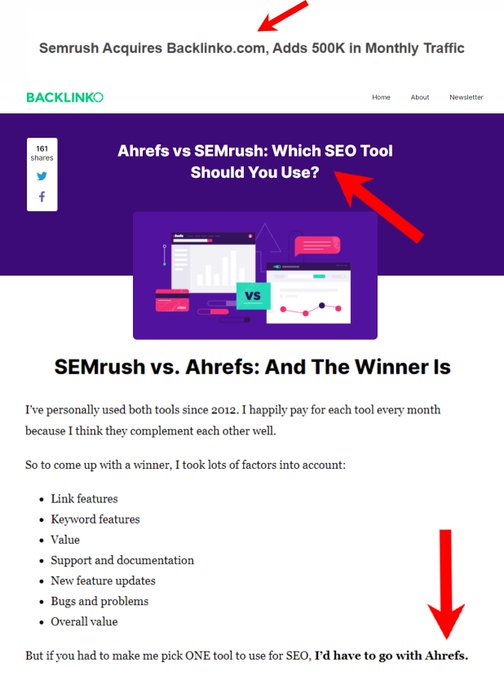
[News] SEMRush acquires Backlinko (Brian Dean Company)
This news may take a long time in the SEO circle to feel its shock. SEMRush is a well-known SEO analysis tool, and Backlinko.com or its founder Brian Dean provides knowledge-based content on SEO. If you have ever searched for SEO-related issues in English, it is difficult not to see backlinko's articles. In the announcement, it was stated that after the acquisition, Brian Dean and his team will continue to stay to help the growth of SEMRush Academy and the community.
I think one of the reasons why this news has aroused the topic is that Brian Dean is not a particularly respected person in the SEO circle. Similar to the situation of Neil Patel, many people think that they are just people who are good at marketing themselves; some people think that SEMRush acquires the content SEO if it cannot win, which fully reflects the capitalism supremacy of listed companies; another is that Backlinko used to be an impartial third-party reviewer of SEMRush vs Ahrefs, but then there may be no way not to say that the owner is the best.
link:SEMRush PR release
[News] New robots tag:indexifembedded
Google will support a new tag starting in January 2022:indexifembedded, this parameter can be used in meta robots tag or X-Robots-Tag. New tags allow a file to benoindexYou can get additional control when you use it. In other words, when a file (whether text, image, or PDF...) has the following instructions, the file itself will not be indexed, but if it is "embedded" on other web pages (such asiframe), the above content will be indexed.
// HTML <meta name="googlebot" content="noindex,indexifembedded" />// HTTP Header X-Robots-Tag: googlebot:noindex,indexifembedded
A few years ago, there was a case where a website replaced all images with Instagram. As a result, it lost a lot of image search traffic. The reason was that IG placed all the imported resources.noimageindexlabel. Therefore, if you want to insert resources later, you might as well check whether there is a noindex tag in it.
Twitter/X Post
View original post on Twitter/X
link:Official documentation / Screaming Frog test details / SEL reports
[Discussion] Pages may not appear in both Top Story and general results
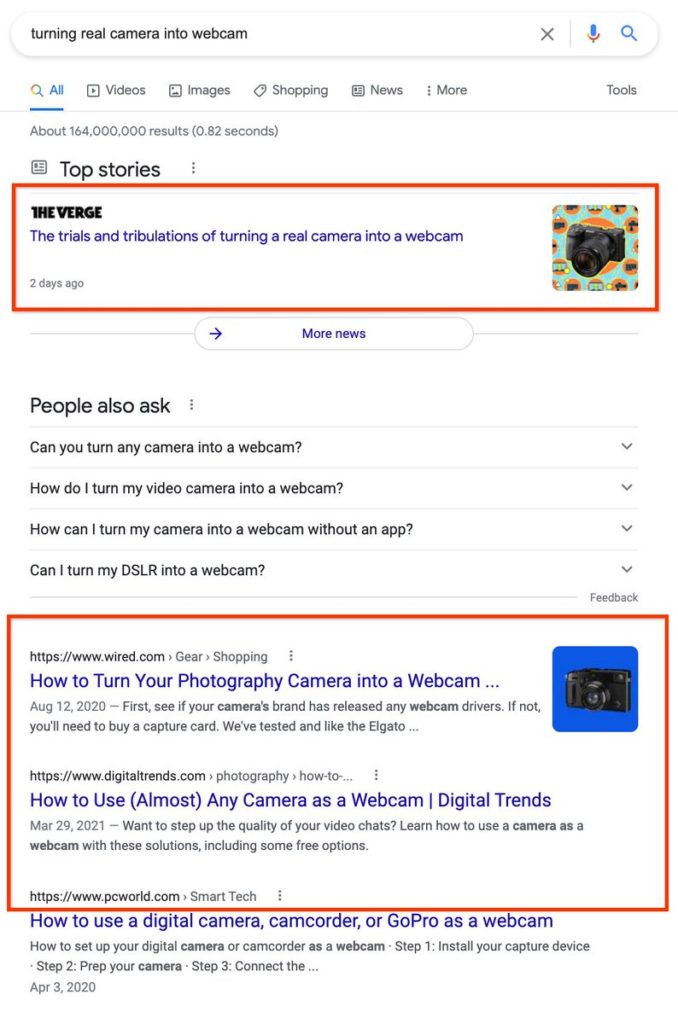
A well-known magazine editor (The Verge) asked on Twitter why he did not see his website when he searched for the article title. Instead, the results came from websites that retweeted his content. Although this is a common question, it has caused a lot of discussion, on the one hand because of the editor's reputation, and on the other hand because Danny Sullivan was fished out to give an official response
Twitter/X Post
View original post on Twitter/X
How to prevent content plagiarists or cooperative authorized websites from being judged as original content?Another topic. The interesting thing is that Danny thinks this screenshot is incomplete, and his answer contains information that I didn't know originally.That is, when the two conditions of "when a webpage is the first result of Top Stories" and "Top Stories appear before the general results" are met, the webpage will not appear repeatedly in the general results. (Original English words)
link:Twitter thread with Danny’s response
[Discussion] SEO practices for website paywall content
Nowadays, many news or content websites place articles behind paywalls or subscription walls. However, how do we enable search engines to crawl and include the complete content so that ordinary users must pay (or register) to see the articles, while avoiding being judged as "cloaking"? Many SEO personnel do not know the details.
Most recentTwitter threaddiscusses current general industry practices, as wellSuggested by Google
The method ofis highly recommended for everyone to read. To put it simply, the server determines whether the request comes from a search engine or a real person, returns different files, and uses them in the structured data part.isAccessibleForFreeattribute to tell which part is paywall content; in addition, you can addnoarchivemeta robots tag prevents content from being stored in cache.
Finally, a little trick is that ordinary users can usestructured data testing toolis used to run web pages with paywalls. Since the tool’s request comes from a search engine, there is a high chance that you can see blocked content in the source code of its results!

[Interesting Fact] Shopify page title is added (1)
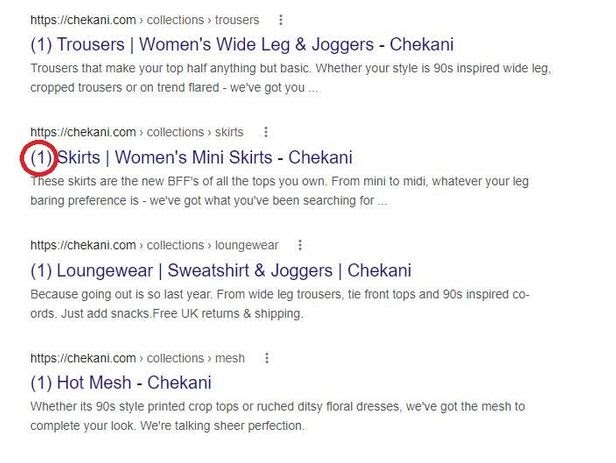
An interesting case happened a while ago. A large number of Shopify webpage titles were preceded by a(1), after some digging, I found out that it was a chatbot on the webpage. When the webpage was loading, a message would pop up to say hello, and (1) meant that there was a new message.
It is very common for scripts on web pages to rewrite titles. If you have ever visited a phishing website, you should have seen the title of the web page flashing around at the top of the browser to attract attention. But this time it was a small tragedy because the chatbot triggered the title rewriting script when the web page was loaded (rather than after some interaction), and did not determine whether the other party was a search engine or a user.
link:SER report / John responded / Forum Announcement
[Good article] How to use Chrome DevTools to find website analysis issues
This guide is written by Simo Ahava. I believe you have heard of his name or read his articles if you have contact with Google Analytics. This article talks about how to use the built-in developer tools of the browser to determine whether a certain code is successfully triggered, and how to use the built-in functions to profile the website.
Chrome DevTools ranks among the top three tools I recommend learning in terms of SEO or website analysis. Because its data source is directly from the browser itself, it is more worthy of reference than any plug-in or plug-in. It is recommended that readers who are not familiar with this tool can find time to read it carefully and follow the operation.

Some of the things you can do with Chrome DevTools include:
- deliberately limits the loading speed of web pages (you can see the loading experience of the website under slow network speeds and the order in which tags are triggered)
- Know the code behind the components on each web page, change or delete them,
- See exactly every event sent to the GA server, and the details inside
- Add a breakpoint to the resource to allow the browser to stop at the specified location when executing the file (can be used to determine where the problematic code occurs)
- Use Local Override to determine the loading status of a web page when a resource has been overwritten
link:Simo Ahava Articles / Test site speed changes using Local Overrides
[Tool] Check a large number of web pages to see if they are indexed (125 free URLs per month)
This tool allows you to upload a large number of URLs at once and instantly check whether each URL is included in Google. The way to check is to search the URL as a keyword on Google and see if the page appears in the top 20 results. You must apply for the API Key of the Value SERP tool. In addition, the free version has a quota of 125 times per month.
I personally tested it and found it very convenient. There is no need to tie a credit card to register an account. You can see the results in about one minute after running 30 URLs. The whole process can be completed in less than 10 minutes. I recommend that you try running it again and see.

[Tool] Download all inventory pages of a website at Archive.org
This tool is made by the same developer as the previous one. It does not require any API. Just enter a domain, start and end dates, and the tool will download the known page archives of the domain from Archive.org. It is very practical!
Archive.orgWayback MachineThis tool allows you to see what a web page looked like in the past. When doing SEO testing, it can be used to see the evolution and past appearance of your own website or your opponent's website.

Which web pages are included in the inventory are mainly determined by the site's robots, but everyone can also submit them on their own initiative.introduceAnother Python script is able to submit pages in bulk at once. A screen for regularly storing a large number of web pages, and a screen for quickly pulling out all past web page archives of the website, the two go very well together!
link:Digital engine introduction wayback machine
[Video] Does changing the URL structure affect SEO?
The theme of this film is relatively basic, but it has many important concepts. Google's index database is a very large database based on URLs. Therefore, whenever the URL is changed (as large as changing the domain, as small as removing the slash at the end of the URL), the original data must be transferred to the new URL.
Several suggestions include: (1.) Do your homework; (2.) Create a comparison table (URL Mapping) of the old and new web pages; (3.) Execute - use 301 redirects, update links, sitemaps, structured data on the website, etc.; (4.) Monitor the transfer process. Usually important web pages will be processed faster, but it may take more than a few months to fully reflect.
link:Related documents
[Abstract] Google Search Podcast – Google Search Team’s Outlook for 2022
followPrevious episodeAfter discussing the review of 2021, the trio discussed some prospects for Google search in 2022. After listening to it, I personally felt that there was not much worth taking notes (even a bit boring), so there is no need to click on it to listen.
Gary mentioned that sustainability is a hot topic recently. Googlebot does have a lot of room for improvement in refresh crawl (re-crawling known web pages to know that the content above has not changed). Although the sitemap haslast_modifiedThis parameter, but how much the content on the web page needs to change is not clearly defined. In addition, although Bing and Yandex jointly launchedIndexNow protocol, but this still doesn't prevent unnecessary crawling. All three people agreed that many SEO personnel mistakenly believe that the frequency of crawling is related to ranking, but in fact the two are controlled by completely different mechanisms. Google cares about sustainability, but it also cares about having a truly effective solution.
In addition, there have been many Google searches since the end of last yearOutage news, whether it is crawling or indexing, it is not that its system is becoming more and more unreliable, but that they have internally decided to make such information as public as possible, so even though it is only a bug with a small impact, Google will now choose to actively let everyone know.
link:verbatim
This is the seventh year that I have celebrated New Year in the United States...
Related reading
Trailing slashes and duplicate content: What really needs to be unified is the entire URL signal
Organizes the differences between URL trailing slashes, HTTP/HTTPS, www and non-www versions, and explains that canonical, redirects, internal links, and sitemaps should all point to the same version.