Since I took a leave of absence in mid-May, the content of this issue is more concise and selects the SEO news that I think is important throughout May. The amount of text and information is also the largest in history. If you are interested in Python, you can read the third point carefully. There is a very simple and practical application. My personal favorite part is the last two episodes of podcasts. It is very interesting to see the complexity of search and the difficulties of Google in external communication. It is very interesting from the perspective of an information receiver!
- GSC remove Scroll-to-text link report
- SEO Tools Big Update
- [Python] Mass storage of web page snapshots
- Technical SEO Beginner’s Guide
- Screaming Frog analyzes internal link "location"
- [Report] 2021 Link Building Survey
- Place animated images (GIFs) on my business profile
- [Abstract] Google I/O 2021
- [Abstract] Google Search Podcast – If speed was a ranking factor
- [Abstract] Google Search Podcast – Search word processing and understanding
GSC remove Scroll-to-text link report
inIssue 2andIssue 10’s newsletter has introduced the scroll-to-text function.

Originally, the complete URL would be recorded in GSC, including this type of link.#:~:text=part allows webmasters to view it through GSCto see which pages appear in featured snippets and what search terms were used when this occurred, but it has been observed that Google stopped this feature starting in early May.
Twitter/X Post
View original post on Twitter/X
The web page (page) that appears in Search Console can theoretically only be a canonical URL, so John Mueller has previouslymentioned, the scroll-to-text situation, and the situation where the web page contains fragment (#) should not be recorded in GSC. But it is very practical to know which words appear on your webpage in the featured excerpts. It is recommended that you go to GSC to check the historical data.
link:SER report
SEO Tools Big Update
bySam Underwoodhas compiled a comprehensive collection of SEO tools, both free and paid, with a total of more than 200, which continues to increase, and has a fairly well-organized classification mechanism.
I must say that I have never used most of the tools in it, and the functions of these tools are somewhat repetitive. I don’t think you need to know every tool, but you can use this website to review the tools you are familiar with to see if there are better alternatives, or explore some unfamiliar tools to meet your work needs.

link:SEO Toolbelt
[Python] Mass storage of web page snapshots
Wayback MachineThis tool should be used by many people, if not, it allows you to see what a web page looked like in the past. When doing SEO testing, it is very practical whether you want to look at the evolution and changes of your own website or your opponent's website.

I recently saw an article that allows you to simply "snapshot" a web page through Python and put it on the Wayback Machine, so that you have something to use as a reference in the future. Below is a simple example. You can see that the code is less than 10 lines (the execution time is about one minute). If you don’t know Python at all, you can copy a file and play with it. Maybe you will be interested in Python.

There are some more cool extensions in the article, such as taking snapshots of several web pages at once, combining XML Sitemap, regular snapshots, etc. If you think it is useful for your own website, you are welcome to practice it. But I want to remind everyone thatInternet Archive is a non-profit organization. We hope that everyone will use it sparingly and not make unnecessary caches that will cause the other party's server to load quickly~This is why the script above only gives a web page snapshot. It is not difficult to achieve scale. You are also welcome to discuss it on Slack!
link:Google Colab Example / complete teaching text
Technical SEO Beginner’s Guide
I haven’t read this kind of novice article for a long time, but this article is from a senior I admire very much.Patrix Stoxwrote it, so I read it as a self-examination. There are no difficult parts in the content, and it provides a comprehensive overview of what technical SEO is doing.
If you don’t often come into contact with technical SEO, or you are learning SEO, I highly recommend using this article as your introduction. You will learn the basics of technical SEO, understand the principles of search engines, several quick health checks, recommended tools, and a lot of extended reading!
link:Ahrefs Articles
Screaming Frog analyzes internal link "location"
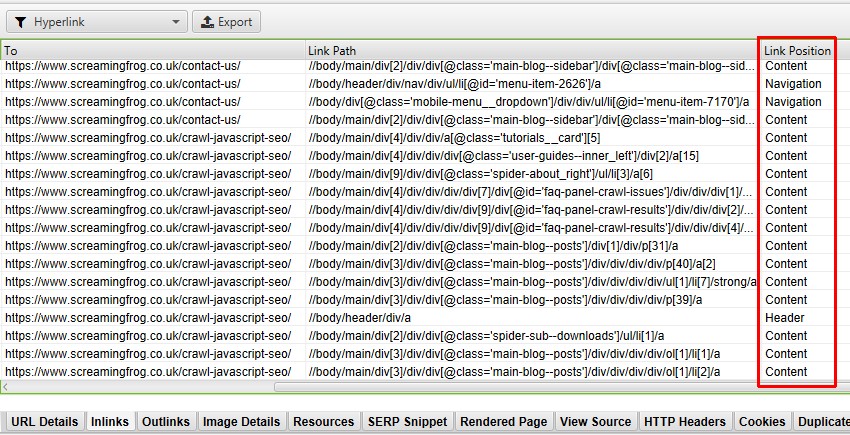
Internal links are an integral part of analyzing the health of a website. But not every link has the same value. For Google, links in the main content of a web page are more important than links that appear on every page on Footer. Therefore, knowing the "location" of the link will give you a better insight into whether there is room for improvement in internal links.
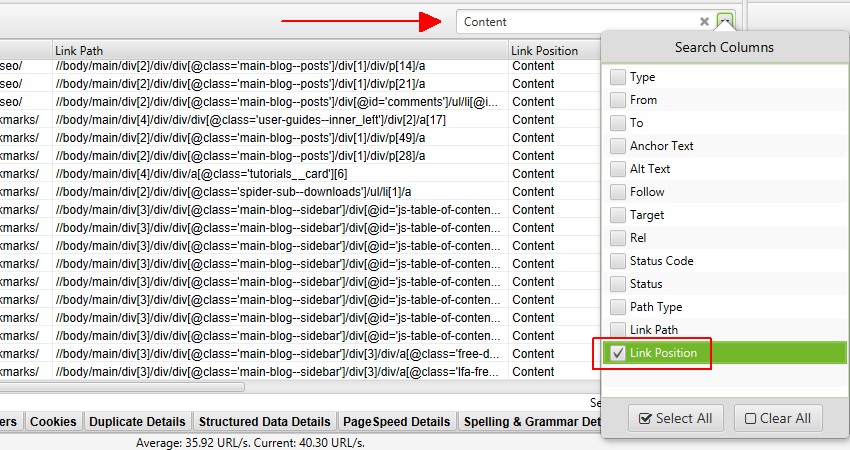
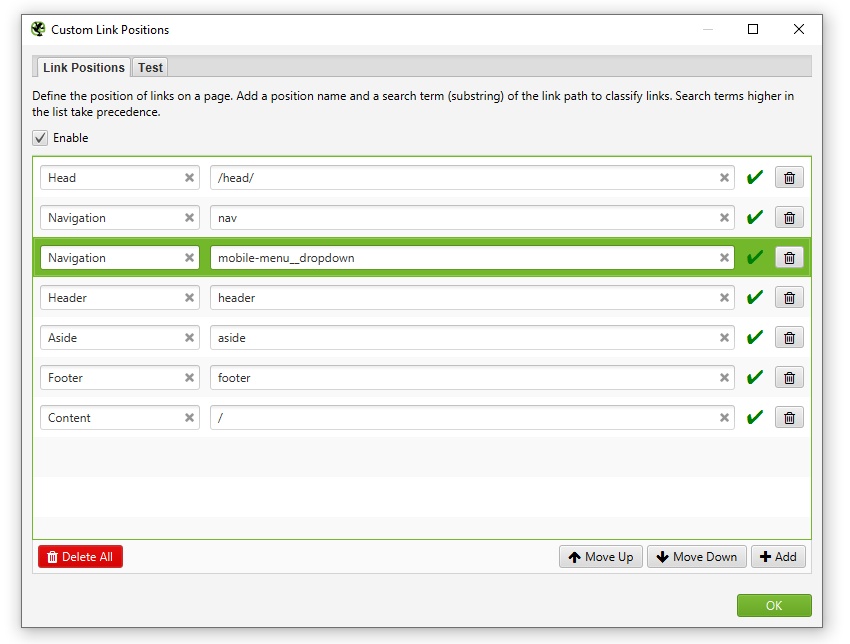
I feel enlightened after reading this article. I used to burn my brain for several days to do such an analysis, but I didn’t know that it can be easily done on Screaming Frog! This article will teach you (1.) why the link position is important, (2.) how to see the link position, (3.) how to filter based on the link position, and (4.) how to customize the "position" of the link.
[Report] 2021 Link Building Survey
I originally thought it was a watery survey to attract traffic, but after reading it carefully, I found that the content is quite good. You can see the thoughts of most SEO people, as well as the opinions of some experts. Here are some data from the report. It is quite interesting and I recommend everyone to read it.
- The most popular link building method is to produce articles that make people want to connect (76%), followed by competitor analysis (54%)
- The most used and trusted tool is Ahrefs
- 53% of people have used disavow file
- The most commonly used indicator is Ahrefs’ DR, with Moz’s DA ranking second. Interestingly, Moz staff said they usually recommend people use PA instead of DA
- 61% responded that even if the link is nofollow, they will include it in the pursuit of the goal
- 74% believe that unlinked brand mentions also affect rankings
- 1~10 points, 62% of people believe that the influence of link building is greater than or equal to 8 points
- 51% of people expect to see changes in fame and traffic brought about by link building in 1 to 3 months
- 89% of people produce content to have links
link:The State of Link Building Report 2021
Place animated images (GIFs) on my business profile
Practical tips shared by Whitespark. First of all, product is a field that can enrich local merchant files. Even though it provides services rather than goods, you can also make good use of this area. The picture below is a comparison of the area with and without products.
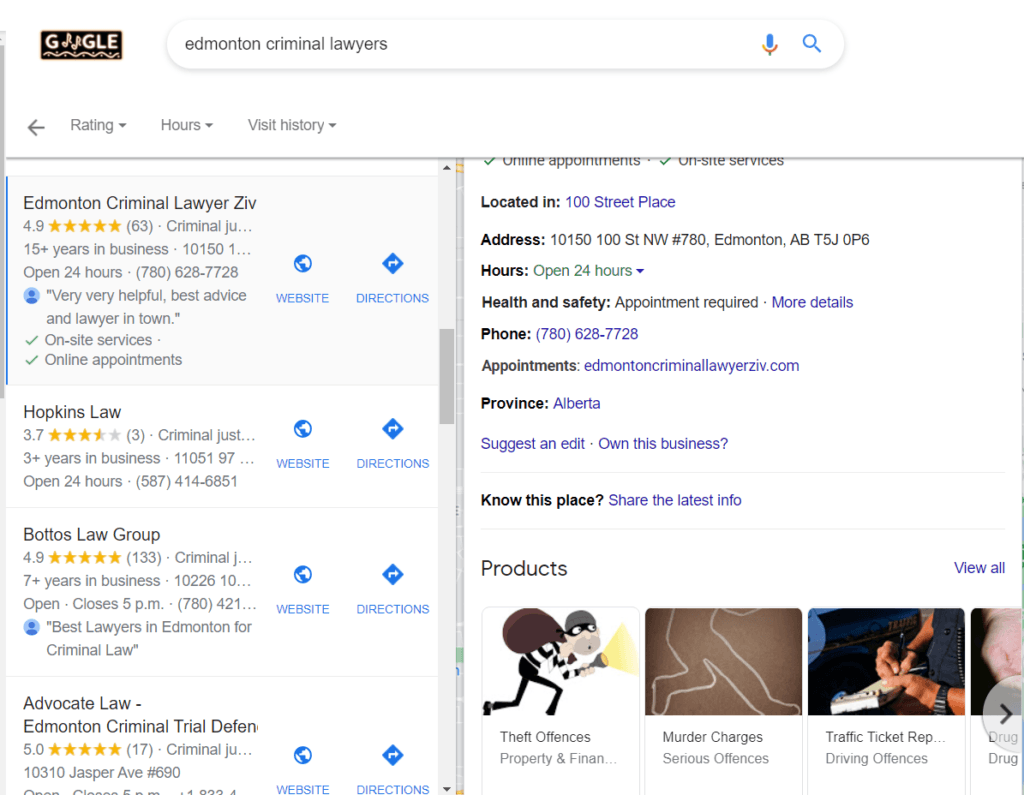
has products 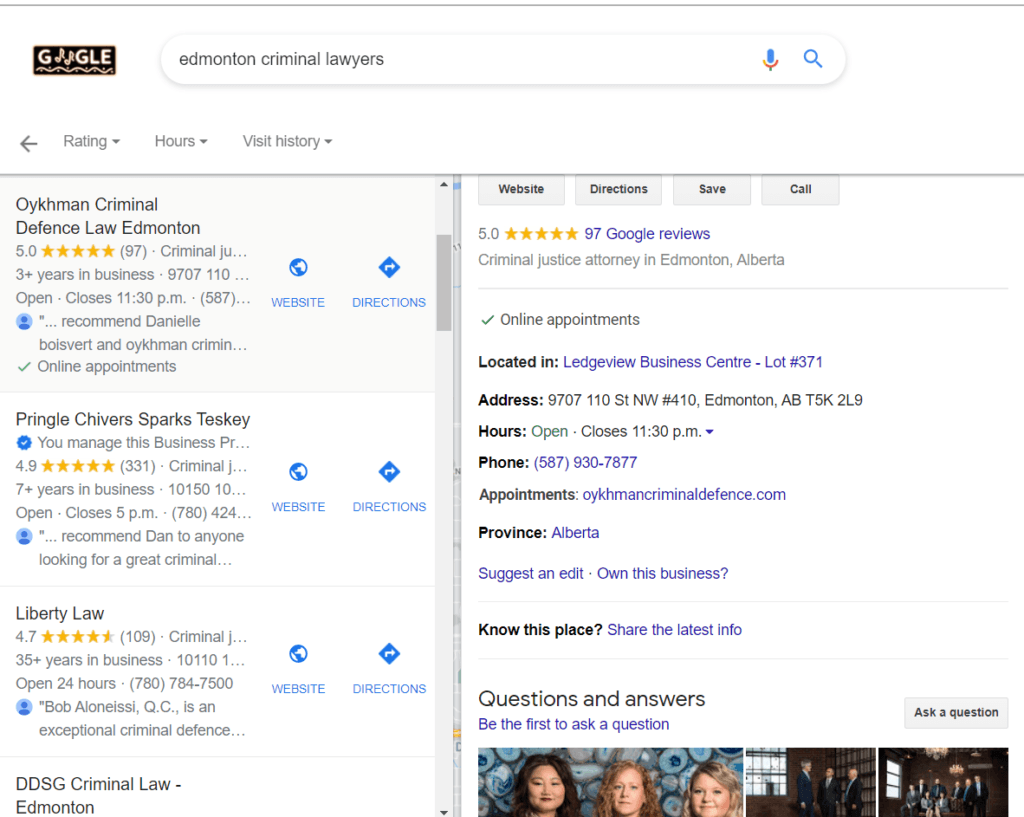
No product


But another more advanced technique is to place dynamic images (GIF) in the display image of the product area to make the merchant profile more prominent. GIF files are not actually accepted for product images, but this restriction can be bypassed by manually editing the file name! Note that this is not an officially recognized method, so it may become invalid later.
link:Explanatory Article / Local Merchant Product Editor
[Abstract] Google I/O 2021
Google I/O is Google's annual event, which promotes some of its progress and optimization in technology and products, many of which focus on search and SEO practices. Instagram has@seo_pbis an easy-to-read version with pictures and texts. It is recommended to go and read it. I will briefly share the text summary below.

1. Page Experience (PX)
- PX contains four major projects - Loading, Security & Privacy, User Annoyance, Accessibility
- PX will affect the ranking of the desktop version
- Use signed exchange to let Google pre-crawl web pages
- AMP is no longer a requirement to appear in top stories, andAMP’s lightning tag will be removed


2. Machine Learning Milestone - MUM (Multitask Unified Model)
MUM is Google’s new milestone in machine learning, known asBERTis 1000 times stronger. Digital Engine has a little presence on Facebook Introduction toIts characteristics are that it can help a question find (1.) more complex and relevant answers, (2.) cross-language information, (3.) cross-type (text, video, picture) information.
MUM has not yet been implemented on Google search, Danny on Twittermentioned Let everyone know whenis launched.
3. Create Shopping Graph
In the computer field, Graph is a relational data storage structure. Similar to the Knowledge Graph (Knowledge Graph) is used to understand the relationship between each "thing", the Shopping Graph is used to understand the real-time information and relationships of products (inventory, seller, price, brand, evaluation...etc.).
Google relies on its own crawlers, cooperation with companies such as Shopify, and structured data provided by the website to collect a huge amount of data and build its own set of Shopping Graph. In the past few issues, we have introduced Google’s work in the field of shopping.Progress and ambitionhas the same goal as the shopping graph specially introduced at Google I/O this time.
4. Smart Canvas makes your collaboration easier
This has nothing to do with SEO, but it is my favorite highlight of this Google I/O! I won’t introduce much, let the following video introduce everything~
link:TechCrunch report / Google Workspace update Introduction to / MUM Introduction to / Shopping Graph / SEO Takeaways from Google I/O / official summary
[Abstract] Google Search Podcast – If speed was a ranking factor
This episode discusses whether website speed is a profound ranking factor. Some people think it won’t, so they leave it alone; some people think it does, so they optimize every second; some people think it has a significant impact on UX, so they should be strengthened regardless of the ranking.What about from Google’s perspective? How should speed be positioned?
Gary mentioned that changes to Google’s ranking algorithm are divided into two categories:
1. Fix systemic issues (ex: fake news)
For example, if you want to combat fake news and lower the ranking of less authoritative media sources, such an experiment will actually have negative indicators during testing, because these web pages often use exaggerated or even false titles that are more attractive (users want to see it, but the ranking is low).
2. Minor fixes and optimizations (ex: HTTPS)
The other is an optimization with a relatively small impact, such as HTTPS. Now it is just a "tiebraker" indicator. It will only be used to determine the winner when other aspects of performance are the same, because Google does not want to sacrifice quality, relevance... and other more important things because of HTTPS, and this situation happens more often than you think. Google gives each ranking factor an impact score, and then adjusts it upward or downward based on the experimental results to determine its impact on the overall search results. In the case of HTTPS, they revised its impact score down 4 to 5 times.
Martin then said that in addition to ranking, speed will also have (1.)crawling, the impact of indexing, the speed of the website will affect the latter two, which is the so-calledcrawl budget; (2.) In addition, what is "speed"? The website loads quickly but there is no way to interact, which is not a good experience, that is The origin ofCore Web Vitals; and (3.) How to measure speed? Is it based on the speed seen by the search engine or the user's experience speed?; and finally (4.) Is it possible that the speed indicator can be manipulated to make an automatic robot visit the opponent's website at 2G speed?
The above discussion clearly shows that the speed indicator is clearly good or bad in terms of ranking positioning. Finally, John raised another question. Based on the above reasons, how should they communicate with the SEO community, how should they speak correctly, how can they be of substantial help, and how can they avoid being attacked by spammers?
This episode largely reflects their usual difficulties in external communication. Although the topic feels serious, the three of them are actually quite relaxed and happy when speaking. They also emphasize that they are all their own "personal" opinions. I recommend everyone to listen to it when you have time. It will not be too difficult to practice English listening with the above summary. There is also a scene where Gary sings XD
link:verbatim draft
[Abstract] Google Search Podcast – Search word processing and understanding
Gary talked about it in previous episodes.indexingandserving, this episode is going to discuss another part of serving (ranking as most people know it): query parsing and query understanding.
Search word processing (Query Parsing)
First, Google must first convert the words (query) entered by the user into something that the indexing system can understand. This thing is called a "parsed query". The concept sounds simple, but it is actually very complicated. The simple part is to identify synonyms and determine the entity; but in other languages, this process will become very complicated. For example, there are no spaces between each "word" in Chinese, while Thai has almost no punctuation between sentences. For this type of language, there is a "Segmentor" in the system that specifically divides the query entered by the user into multiple "words".
Search word understanding (Query Understanding)
The next step is to understand the meaning of each word and expand it into more synonyms (synonyms), but at the same time avoid the emergence of non-synonyms (anti-synonyms). Another important point is stop words, such as a, the, of, and this in English. Most of the time these words have no meaning, but in some cases, such as when searching for "The Lord of the Rings", they are indispensable.
Query Understanding also has many details, such as understanding the user's search intent. A person who searches for "The Rock" in the United States is looking for Dwayne "The Rock" Johnson, but a person who searches for "The Rock" elsewhere may be at a certain attraction.
There is another thing called diacritical expansion. For example, John Mueller's name can also be written as John Müller, in some languages, a word can be written in multiple ways, and their variations are basically treated as synonyms.
The last and most important point is that in the understanding stage, each synonym will be added with a score (weight), depending on how confident Google is that the synonym is similar to the entered word, so the results you see when searching for a certain word and searching for its synonyms will not be exactly the same.
link:verbatim draft
Should you see results in Simplified Chinese when searching for Traditional Chinese (or vice versa)? With the concept of search word understanding, everyone can rethink this issue!