Hope everyone had a great long weekend! This issue of the newsletter has more informational parts, including CWV updates, 2020 web spam report, PageSpeed Insights tool updates... and so on. Although there are not many implementation parts, the "How to use Python to master the Title/Description of the website on the SERP" shared this time is very practical. Even if you don't know how to write code, you can still do it step by step. I recommend it to everyone!
- Official announcement: Core Web Vitals update delayed to mid-June
- 22 SEO elements for e-commerce product pages
- GSC will allow users to report indexing issues (US Only)
- Google 2020 Webspam Report
- iProspect Statistics: CWV scores by industry
- PageSpeed Insights minor upgrade
- [Tool] Master the title and description of the website on the SERP
- [Official article] Why does Google remove web pages from search results?
- [Video] SEO Current Situation Analysis from Internet Yearbook Report
- [Video] How does Google Search Console record rankings?
Official announcement: Core Web Vitals update delayed to mid-June
Google issued an official announcement stating that the Core Web Vitals update that many people have been waiting for will be changed from the original May date towill be gradually launched in mid-June and is expected to be completed by the end of August this year.. Regarding CWVs, it has been introduced many times since the announcement. If you are still confused about this, you can refer to it. Articles written before by, and the ones mentioned aboveOfficial Q&A。
In addition, a new "Webpage Experience" report has been added to GSC, including all webpage experience scores except CWVs. Regarding the above scores, you can refer to this newofficial document。

22 SEO elements for e-commerce product pages
The 22 elements of e-commerce product pages shared by foreign netizen Paddy Moogan. Although the things mentioned are commonly known common sense, putting them together and attaching wireframes is a good reference.
Wireframe is an important step when designing a web page. After working in inhouse, I feel that this way of presentation greatly helps communication efficiency compared to listing things that should be on the web page in a list. I recommend it to everyone. inThe 20th E-Newsletter Similar sharing has been introduced in. Welcome to refer to it for more!

link:Original text
GSC will allow users to report indexing issues (US Only)
Google will allow users to report web indexing issues through GSC or throughthis form. The announcement states that it is only open to users in the United States. It is not sure whether other countries can open the form or apply it.
Twitter/X Post
View original post on Twitter/X
"The webpage is not indexed" and "the webpage is not ranked" are two different things. I have encountered situations that are called "not indexed", but almost all of them are actually not ranked; or there is an error in the webpage itself, and the GSCweb page detection toolcan identify most of the errors. I personally think that there are not many opportunities for the reward mechanism launched this time to really come in handy.
Google 2020 Webspam Report
Google recently released its annual webspam report, telling everyone about some of their progress in combating spam. An incredible number is that they find 40 billion spam web pages every day! The report talks about their simple process -First of all, Google will have a system in the crawling stage to prevent spam content from being included; if spam content is accidentally included, the ranking mechanism will also prevent them from being ranked at the top of the search results, and use this information to optimize the machine learning model in the crawling phase; and finally, manual review.
In addition to spam content, starting in 2020, Google has also expanded its crackdown on other types of harmful content, including fraud, slander, etc., including the recent"Product Reviews" update。
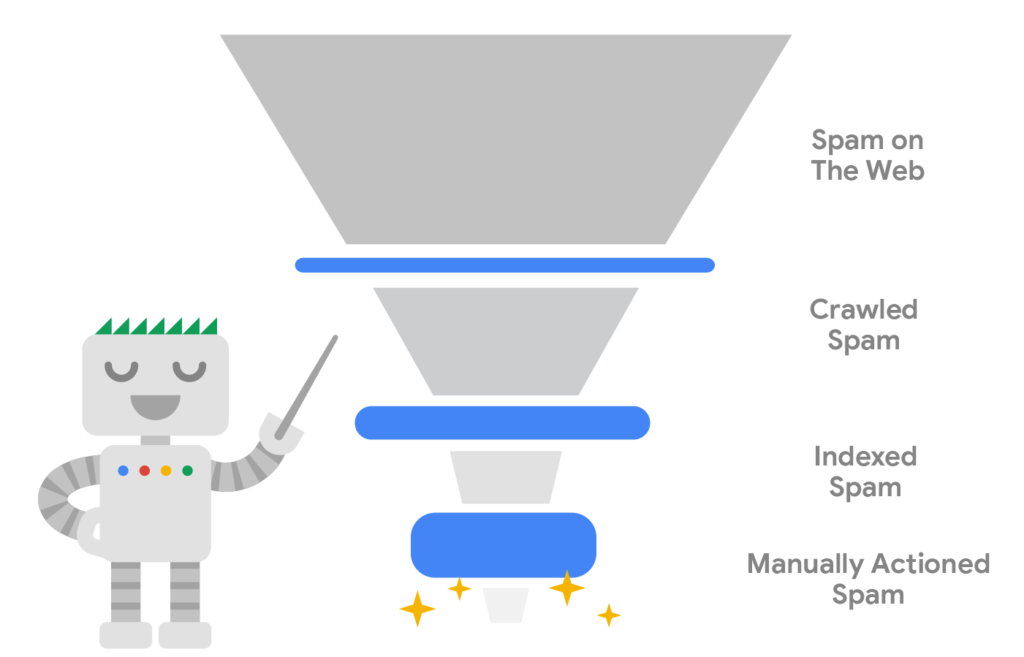
Google produces such a report every year. Digital Engine has also introduced reports in the past few years. Welcome to read!
link:2020 report
iProspect Statistics: CWV scores by industry
iProspect, a subsidiary of Dentsu Group, made this statistics. It took the top 100 traffic websites in 15 industries in the UK, a total of 1,500 websites, and analyzed theirCore Web Vitals Score。
According to this analysis, overall only 20% of websites meet the "good" standard. Among them, government websites have the highest average score, and fashion websites have the lowest score. It seems that the general website is not ready for this update.

link:iProspect Report
PageSpeed Insights minor upgrade
PageSpeed Insights Toolhas a very practical upgrade. Now you can directly see in the detection results which objects cause the web page section shift (CLS), and which component's loading time the LCP is based on! When communicating with engineers, you can tell more accurately which tag caused the problem!
Twitter/X Post
View original post on Twitter/X
[Tool] Master the title and description of the website on the SERP
by netizen The free Python script shared by@LeeFootSEOcan crawl out by connecting the two APIs of Google Search Console and Custom Search Engine.The top 100 search words that bring traffic to the website. In the search results, whether the title and description given by Google for the web page are consistent with what you have set., the output is as follows:
Twitter/X Post
View original post on Twitter/X
This tool is very useful. If there is any discrepancy, you can try to ask whether the title/description you provided satisfies the search intent behind the keyword.
The author shared the code for free in OnGoogle Colab, it’s not difficult to make it. There areSimple teaching, there is also aYouTube videostakes you step by step and I highly recommend you to try it out.
[Official article] Why does Google remove web pages from search results?
Danny Sullivan is atthis articleexplains a problem that most people rarely encounter and don't want to encounter: "How to get a webpage to be removed from Google?", which is generally divided into three situations.
1. Legal factors (ex: copyright, legality)
Google is not a law enforcement agency, and laws vary from region to region. Therefore, disputes such as copyright, original content, etc. need to be adjudicated by law enforcement agencies and notified to Google to remove the content. Rather than complaining, Google will investigate, unless it is an obvious violation of the law such as child pornography or drugs.

2. Personal appeal
Although Google does not take the initiative to accept things that require legal rulings, if personal confidential information is leaked, for example, a large number of villagers dig out someone's ID card number, contact information, and medical records and put them online, you can still file a complaintGoogle complaintrequested removal. However, if it is a negative review of the business or content that is suspected of defamation, it may not be accepted.
3. Scale
To be able to handle massive complaints, it is necessary to establish a scalable and automated mechanism. Google will use complaints to optimize its quality control system. For example, if a website has a large number of copyright violation notices, Google will use this as a quality signal to adjust the anonymity and exposure of the website in search results.
link:official article
[Video] SEO Current Situation Analysis from Internet Yearbook Report
Web Almanac(Internet Yearbook) is a report produced every year by the organization HTTP Archive. This year is the second year. This video features Aleyda Solis describing some of the findings in the SEO chapter, such as...
- 99% of web pages use title tags, the median is six words, 38 characters (last year it was only 20 characters!)
- Only about 68% of web pages have meta description
- is used in about 28~30% of web pages
rel=nofollowis on the link, butrel=ugcand The usage rate ofrel=sponsoredis only around 0.3% - HTTPS usage has reached 73~77%, 10% higher than last year
- Less than 1% of web pages use AMP
The above is only a small part. In addition to SEO, this Internet Yearbook report contains CSS, JavaScript, SEO, Performance, CMS, Ecommerce... a total of 22 chapters. There are also some interesting information in other chapters, such asCMSand In the chapter ofEcommerce, you can see what the most common content or e-commerce platforms are now, the average CWV score of each, the usage rate of AMP... etc. It is recommended that you check it out when you have time.
[Video] How does Google Search Console record rankings?
How are rankings recorded in GSC - is it the value seen by actual users, or is it a theoretical ranking? If the same website appears more than once in the search results, how is it calculated? John Muller gives the answer in this video.
The answers to the above two questions are "actual value" and "takes the highest ranking". The ranking is calculated inofficial document There is a very detailed explanation in. Some interesting questions include "How to record the exposure of a webpage that appears in People Also Ask?", "How to record the ranking of a webpage that appears in the carousel?"... etc. You can find the answers. I recommend everyone to read it!
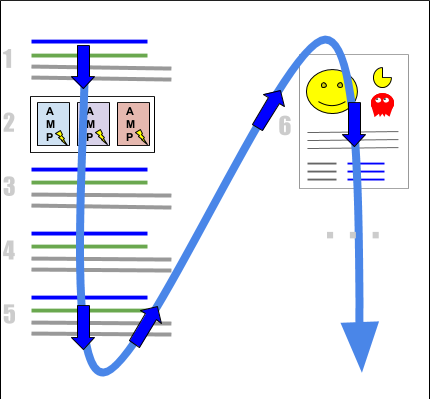
A friend informed me about an official e-newsletter published by Google Taiwan, which compiles a summary of Google Search related updates. Welcome.Go to register! If you have noticed any interesting news, please share it with me~~