There are some contents in this issue of the newsletter that I quite like. The third point of Local Overrides feels like I have learned a trick; the fourth point of Rand’s article I nodded in agreement while reading it, and the last point is also very interesting, although the case of the disappearance of brand word rankings of adult websites is also very interesting, although it should be very troublesome if encountered in practice. The following is the content of this issue, Enjoy!
- PageSpeed Insights Get started with HTTP/2
- YouTube SEO Guide
- Test site speed changes using Local Overrides
- The Content Marketing Paradox by Rand Fishkin
- Case: Yahoo! Japan news optimization CLS increases the number of pages in a single session by 15%
- Test: Removing numbers from title reduced organic traffic by 16%
- Grow with Google course officially launched
- Interesting case: Adult websites disappear from rankings on brand terms
- Official Video: Search Budget and Search Statistics Report
- Official Video: User-Generated Content
PageSpeed Insights Get started with HTTP/2
PageSpeed Insights started using HTTP/2 for requests in March this year. If the website supports HTTP/2, you may notice an improvement in the detection results; if the website does not support it, you will see the possible effects of using HTTP/2 in the results.

It is worth mentioning thatGooglebot has started using HTTP/2 for retrieval in November 2020, so this change only affects the results measured by PageSpeed Insights related tools, and has no impact on SEO or actual user experience.
In terms of speed and user experience, the benefits of HTTP/2 are undoubted. You may wish to check whether your website supports it. If not, you can use the estimated results of the new version of the detection tool to communicate with engineers.
link:Tools to test whether a website supports HTTP/2
YouTube SEO Guide
Wherever there is search, there is SEO. With more and more video and audio self-media, more and more people are beginning to wonder how YouTube’s SEO works. This article is quite complete, explaining the differences between Google SEO and YouTube SEO, common YT SEO mistakes, optimization methods, optimization methods, and some tips.
link:YouTube SEO Guide / [Official] YouTube Search Mechanism
Test site speed changes using Local Overrides
This articleteaching textExplains how to use Local Overrides in Chrome DevTools to test the speed of web pages.For example, when you suspect that the website speed may be slowed down by a certain piece of code, this method allows you to conduct simple tests and verifications on the local environment without actually touching the website.
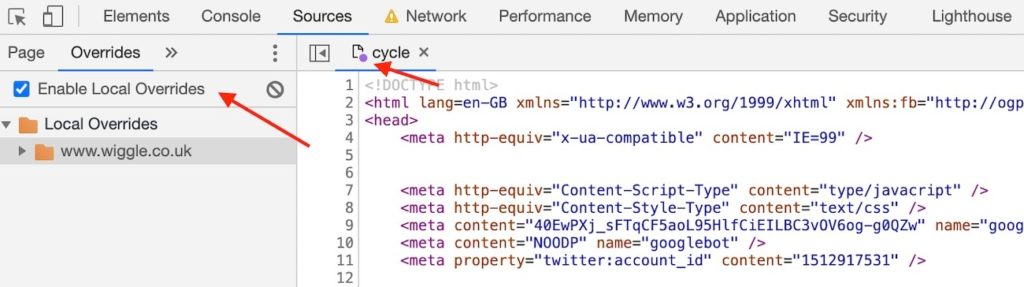
This method requires you to first understand some basic website development principles and be able to identify the reasons that may slow down the website. But once you learn it, you can give more specific suggestions on some simple and direct sticking points, such as "After changing which lines of code, by how much is the LCP shortened?", not just "LCP is too high and needs to be optimized」。
link:Website experience indicators
The Content Marketing Paradox by Rand Fishkin
In this article, Rand puts forward a point of view on content marketing:
「Novice-oriented articles have a larger readership, but the amplification effect is lower; while high-dimensional articles resonate with fewer people, but these people are more likely to be experts in the field and have higher influence.」
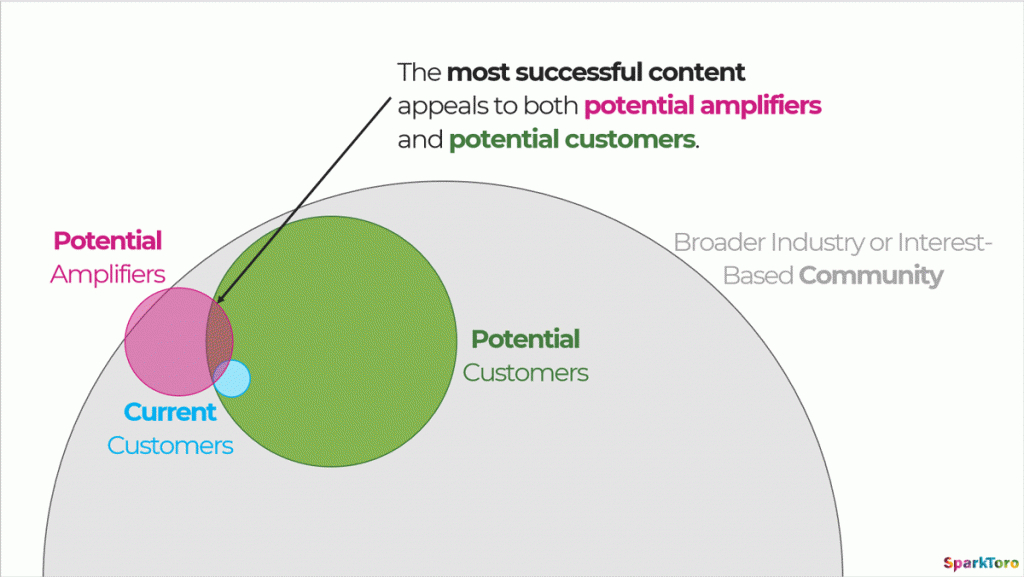
He believes that when it comes to content development strategies, marketers should ask themselves “Who will help amplify this and why?”, if you don’t have a good idea, the end result may be that you create high-quality content, but it is not amplified or obtained.Backlink, not seen, not ranked…. When doing reader research, in addition to the tastes of the target group, the research should also help amplify the industry leaders that will be reached.
Rand Fishkin is a well-known person in the SEO circle. Although he is no longer so focused on SEO, I was very impressed after reading this article and recommend it to everyone!
link:Rand FishkinOriginal article
Case: Yahoo! Japan news optimization CLS increases the number of pages in a single session by 15%
This is an example from web.dev, a Yahoo! Japanese news site, defining its imagesheight、width, and new
Afteraspect-ratio, its CLS decreased from 0.2 to 0 (standard is below 0.1), increasing the number of pages per session by 15.1%, the average session length by 13.3%, and decreasing by 1.72 percentage points.

This is a very common CLS problem on content websites, and the optimization method is also quite easy. I recommend that people with similar problems take this as a lesson!
link:web.dev case
Test: Removing the "number" from the title reduced organic traffic by 16%
- <title>San Francisco Internet Beauty Attractions</title>
- <title>Top Ten Internet Beauty Attractions in San Francisco</title>
Which of the above titles is better? According to a recent test by SearchPilot, they found that after removing the number in the title of this type of article, the natural traffic decreased by about 16%.
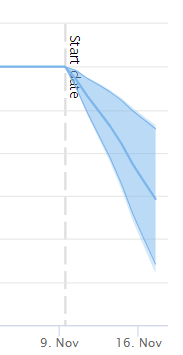
The article did not give many details, such as whether the drop in traffic was caused by changes in rankings or click-through rates (I guess it was the latter), but this test once again confirmed that the numbers on the title are helpful to a certain extent in attracting readers' attention.
Regarding this kind of case or test, I suggest that everyone should remain somewhat skeptical and should not believe it!
link:SearchPilot article
Grow with Google course officially launched
Google’s highly publicized Grow with Google course last year has finally been officially launched! Courses include “Data Analytics”, “Project Management”, “UX Design”, “Android Development”, and “IT Support”. The
courses are on Coursera. You can complete these courses for $39 per month. The certificate is forSome employersis equivalent to a university degree and can also be used to get interviews.

Official Video: Search Budget and Search Statistics Report
Crawl is the indispensable first step for web pages to rank on search engines., but Google does not crawl web pages everywhere without restraint. In this video, Daniel explains several important concepts "crawl demand」、「crawl rate」、「crawl budget" and how to interpret the information given by the Search Statistics report in GSC.
- crawl demand: how much the content is desired by Google
- crawl rate: max # of concurrent connections a crawl may use to crawl a site
- crawl budget: # of URLs Google can and wants to crawl
link:Related Documents – Search Statistics Report
Official Video: User-Generated Content
In this video, Aurora discusses how user-generated content (UGC) can help or hurt a website, as well as some best practices. Basically, user-generated content generally refers to the content that users can submit on your webpage, including comments, messages, pictures, and videos.
Although UGC is a good channel for webmasters to interact with users, when Google evaluates web pages, it may not be able to distinguish whether the content is produced by webmasters or users. The management responsibility of UGC lies with the webmaster, so careless management leads to too many spam or illegal comments, which will not only cause the website's SEO effectiveness to be damaged and ads to be removed, but more importantly, the brand's reputation and even other users will be harmed.
Interesting case: Adult websites disappear from rankings on brand terms
Marie Haynes shares this problem her Agency, a company that sells adult products "Jack and Jill Adult"Since September last year, the website's ranking on its own brand words has disappeared. The website has indeed been included, and there are no serious technical problems. It is not ranked when the SafeSearch function is turned off.

At present, this problem is still unsolved. Everyone is welcome to try and see if there is any way to break through the blind spots. In addition, the article lists the diagnostic process in great detail. Although there is no answer yet, it is worth reading!
After reading some comments, I think it has nothing to do with the nature of the adult website, but the responsibility lies more with Google. The word "Jack and Jill" is also a children's fairy tale. Even though Adult is added to the search term, Google may still think it is inappropriate to list adult websites.
link:Original case text / Twitter thread
If the brand name is too repetitive or similar to other things, the brand name itself will have different search intentions, such as "Jordan Sports Shoes" or "Maokong Tea House". If it goes well, it can attract traffic from other search intents, but if not, it may disappear like the case in this article. If you have seen any similar examples, please leave a message to share ~