
newsletter has come to its 20th issue! Apart from the official announcement that the webpage experience indicator will be included in ranking factors in May 2021, there is not much news, but this issue has some very good tools, resources, and case introductions. The repetitive content discussed in the podcast and how Google selects standard web pages are also worth listening to.
Ah, and Google decided to change the name of "Google Webmasters Central" to "Google Search Central", the Googlebot mascot also has a spider friend XD (Image from Googler Lizzy)
- Google web experience update: Counting down to 2020.05 implementation
- About Google Indexing API
- Tool: Download autocomplete recommendations for search engines
- Tool: Find what Googlers have said on Twitter
- Pinterest engineers discuss CTR
- SEO wireframes (Wireframe) for various types of web pages
- Several updates to Web Stories
- Official Video: How Search Quality Raters Work
- Official Video: How to Remove Pages/Content from Google
- Google Search Podcast EP.9
- One more thing...
Google web experience update: Counting down to 2021.05 implementation
has been introduced many times in Digital EngineWebsite experience indicators (web vitals), Google announced that it will be included in the algorithm in May 2021, affecting the ranking of web pages。
inofficial announcement There are two points mentioned in- (1.) Non-AMP webpages can also appear in Top Stories, as long as they meet news standards and have a good user experience; (2.) For webpages with a good user experience, Google will list them in search resultshas a label to indicate。
We don’t know what this label looks like yet, but if one of the two web pages is marked “Quick” and the other is not, it will definitely have a great impact on the website traffic. Chrome is currentlyWhen opening a new page, add the "Fast Page" label to web pages with good experience. If you joined SEO relatively late, a few years agoGoogle will also mark pages that are compatible with mobile devices in search results.。
Twitter/X Post
View original post on Twitter/X
About Google Indexing API
becauseGSC temporarily turns off the function of submitting indexes, many SEOs are beginning to look for ways to allow Google to quickly index web pages, so more and more people are paying attention to Google's Indexing API, an API that can proactively notify Google of new/changed/removed web pages.
This API is valid, however, different fromBing’s indexing API,Google's indexing API is specifically used for job posting (JobPosting) or live broadcast (BroadcastEvent) type web pages. Google does not recommend that you submit general blog articles.

Although Google wants everyone to stop messing around, many people want to try it because it is effective. If you are also curious,SEO Breakdown Tea Articleintroduces how to use RankMath, a WordPress plug-in, to do this without coding. People with some programming skills can also refer to it. Official documentation ofindexing api。However, please note that this is not an officially recommended approach, and you are responsible for the effects and risks.
Tool: Download auto-complete word recommendations from search engines
StreamSuggest is a tool developed by Charly Wargnier.After entering a word, you can see the "auto-complete" string for that word on Google or Bing, as well as the recommended strings at the next level., and can be expanded, contracted, and downloaded, which is a pretty good visual presentation.
Twitter/X Post
View original post on Twitter/X

link:Tools/ tool introduction
Tool: Find what Googlers have said on Twitter
When discussing, SEOs will inevitably bring out Google’s views or words as references or citations, and Twitter is a place where Googlers hang out very frequently. This tool is called "Google Says" can help you find what several official figures have said on Twitter(The concept mentioned by the teacher).

Pinterest engineers discuss CTR
Click-Through Rate is a commonly used indicator to measure user engagement no matter what field it is in.This article from Pinterest’s advertising data analysis team discusses the possible shortcomings of focusing on traditional CTR and how Pinterest can “upgrade” CTR into a better user engagement indicator.
The writing point of view is from the advertising space provider. Their goal is to strike a balance between advertising push and user experience. The article mentioned four areas where CTR is not perfect:
- Position bias: The higher the ranking, the easier it is to click on the ad, but this does not necessarily mean that the user thinks the ad is good. It may just be that the CTR is higher because it is ranked higher.
- Focusing on CTR leads to clickbait: Some ads are very attractive for clicks, but the user experience on the landing page is extremely poor.
- CTR ignores other signals: Whether the user likes the advertisement may be expressed by storing or hiding the advertisement, which will not be reflected in the CTR.
- Some things aren’t meant to be clicked: Not every advertisement is designed to be clicked, but it may also be seeking exposure.
Solution:
- They firstalso includes other indicators (like, hide, save...etc.), calculates a "Weighted Engagement on Ads" instead of a simple click-through rate such as clicks/exposure.
- Next, in order to overcome the ranking bias in the first point above, theyUse the CTR of the natural results near the ad space as a comparison, calculates a "Weighted Engagement on Neighboring Organic Content".
- For example: The CTR of advertisement A is 1%, but the CTR of the non-advertising content next to it is 2%; the CTR of advertisement B is 0.8%, but the CTR of the non-advertising content next to it is only 0.3%, then the degree of interaction of advertisement B is higher than that of advertisement A.
After upgrading the user engagement indicator from CTR, Pinterest can better reflect the positive/negative impact of website changes on user engagement.

I originally wanted to read it briefly but accidentally finished it. This article was very inspiring to me. I recommend that you go back and read it when you have time.Original text~
SEO wireframes (Wireframe) for various types of web pages
Matt Wright From the perspective of SEO,shared various types of web page wireframe design drawings and the web page components that should be included, four examples are listed below,his articles There are more reference images in.
Wireframe is an important step when designing a new web page. SEOs are often asked at work what components should be on the web page or even asked to draw a sample. The content of this article is a good reference.

Home page wireframe 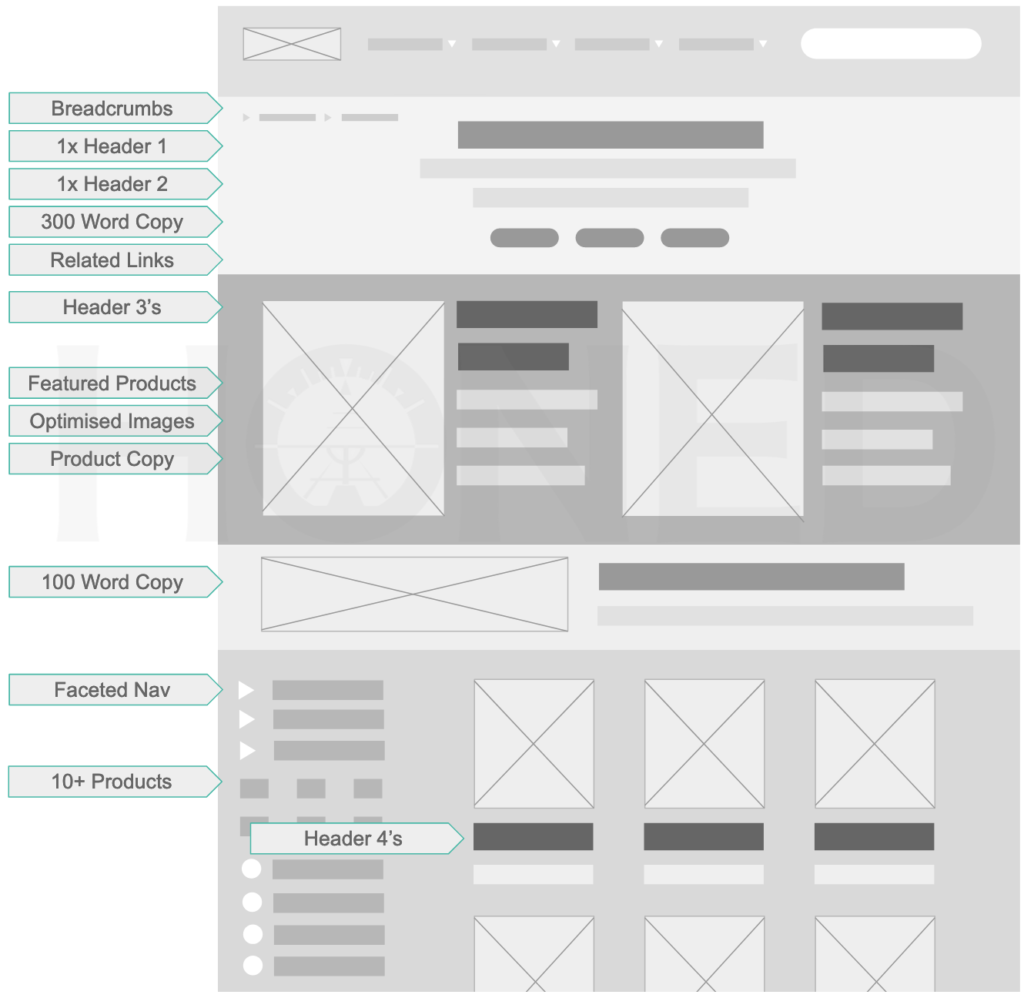
Category page wireframe 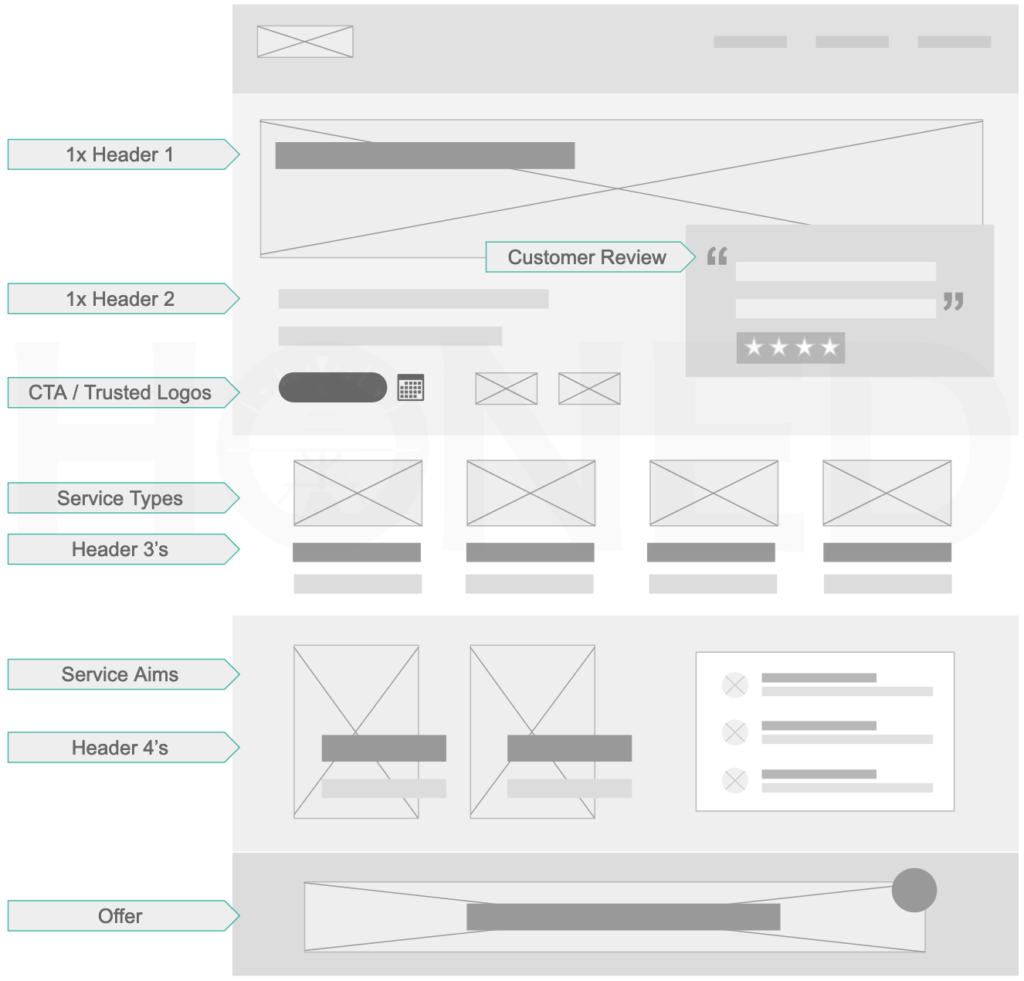
service page wireframe 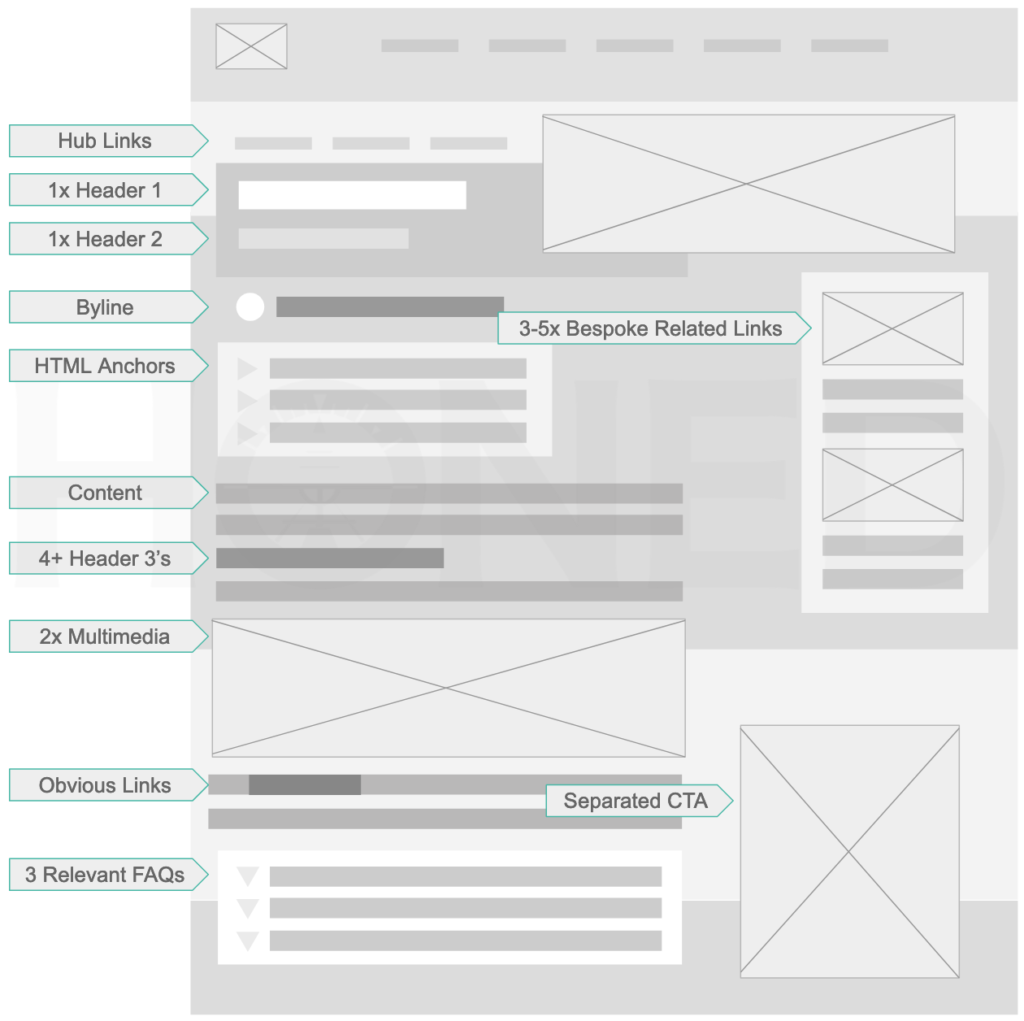
Article page wireframe


Web Stories Several updates
The development of short videos can be said to be the darling of the entire Internet ecosystem in recent years., from Snapchat to IG limited time updates, TikTok, Twitter Fleets... it is everywhere, and Google is certainly not lagging behind in its launch.Web Stories , and allowing Web Stories to have a separate and prominent block in search, I think it is a format worthy of investment by every content creator.
If you haven’t heard of this thing, the two SEO cases in the digital engine website navigation column are both in the format of web stories. You are welcome to go and take a look.
1. Web Stories supports interactive components, which can be used for quizzes or voting, Demo page

2. WordPress Web Stories plug-in provides text layout, free GIF gallery, and video subtitle insertion
Twitter/X Post
View original post on Twitter/X
3. Web Stories video series by Paul Bakaus
has not introduced this series of videos, but there is a lot of good content in it. It is hosted by Paul Bakaus, one of the main developers of AMP. The topics discussed include "What is the difference between Web Stories and general short video platforms?」、「Google Discover product manager talks about Web Stories」、「Web Stories and SEO"...and so on.
Official Video: How Search Quality Raters Work
Google hires a bunch of real people to train their algorithms. These people are called search quality raters. This is not news. However, this video clearly introduces the work content and responsibilities of these people. The video only has two minutes to watch!
Official Video: How to Remove Pages/Content from Google
This question should be the most common question I encountered when I was a product expert on the Google forum. Daniel gave a quite complete explanation of the four situations that may be encountered and how to do it:
- has control over the content and wants it permanently removed
- has control over the content and wishes to temporarily remove it
- has no control over the content, and the content is on Google's platforms, such as Youtube, Blogger...etc
- has no control over the content and the content is not on the Google platform
Google Search Podcast EP.9
This podcast episode invites Lizzy, a writer for Google search documents, to discuss the process of producing official documents. Martin also mentioned that he is planning to hold another online discussion in January or February next year, this time hoping to include people from different time zones and inviting some unofficial speakers. But nothing is more relevant to SEO than what Gary discusses below.
Gary continues the index of discussions in previous issues and continues to talk about canonicalization and dupe detection. First of all, these two are different things. Google will first determine which content is duplicate content and circle it together. This is dupe detection; then it will select a web page from it as a canonical page.
In the stage of determining duplicate content, Google will perform a fingerprint action on the web page, convert the content into a string of codes (hash, checksum, etc) and then compare it., at this stage, the template part (header, footer, etc) on the web page may be ignored, and it is capable of judging "nearly similar" content.
Next,Google will select a representative web page from a bunch of dupe clusters that are judged to be duplicate pages. This web page is called a canonical page.. The process of selecting canonical is quite complicated. There are about 20 algorithms doing this. The signals used to determine include PageRank, rel="canonical", redirection, whether it is in the sitemap... and so on.
John jumped out and asked Gary at this time: "You mentioned sitemap, is the presence of the URL in the sitemap considered a ranking factor?" Gary's response was that this is not a ranking factor, because it only helps the webpage have a better chance of being selected as a canonical URL and does not affect the ranking.
John’s rhetorical question is very interesting. The system behind Google is quite complex, and many SEO questions are oversimplified and difficult to answer.