
"Search On mentions the upcoming snippet index" and "Gary explains how Caffeine works" are the two main focuses of this issue. Although there is a simple translation and some own interpretations, these are relatively new information. It is recommended that you read the original information and digest it yourself when you have time. Welcome to read or discuss!
- Search On 2020 Summary
- Google indexing problem
- Cloudflare launches website analysis and WP platform optimization tools
- Several name-rectification activities
- New presentation method of Web Story on Google Discover
- AMP launches AMP Page Experience Guide tool
- Google launches Podcasts Manager
- GSC temporarily closes the "request indexing" function
- Official Video – How Engineers Can Use Search Console
- Google Search Podcast EP.7
- Official Video – SEO for Single Page Apps
Search On 2020 Summary
Google held a "Search On" event in mid-October, where they talked about how Google search helps human society and some changes and progress. Here are some key points related to SEO. Run by another friendFacebook page "SEO Decomposition Tea"has also done a pretty good job of sorting it out. Welcome to check it out.
1. BERT [07:36]
BERT applied to search from 2019, which affected 1/10 of the English search results in the United States, is now applied to almost every search term, and has also expanded to other languages.
2. Continuous testing and optimization [08:57]
To optimize search results, Google conducts thousands of tests every year, and there were more than 3,600 updates in 2019.
3. Spelling errors
One in every 10 search terms has a spelling error, and Google is launching a new algorithm that uses machine learning to improve its judgment. This update is more advanced than any other spelling error change in the past five years.
4. Specific information search/fragment information index [17:16]
Sometimes the answer that the user is looking for is hidden in a small paragraph in the web page. In this case, although the passage information meets the search intent, the search term has low relevance to the main theme of the entire web page, so the relevance of the key fragment information is diluted and the ranking suffers (because there is too much content on the page that is not related to the search term).
With this update, Google will base its rankings on the relevance of fragment information and search terms, rather than on the relevance of the entire web page and search terms.(Note: The content of the entire webpage will still be indexed, but the ranking will be based on fragment relevance rather than overall webpage relevance)
This update will be rolled out before the end of the year, starting with English searches in the United States, but will gradually expand to every language in the world. When fully rolled out, it will affect about 7% of search terms.。
The example given in the video is "How do I know if my glass is UV resistant? The word "" originally ranked first (Figure A) was an article about anti-UV glass. It talked about different ultraviolet wavelengths, which type of glass is most effective... and so on. It was quite professional but did not answer the searcher's question. The first place after this change (Figure B) is a forum article. You can see that the entire webpage is very long and contains a lot of irrelevant noise (the following is a bit like a villager's pen battle...), but there is a short paragraph in the middle (yellow block) that accurately answers the search question.
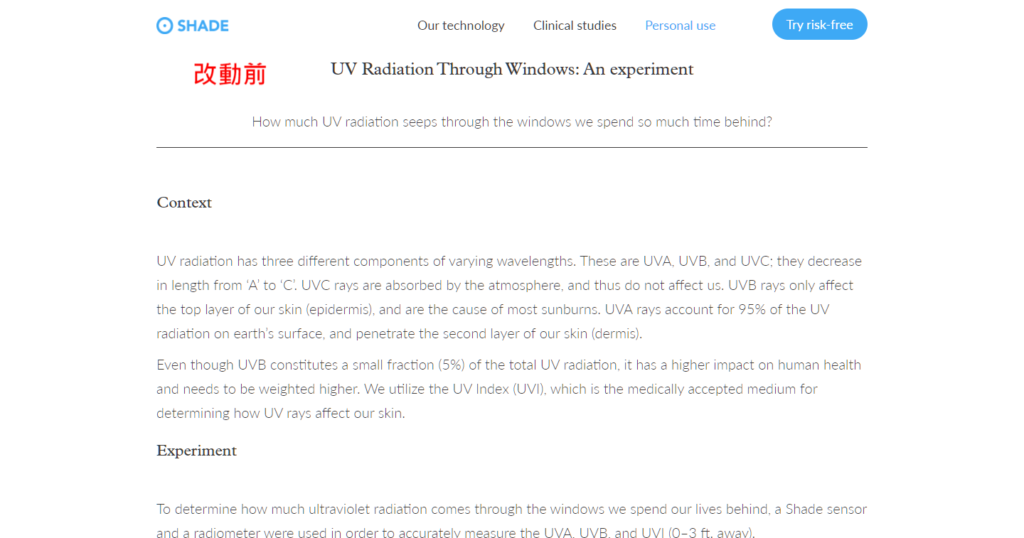
Figure A: The article discusses UV-resistant glass professionally, but does not meet the searcher’s intent 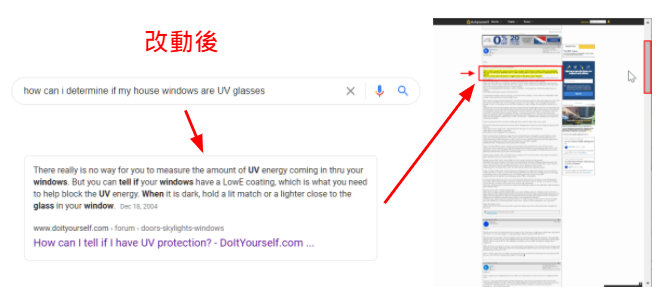
Figure B: There is a lot of irrelevant content on the webpage, but Google finds the snippets that best match the search intent.


5. Provide subtopics and diversity for broad search terms
Google uses AI to determine the subtopics behind a broad search term to provide diversity in search results.
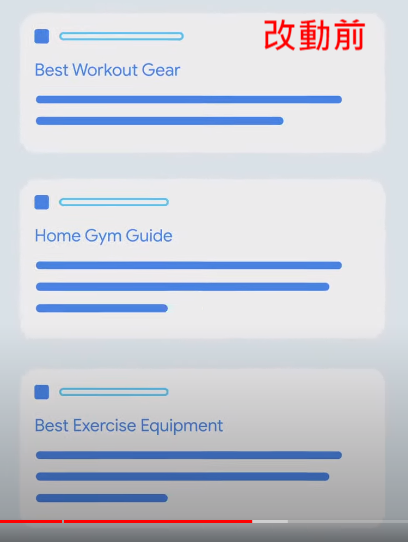
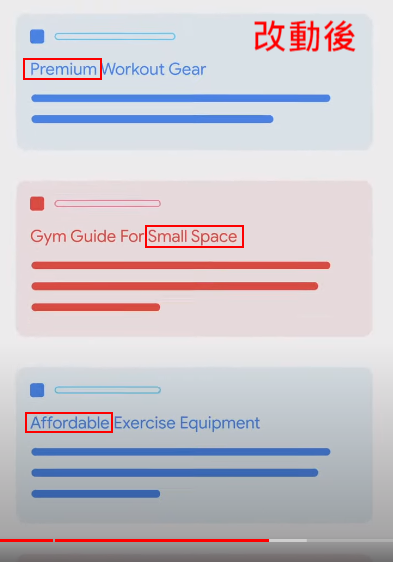
For example, when someone searches for "home fitness equipment", the original (left in the picture below) will provide a relatively broad range of equipment recommendation articles, but after the change (right in the picture below), the search results will be more diverse, which may be "home fitness equipment for small spaces", "high-end home fitness equipment", "affordable home fitness equipment"... etc., making it easier for users to find results when the search intention is unclear.
related links:Google article / SER finishing / About segment index (SEL)
Google indexing problem
Google has had several indexing-related issues since September. One is related to "mobile-first indexing", affecting 0.2% of web pages; the other is related to "Canonicalization", affecting 0.02% of web pages. The number of affected web pages is quite large.
The symptoms of being affected are that the web page will disappear from the Google index (cannot appear in the search results), or you will see that the standard URL declared by the web page is different from the standard URL selected by Google.
Twitter/X Post
View original post on Twitter/X
When encountering such a situation, webmasters generally have nothing to do but wait quietly for Google to fix it. Google recently announced that most of the affected URLs have been restored.
Twitter/X Post
View original post on Twitter/X
link:Twitter Announcement / SER report
Cloudflare launches website analysis and WP platform optimization tools
Cloudflare has launched a website analysis tool that takes user privacy into consideration. This tool is free and can be installed by anyone. Because of privacy considerations, it is more like GA with many fewer dimensions. For example, "users" will not be recorded.
Another tool is Automatic Platform Optimizations (APO), which costs $5 per month. It first supports WordPress. Users only need to install the WP plug-in and register an account to enjoy this service. Different from ordinary CDN, because the Cloudflare plug-in is installed in WP, cloudflare will automatically cache the resources to the CDN when the web page is updated. In other words, even if the web page is visited for the first time, it does not need to go through the original server. The official figure is that it can reduce TTFB by 72%.
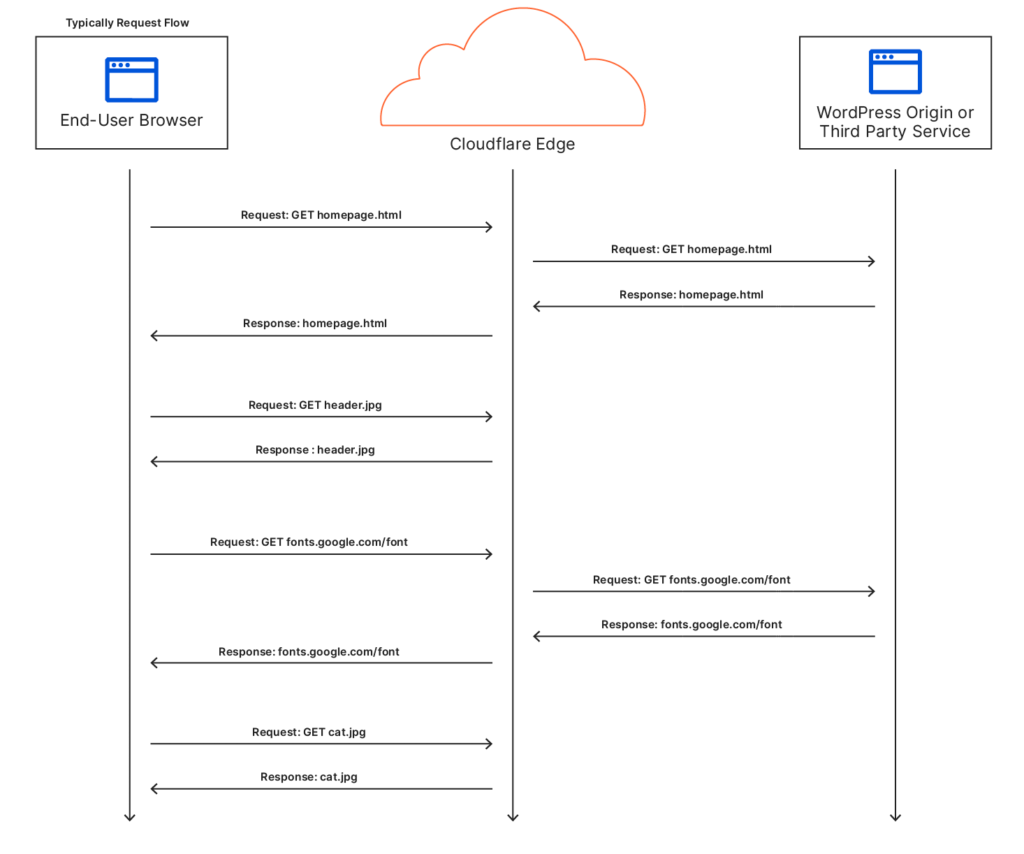
General CDN 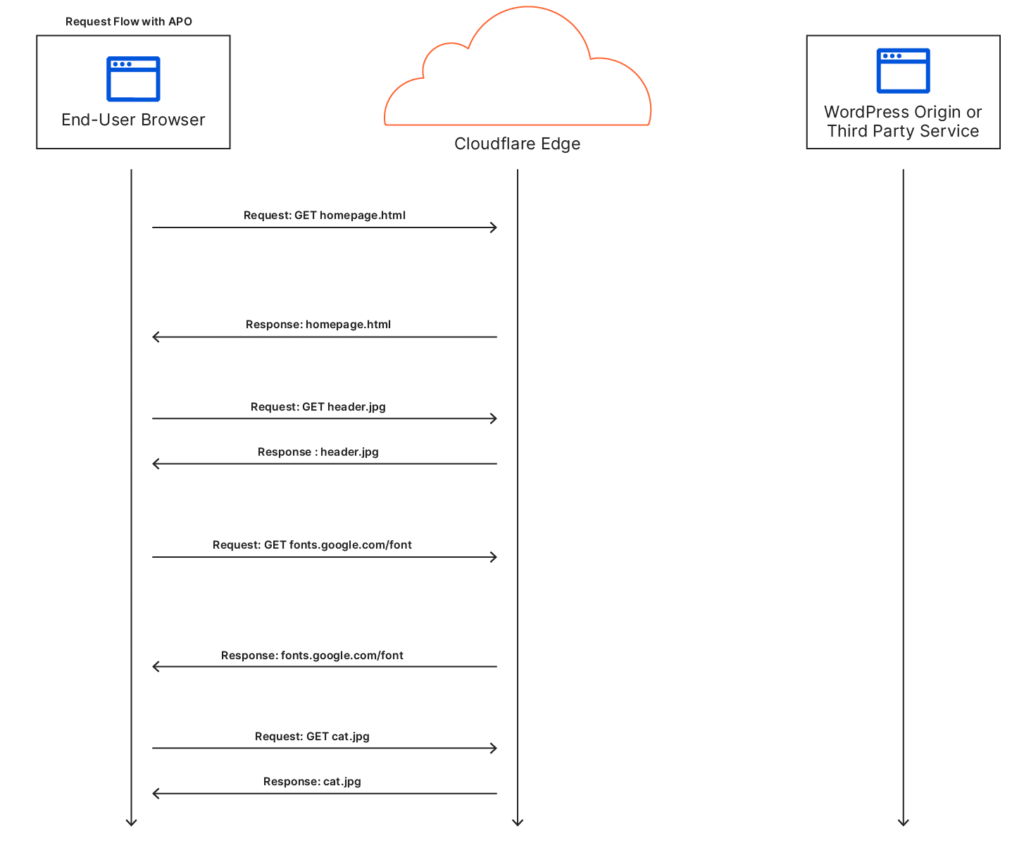
Using APO
APO is a service that I will consider using. The current server on the website is a bit too weak and needs to be upgraded. You can refer tothis articlehas a detailed installation guide. (After introducing the website analysis tool, I am a little confused. I don’t seem to have thought of a special use case...)
link:Official Announcement-Analysis Tools / Official Announcement-APO
Several name-rectification activities
- Bing renamedMicrosoft Bing (Announcement)
- G Suites renamed toGoogle Workspace (Announcement)
- Google Analytics App+Web renamed toGoogle Analytics 4 (Announcement)

This news is too useless, so I’ll add some trivia XD. Bing has a feature in the United States calledMicrosoft Rewards, you can earn 5 points every time you search on Bing. The points can be entered into a lottery, redeemed for Microsoft products (ex: Xbox membership), exchanged for gift cards, or donated to non-profit organizations. The points are worth about 1000~1300:1.
New presentation method of Web Story on Google Discover
In recent months, it has been clear that Google wants to popularize Web Stories, which can be seen in more and more places Traces ofweb stories, launchedWordPress production plug-in, and another cool onepromotional official website。
Now Web Stories has its own row in Google Discover, similar to the limited-time dynamic wall above IG. Users can click to see the next page of the same story, or slide over to see the next story.。
Twitter/X Post
View original post on Twitter/X
recommends that regardless of personal blog or company content, you can consider this way of presenting content. Attached are two of my previous Web Story works - "Leo Burnett’s Controversial SEO Strategy」、「The British Prime Minister’s Political SEO Skills」
AMP launches AMP Page Experience Guide tool
is basically a new tool that connects the APIs of other detection tools to help you measure the user experience of AMP web pages. The indicators includeweb vitals, security, HTTPS, mobile experience, intrusive advertising, and provide improvement suggestions.
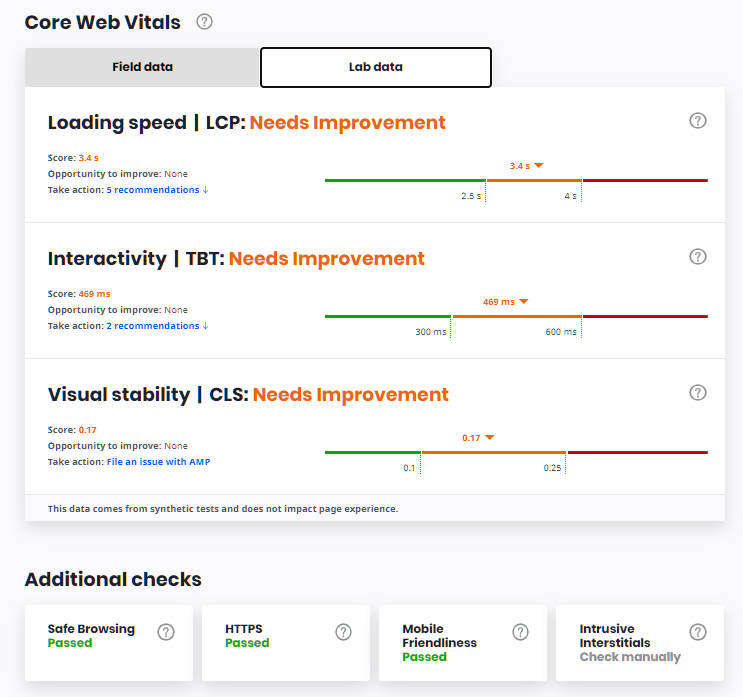
Inspection items 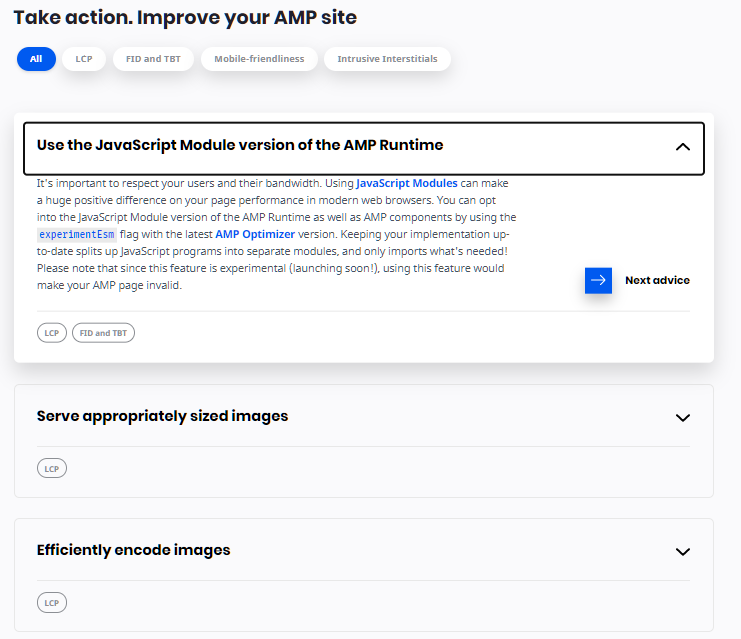
Improvement suggestions


link:official introduction / Tools
Google launches Podcasts Manager
This tool is like a webmaster tool for Podcasts, allowing podcast hosts to submit their programs to Google index, see exposure, clicks, search word information, and provide information such as the length of listeners' listening, when to jump out, listening device... and other information.
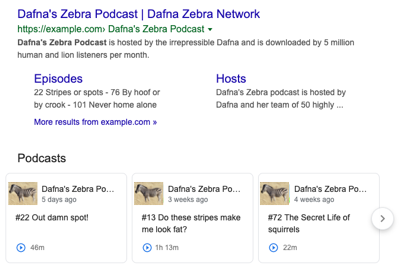
podcast on search results 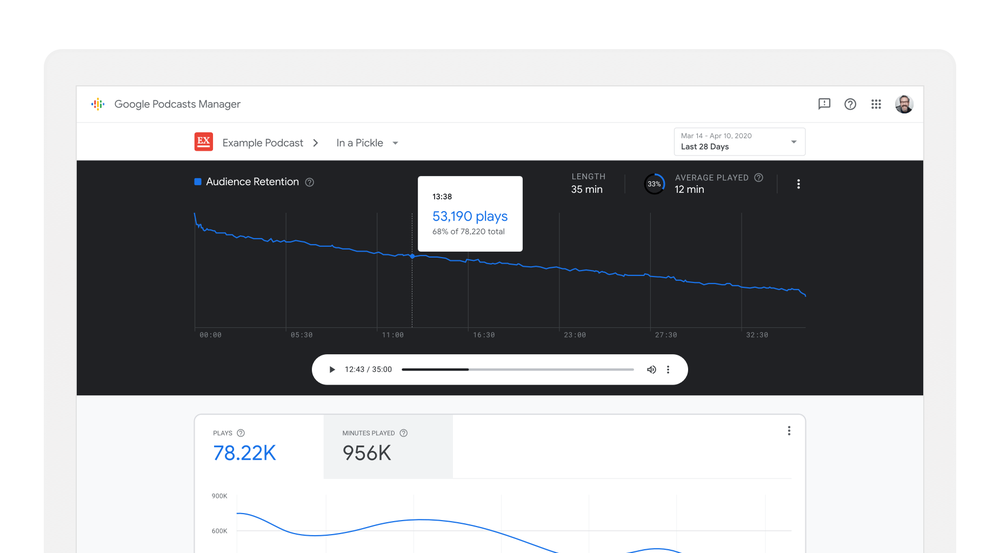
Google Podcasts Manager interface

If you have friends who are running podcasts, you might as well introduce them to them. I have no experience in this area yet, but if anyone doesn’t know how to start, you can contact me to study together!
link:registration page / official announcement / Guide to optimizing your podcast (podcast SEO?)
GSC temporarily closes the "request indexing" function
This is only a temporary maintenance of one-way functionality and does not affect page ranking or normal crawling/retrieval procedures.
Twitter/X Post
View original post on Twitter/X
Official Video - How Engineers Can Use Search Console
In this video, Daniel introduces several functions of Google Webmaster Tools, which can help engineers find website errors. Features/reports introduced include "Coverage」、「URL checking tool」、「Security Issues」、「Website experience core indicators". Recommended for SEO newbies or engineers who don’t know what SEO is doing!
Google Search Podcast EP.7
The focus of this podcast episode is that Gary talked about the operation of Caffeine (Google's indexing system). He briefly took notes and added his own interpretation, but I still recommend that you listen to it yourself when you have time.
- first inGooglebot crawls web pages After, it will spit out "protocol buffers"Then give it to Caffeine.
- Next is conversion. Caffeine will normalize the information given by protocol buffers into a unified format (normalize). For example, the HTML of the web page may be missing a closing tag and strange tags appear in the <head>; or header tags may also be processed because the header tags on the web page may not represent their true importance on the page. Caffeine will standardize the data sent by Googlebot.
- Of course, Google not only indexes web pages, but also PDFs, Docs, spreadsheets, etc., and different file types are standardized before they can be compared.
- Caffeine will look at the meta tags in the file. There are some important instructions for search engines that must be followed, such as robots noindex tag.
- There is also a thing called "Collapsor", its function is to handle "error pages". Sometimes non-existent pages will return 200. This situation is called soft 404s, and Collapsor is responsible for catching such situations.
- Caffeine puts the organized information into the index.
In the fifth point, Gary talked about an interesting bug. If there is an article discussing error pages, Collapsor may judge the article as a soft 404 page because there are too many words like "page not found" that often appear on error pages on the web page, and Caffiene will stop processing the page.
link:verbatim draft
Official Video – SEO for Single Page Apps
This video talks about very common SEO problems in SPA and how to deal with them. Including the URL is not updated, there is no correct a href tag, the Title/Description is not updated, the status code is incorrect... and so on.
There was actually a Search On event when the e-newsletter was about to be launched. It took me some time to better understand the concept of passage-based indexing. I hope this summary will help everyone clarify it!