Compared to the previous issue of Title Earthquake, there is not much exciting news in this issue. But there are some great articles and tools out there. The two tools in the fourth and fifth points are highly recommended for everyone to play; the article in the eighth point, although this trend may not have affected the Chinese SEO circle yet, I believe it will happen sooner or later, and it is worth pondering; finally, I only found out about the faceted navigation guide in Chinese called "multi-faceted navigation" when I was writing this e-newsletter. It is recommended that people who are not familiar with this concept or term read it carefully! The following is the content of this issue:
- [News] Web experience update fully launched
- [News] Bing content submission API is now available
- [Python] Write GSC data to BigQuery
- [Tool] Check whether the SERP title of the web page has been rewritten
- [Tool] Free Google Sheets plug-in for SEO people
- [Self-test] 15 Technical SEO problems and detection & solutions
- [Case Analysis] Multi-country and multi-language website SEO optimization case
- [Article] Performance of AI-produced content websites in SEO
- [Guide] SEO considerations for Faceted Navigation
- [Abstract] Google Search Podcast – A Beginner’s Guide to Search Engine Optimization (SEO)
[News] Web experience update fully launched
I have been shouting for more than a yearWeb experience (Core Web Vitals) Theupdate, launched in mid-June, was finally announced in early September.
Since there have been quite a few large and small algorithm changes in the past two or three months, it is difficult to say exactly whether the impact on the web experience is large or small. But according toofficial statement, this update will generally not cause much change in website performance. I personally also think that the establishment of the CWVs set of standards has more profound significance for UX than for SEO.
| algorithm update | start date | end date | related information |
|---|---|---|---|
| Product review algorithm update | 2021-04-08 | 2021-04-22 | official information |
| June core algorithm update | 2021-06-02 | 2021-06-12 | official information |
| web experience update | 2021-06-15 | 2021-09-02 | official information |
| Fighting spam part 1 | 2021-06-23 | 2021-06-23 | official information |
| Fighting spam part 2 | 2021-06-28 | 2021-06-28 | official information |
| July Core Algorithm Update | 2021-07-01 | 2021-07-12 | official information |
| Spam link algorithm update | 2021-07-26 | 2021-08-24 | official information |
| SERP title generation mechanism update | 2021-08-16 (estimated) | continues to be optimized | official information digital engine finishing |
link:SEL report
[News] Bing content submission API is now available
inIssue 5andIssue 13mentioned these two APIs of Bing, which allow webmasters to directly submit URLs or content to Bing so that they can be indexed in a timely manner. The URL submission API has been available for a while and has an officialWordPress plug-incan be integrated; the content submission API will only be officially opened for full use in September this year.

The main difference between the two is that the URL submission API submits the URL to Bing for crawling; while the content submission API puts the content in the API and submits it directly to Bing (theoretically, Bing does not even need to send a crawler to the web page).
A video of a previous interview with a Bing spokespersononce said, Bing wants to aim at helping webmasters actively submit new or updated content, because relying on crawlers to continuously discover new web pages and whether web content has changed in the online world (Googlebot's method) is too inefficient.
[Python] Write GSC data to BigQuery
There are several advantages to storing GSC data in BigQuery. The two most important ones are (1.) the ability to have more than 16 months of data provided by GSC by default, and (2.) the flexibility and efficiency of pulling data in the future.this articleshared how to accomplish this action through Python.
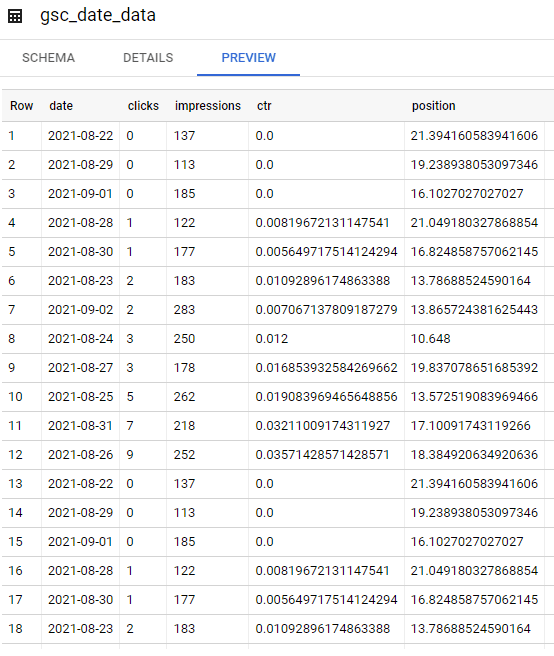
This skill was very useful in the past when GSC would only provide 90 days of data, otherwise it would have to rely onKeylime ToolboxThis type of paid tool. Although Google now provides 16 months, I believe many people still find it insufficient. The whole step is quite uncomplicated and I recommend you give it a try.
The only drawback is that the author’s script does not includequeryThis is the most important part. Although I haven't implemented it yet, it shouldn't be too difficult to write one more column of information. Here are a few similar articles. Although they are a bit old, they should be good reference materials when debugging.
link:Ben Powis article (Python 3, 2020) / YouTube Video (Node.js, 2020)
[Tool] Check whether the SERP title of the web page has been rewritten
Previous issueThere are several tools introduced to check whether the SERP title of a web page has been rewritten, but none of them are as useful as this SEOWL tool! The method of use is quite simple, put a URL in each line, or enter the sitemap location, and you can check up to 250 web pages at a time.
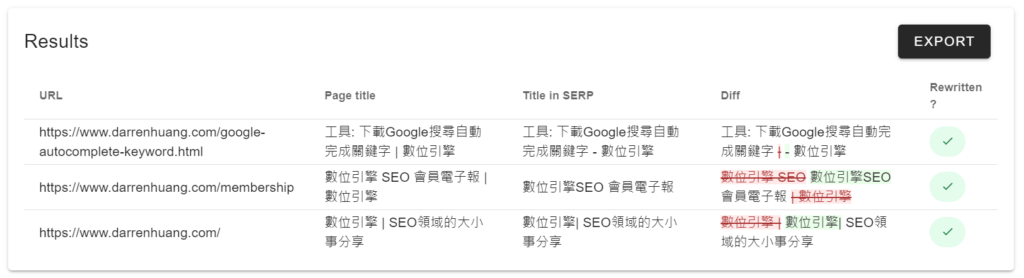
is actually very simple. Since the title of the web page no longer changes due to search terms, this tool uses
Use thesite:command with the URL to see what the title of the webpage looks like on the SERP. The same principle can also be used in the previous issue.Google Sheets inspection template。
[Tool] Free Google Sheets plug-in for SEO people
I found this very useful Google Sheets plug-in, which has many built-in formulas that are often used by SEO, and even includes some functions that require string API to be used. I highly recommend everyone to download it. Here are some of the highlights I saw.
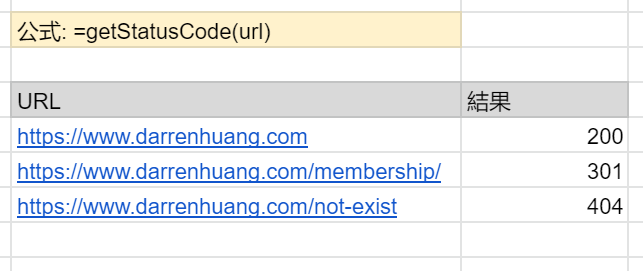
=getStatusCode(url)— Returns the status code of the URL (200, 301, 404... etc)
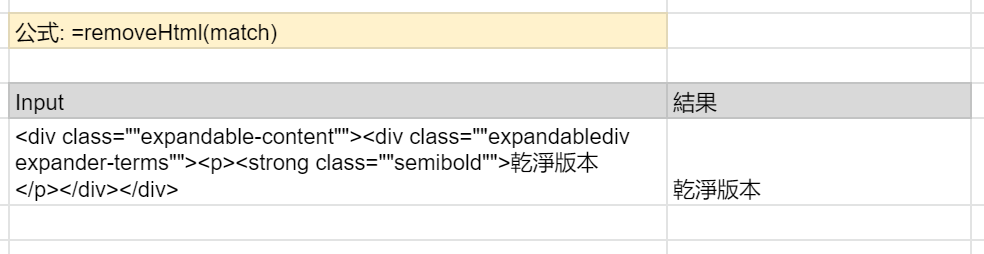
=removeHtml(match)— Remove HTML tags. My personal favorite, the content I capture often contains a bunch of HTML tags and it takes some time to clean them up.
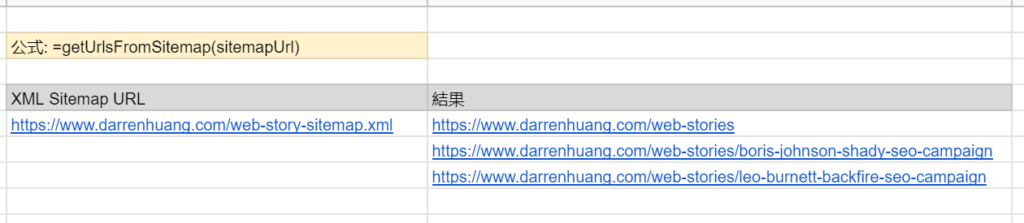
=getUrlsFromSitemap(sitemapUrl)— Returns a web page in an XML Sitemap
link:tool download / Tool Home Page / Twitter Introduction (Spanish)
[Self-test] 15 Technical SEO problems and detection & solutions
this articlelists 15 technical SEO problems that websites will encounter. I rarely share this type of articles in the past because there are definitely more than these 15 types of problems that I will encounter. This time I recommend this article because it is very detailed. It not only lists the problems, but also includes how to check whether your website has such problems and the solutions. It is suitable for self-testing, or you can absorb some knowledge even if you just read it.

The 15 questions listed in the article are as follows:
- CWVs is passing the detection tool (lab), but the actual data (field) is not passing.
- robots.txt blocks website resources (css, javascript, etc)
- XML sitemap contains unnecessary URLs
- problematic canonical
- Conflicting directives in HTML <head> and HTTP Header
- Nofollowed or disallowed internal links
- Unoptimized internal link
- There is no page with outgoing or incoming links.
- Internal or external link failure
- Internal links have redirects
- Invalid or wrong hreflang tag
- There are invalid elements in the <head> of the web page.
- HTTP vs HTTPs
- Mixed content or internal links use HTTP
- Duplicate content web pages caused by website architecture
link:SEOSLY Article
[Case Analysis] Multi-country and multi-language website SEO optimization case
This is a very long case with an estimated reading time of 43 minutes. The protagonist of the article is https://forexsuggest.com/, a large website with 41 different language versions. You can see the traffic changes of this website in the picture below. Although it is difficult to say that all the growth is attributed to SEO, the issues highlighted in this article, the prioritization method, and the problems of multi-language websites are all worthy of reference.

The article is written in English and is very long. The content in it is not a technique that can pay off quickly. To be honest, it took me several days to finish this article. It is recommended that you read the author's four principles (Prioritization, Symmetry, Matchability, Consistency) first, and then read the subsequent 20 points when you have time.
link:case analysis / Another longer multi-country and multi-language guide by the same author
[Article] Performance of AI-produced content websites in SEO
this article In, the author found four websites that are "very likely" to use AI to produce content, and their SEO performance. It can be seen from the article that the main profit model of these four websites is advertising. They all produce a large number of pages and content in a short period of time, and they also perform quite well in SEO.

AI-generated content is an issue that I am very concerned about. There are already many mature tools in the English world that allow you to generate a piece of content at a very low price. Many people have sensed this business opportunity and built websites to attract traffic and earn advertising money. The quality of these contents is generally okay, so it is inappropriate to say that they are spam. It's just that when more people use this method to build a large number of websites/webpages, it is worth paying attention to how Google will respond and how the SEO circle will be affected.
introduced in issue 36The Search SingularityThis article has very good insights. I recommend everyone to read it when you have time~
[Guide] SEO considerations for Faceted Navigation
this articlebelongs to the novice series, which talks about the SEO problems that may arise and how to deal with them when there are faceted navigations on the website. This function is especially common on e-commerce websites, and it is recommended for novices or readers who have this function on their websites.
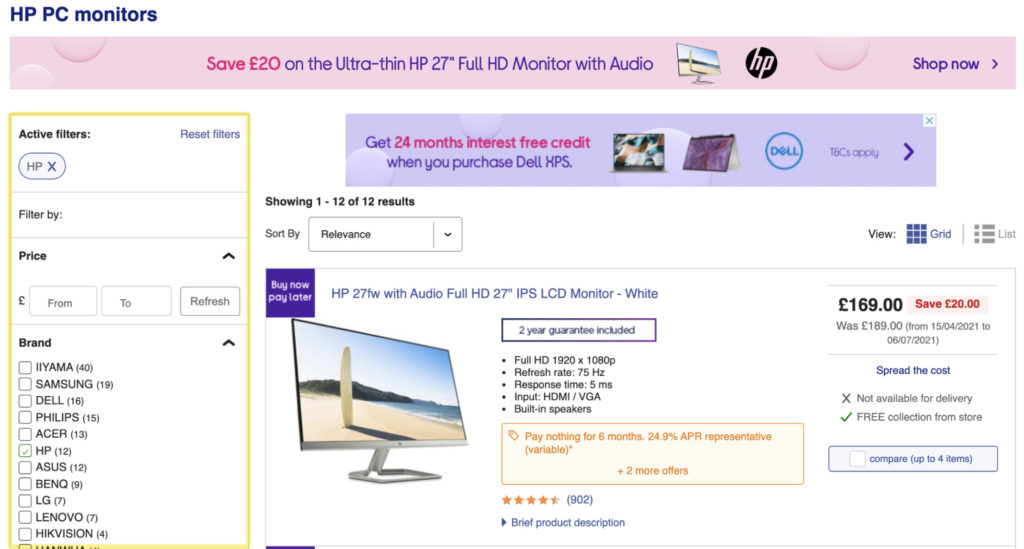
I amcrawler crawling principleThis FAQ is also mentioned in this article. According to my experience, if handled properly, it can bring in long-tail word traffic, but if handled improperly, it will waste the crawl budget and cause difficulties in analysis.
[Abstract] Google Search Podcast – A Beginner’s Guide to Search Engine Optimization (SEO)
This podcast episode invitesLizziandMichael, two writers of Google search documents, come to discussSEO Starter Guidethis document. I believe that the vast majority of readers have read this beginner's guide before, but may not have reviewed it for a long time, including myself. This episode is relatively relaxed, mainly just listening to a few Googlers talk about some anecdotes about this document.
- This guide was born in 2008 because Google was so often asked about SEO suggestions, so Matt Cutts suggested launching a copy of their SEO suggestions.
- Early official internal documents of the Korean government specifically mentioned that due to security considerations, it is recommended that websites block all robots in robots.txt, making it impossible for Google to crawl government web pages.
- There is a paragraph in this beginner’s guide that talks aboutSocial Media, but this paragraph belongs to the category of general marketing. Several people are discussing whether this paragraph should be deleted.
- Gary said that there are links on most social media now
nofollowattribute, but he can imagine that even if some social networking sites are not installed,Google will also internally mark links from these platforms as nofollow(This is very interesting). - Another interesting point is that Gary said that they will receive title suggestions from Google’s internal SEO team, telling them how to write it, including capitalizing the beginning of each word, and then putting a
| + website name, he feels that these suggestions do not make much sense, but they may be related to user experience. - The website Brandon's Baseball Cards is used as an example in the Beginner's Guide because Brandon was the writer of the first edition of this guide, andhttps://www.brandonsbaseballcards.com/will connect to the Google homepage.
It’s September in the blink of an eye. When the busy Q4 season at work is over, it’s almost time to find some time to think about the next step of digital engines and e-newsletter subscriptions. If you have any suggestions, please feel free to send me a private message!
Related reading
Blank category page: noindex, soft 404 and page change signal
Starting from the discussion of blank category pages in e-commerce, we sort out the differences between noindex and soft 404, and how changes in content, internal links, and products can serve as signals for re-examination.