This episode of the newsletter has a lot of content, including Google local merchants for $50 a month, more web stories in the search results, and the major overhaul of Bing webmaster tools...etc. In addition, I have put some relatively minor news at the bottom of the e-newsletter, otherwise it would be endless to sort it out. Welcome to read~
- "Paid version" of Google local businesses
- Referrer policy update after Chrome v85
- Bing webmaster tools overhaul completed
- WordPress plug-in: Automatically submit URLs to Bing
- Compound search results testing tool will support more Schemas
- MLB game recap appears on SERP as Web Story
- GSC filter adds "News" category
- Two changes in lazy loading of Chrome
- Google’s information at the antitrust public hearing
- Fun fact: SEO guidelines launched by the British government
- Mobile version content priority indexing extended to March 2021
- SEO Mythbusters: Website Speed (Page Speed)
- official video: Do special types of files need to be blocked in robots.txt?
- Official video: Google News Collection – July 2020
- More and more SEO related information
"Paid version" of Google local businesses
Google My Business has launched a paid membership model. Currently, only a few types of merchants in a few areas have received invitations. The price is US$50 a month. Merchants that have applied and been approved will have a Google Guaranteed green check on the information bar. When consumers are dissatisfied, they can file a claim with Google.
Twitter/X Post
View original post on Twitter/X How

Related to this is Google's Local Services ads. Both will also have a green check mark, but the difference is that one is a monthly fee-based "organic" result, and the other is a pay-per-lead advertisement.
link:SEL report Introduction to / Local Services Ads
Referrer policy update after Chrome v85
Chrome's default referrer policy will be changed from the originalno-referrer-when-downgradechanged tostrict-origin-when-cross-origin. This does not have any direct impact on SEO. It is mainly due to stricter regulations on information security. Advertisers may lose important information (ex: which pages the user viewed), but the impact on general websites may be that the Full Referral in GA will have less information.
Google Search will not tell you the search terms of natural traffic, also because there areReferrer Policy: origin(regardless of whether the next page is the same origin or not, it refers to the origin information), so the URL contains keyword parameters (?q=digital engine) is stuck.

For information about Referrer Policy and more changes, please refer to the above article, which has a very detailed explanation. It is recommended that everyone who is studying SEO can try to understand it. It may not be directly related to SEO, but after understanding it, you will have a clearer understanding of the entire Internet ecosystem!
Bing webmaster tools overhaul completed
In February this year, Bing announced that it would revamp its webmaster tools, which was finally completed at the end of July. As previously introduced in previous newsletters, several new features include:URL submission tool, URL removal tool, crawl limit, website health diagnosis, backlinks, URL submission...etc.
If you missed it, you can check out previous issues of the newsletter or read the official announcement. Regarding the whole topic, I think this revision is quite sincere. Although the traffic from most websites from Bing is not mainstream, many tools provide functions that Google Search Console does not have, and authentication is very convenient. I recommend everyone to check it out and play around.

link:official announcement / Issue 3 / Issue 9 / Issue 10
WordPress plug-in: Automatically submit URLs to Bing
The fifth issue of e-newslettermentioned Bing’s URL and Content Submission API. Recently, they launched a WordPress plug-in. After installation, when an article is published, the URL will be automatically submitted through the API and the content will be included.
It’s a pity that Bing’s market share is still far behind, otherwise some of the new tools launched in the past few months would be quite practical in terms of functionality.

link:official announcement / Wordpress plug-in
Compound search results testing tool will support more Schemas
Last issue of e-newslettermentioned that Google caused considerable discussion after announcing that it would replace the Structured Data Testing Tool with the Rich Results Test (composite search results testing tool).
John mentioned in a recent Q&A that they will continue to discuss internally whether to support schema types that do not have any appearance changes in search results.
link:SER report / John's answer
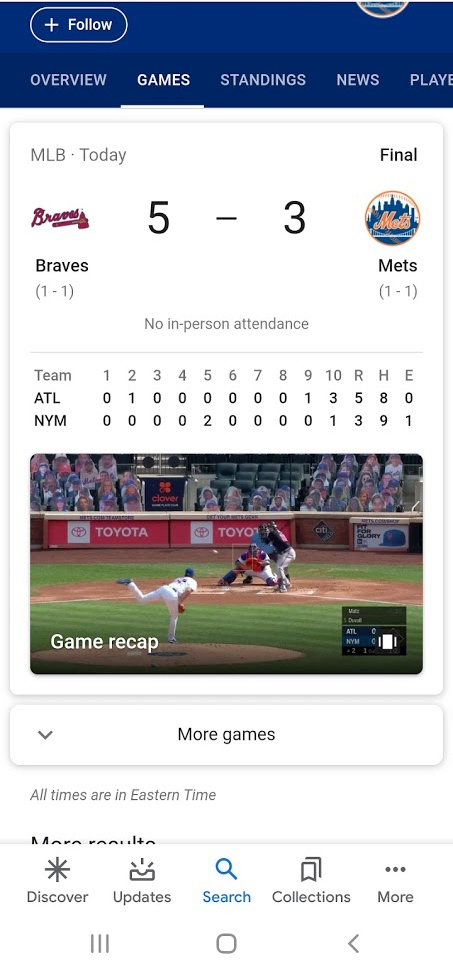
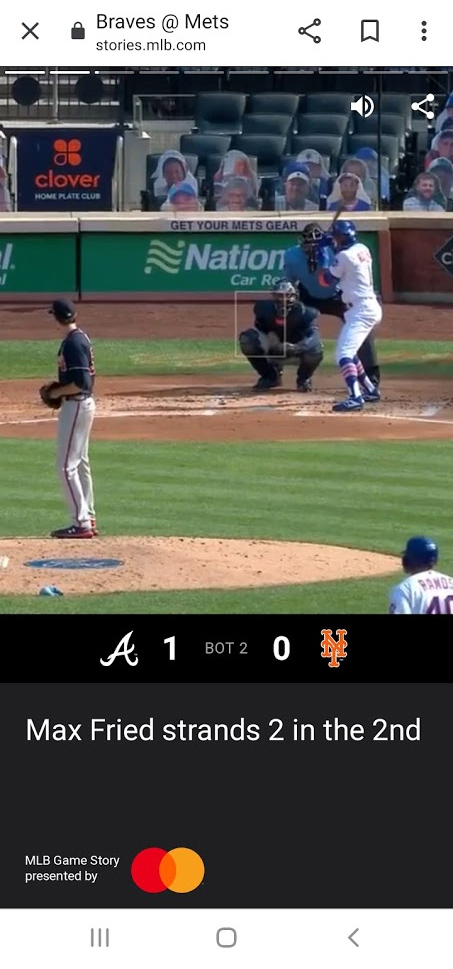
MLB game recap appears on SERP as Web Story
Someone abroad discovered that the game review on Google search results is presented in the form of Web Story. The author also saw it after the actual test, but then disappeared when sorting out the e-newsletter. It would be great to be able to quickly see the game review in the future!
link:Image source
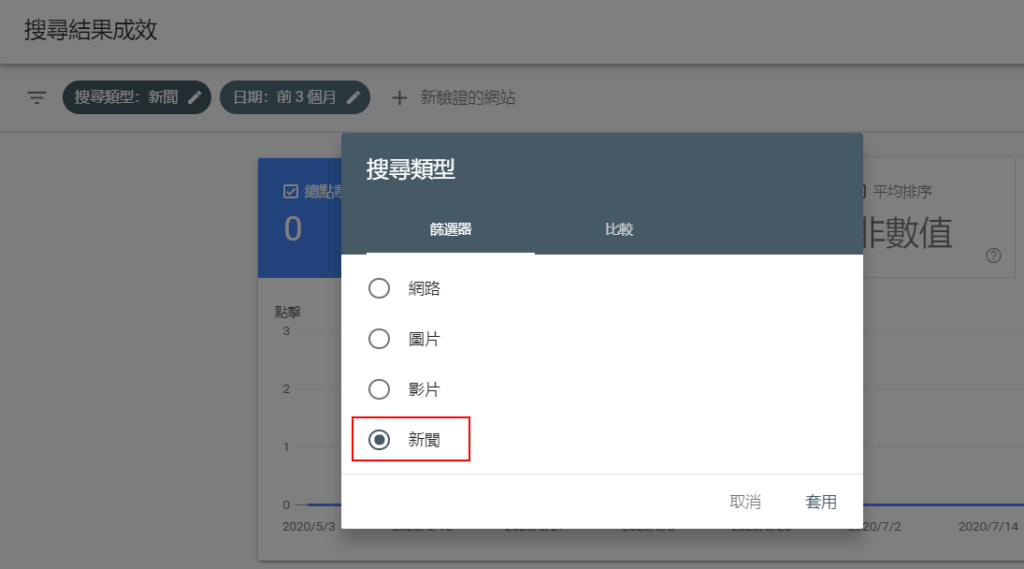
GSC filter adds "News" category
The filters in Google Webmaster Tools have added a fourth "News(News)" category, the original three categories are "Network (Web)」「picture(Image)」「Video(Video)」。
It is worth noting that the "News" category refers specifically to search results for news (tbm=nws) instead of top news in general search results.
Two changes in lazy loading of Chrome
These two updates are related to web perdormance and can save unnecessary data traffic consumption. Lazy-Loading, which is natively supported by the browser, will not have any negative impact on SEO. It is quite simple to install and can be used with confidence.
First, Chrome will support iframe lazy-loading, in the same way as images, just put it in <iframe>loading="lazy"is enough
Secondly, the lazy loading distance of the picture will be determined by3000pxchanged to1250px(4G) or2500px(3G)。

link:iframe lazy loading / picture lazy loading update
Google’s information at the antitrust public hearing
I believe everyone has heard about this antitrust public hearing between the U.S. Congress and the four technology giants. There are quite a few reports in Chinese, so I won’t go into details here. Among them, I think there are two points that SEO practitioners may be more interested in. The following is the author’s understanding. You can take a look for reference.
(1.) Is Click a ranking factor?
The answer is Yes, but it is a very indirect factor. It is not that as long as a certain web page has a lot of clicks on the search results, the ranking will gradually improve; the real operating mechanism is that Google will take back the click data on the SERP and feed it to the algorithm, and rely on machine learning to systematically optimize the results spit out by the overall algorithm. somewhat similar to themHow to deal with spam, instead of manually reviewing and making changes one by one when someone reports it, this information is used as input to train its spam detection algorithms.
(2.) Look at Search from Google’s perspective
A considerable part of this review document is Google’s internal discussion on how to maintain the status of its search engine. Most people may only understand “search engine” as services such as Bing, Yahoo, and Google. However, in Google’s own eyes, in addition to maintaining the status of the former (horizontal search engines), they do not want their status to be replaced by vertical search engines (vertical search engines) such as Amazon, YouTube, and Facebook.
link:Inside report / Business Weekly Report / US Congressional Review Documents
Fun fact: SEO guidelines launched by the British government
A British government unit published an SEO guide on the www.uk.gov website to teach everyone how to do SEO optimization. An official government organization came out to publish this kind of guide. It was so novel that it caused a lot of discussion in foreign SEO circles XD The content of
is okay, but the URL itself looks quite spammy:https://www.gov.uk/government/publications/search-engine-optimisation-for-publishers-best-practice-guide/search-engine-optimisation-seo-for-data-publishers-best-practice-guide
Twitter/X Post
View original post on Twitter/X
Mobile version content priority indexing extended to March 2021
The fourth issue of e-newsletterintroduced that Google announced that it will implement mobile content-first indexing (Mobile First Indexing) for all websites in 2020.09. Due to the epidemic, Google decided to postpone this plan to March 2021 in order to give websites that have not yet been optimized for mobile versions more time to improve.

link:official announcement / Best Practices for Mobile Content-First Indexing System
SEO Mythbusters: Website Speed (Page Speed)
This episode’s myth buster, Martin invites Eric Enge (co-author of The Art of SEO) to discuss myths about website speed. It is mentioned that although website speed has an impact, content is the most important part. Improving a website's Lighthouse score from 90 to 95 will probably not result in a significant ranking improvement.
Speed is important, but Google hopes that everyone will focus on "slow" or "normal" web pages. If the website speed is already fast enough, pursuing faster or faster will improve the user experience, but it will not have much advantage from an SEO perspective.
official video: Do special types of files need to be blocked in robots.txt?
In this newbie video, John Mueller is asked "Should I block special files like CSS, php.ini, or htaccess in robots.txt?」
The short answer is NO! Files that will not be crawled do not need to be specifically declared in robots.txt. In addition, files such as CSS and JS that may be used to render web pages are not recommended to block Googltbot even if the text content on the web page is not changed.
Official video: Google News Collection – July 2020
In this video, John Mueller helps everyone sort out recent news related to Google Search, including Web Stories,Web experience core indicators, structured testing tools...etc. If you follow the digital engine well, these news will probably be familiar to you.
Regarding web vitals, John mentioned that although it has not yet been decided when it will be officially included in the ranking indicators, it will be announced at least six months ago.
More and more SEO related information
Below are several articles or tools that were originally listed as candidates for the e-newsletter. If you are interested, take a look at it yourself!
- Newly added image copyright structured data in GSC
- [Data Analysis] Glossary GA shopping stage by Max (Chinese)
- GMB merchant attributes for each category
- AMP testing tool supports Web Story
- Practical Chart Tool: Bar Chart Generator
- Log File Analysis Complete Guide
- Technical SEO Checklist (PDF)
- Interview with Gary Illyes: Making good use of Structured Data
- Wordpress 5.5 finally lists XML sitemap as a core project
- Schema 9.0 released
- Tip: Find CLS with Chrome DevTools
- MozCon 2020 key points (Part 1/next episode)
- Research: Consumer decision-making process when purchasing by Google
It seems that this is the first time that the e-newsletter has been delayed for so long, but it is finally completed!
Related reading
Use Conversion Funnel to find at which step the user leaves
An analysis note starting from the shopping process, explaining how to break the conversion process into steps, and then use the churn position to find the pages most worthy of optimization.
Alt Text is not just a picture SEO: first describe the picture for users
Reorganize the proper use of image alt text, explaining that alt text simultaneously serves accessibility, content understanding, and image search, rather than cramming keywords into every image.
Search Console search statistics: What pages is Google crawling recently?
Organizes discovery and reorganization concepts in Search Console search statistics, linking crawler behavior back to sitemaps, duplicate URLs, and troubleshooting of site-embedded pages.