
This issue of the e-newsletter has a lot of content that helps clarify concepts, including how search engines operate, common myths about rich results and canonicalization, and a series of unpopular SEO knowledge. If you scan this article, you may think it doesn’t have much emphasis, but if you read it carefully, I believe you will find some things you didn’t know before (for example, “Can the description on search be prevented from being rewritten by Google?”). It is recommended that no matter SEO novices or veterans, read it slowly!
- GTM big update: Server-Side Tagging
- Create your People Card on Google
- Official article: How quality raters make search results better
- Unpopular SEO Knowledge Series
- 8/11 Big glitch in Google index
- Rich Results Q&A & Video
- Free SEO Activity: Science of Search
- Online SEO seminar hosted by Google: Unconference
- SEO Mythbusters: Canonicalization
- Official Video: Mobile First Indexing
- Official Video: How Google Optimizes Search Results Pages
GTM big update: Server-Side Tagging
Google Tag Manager has launched server-side tagging. It is currently only open to the Google Cloud Platform environment, but it is believed to be integrated with more environments.
This is very different from the general GTM. I have read the introduction several times and still am confused. I can only roughly understand the advantages of server side tagging. Here is a very brief introduction. Interested readers can do their own research and welcome to discuss with me! If anyone finds good Chinese resources, please let me know. I will be happy to share them in the digital engine so that more people can see~
In general settings (client-side), third-party javascript will be loaded on the web page, which will consume browser resources, may make the web page load slower, and webmasters have no control over what data is sent to the third party.via server-side tagging, GTM uses HTTP Requests to understand what is happening on the web page, and leaves it to the "Client" for processing. After the processing is completed, it decides what data to send to the third party (ex: intercepted/r/collect?v=1&..will send a pageview to Google Analytics).
In other words, third parties (such as Facebook) will not be able to track various things just because they ask the website administrator to install a pixel through client-side GTM. Instead, they can only receive the data that you define on the server-side GTM to be transmitted to the third party. It has the advantages of privacy, performance, data accuracy, etc., but the disadvantage is complexity and additional costs.
link:official article / Simo article
Create your People Card on Google
This is a function that currently only appears in the Indian version of Google. Search on Google "add me to search"You can create your ownPeople Card, will appear when others search for you.
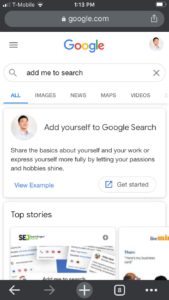
Search "add me to search" 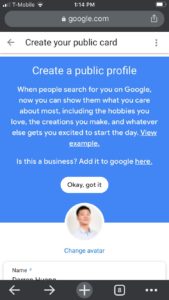
Start creating profile 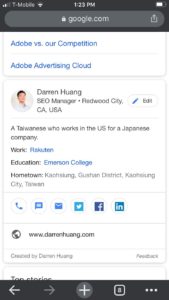
people card appears
Last issue of e-newsletterIn the documents of the monopoly hearing, it was mentioned that Google hopes to have a place in vertical search, and this may be another attempt at "people searching" after Google+.
Link: Create people card tutorial (Shared by netizens/official document) / Manage your people card
Official article: How quality raters make search results better
Posted by Danny SullivanArticleis talking about how Google uses some insights to optimize search results and rankings.
A large part of the article talks about the concept of Quality Raters. Basically, Google employs more than 10,000 people around the world to rate the quality of search results. They baseA guide (search quality guidelines) The criteria onare used to score search engine results, including whether the web page meets the search intent, whether it has EAT... and so on. Their decision does not directly affect the ranking of the website, but is used to measure whether Google search has achieved the goal of meeting user needs.
If you have never heard of search quality raters or are unfamiliar with this concept, it is recommended to read this article!
Unpopular SEO Knowledge Series
This is the Uncommon SEO Knowledge series initiated by Partick Stox, which specializes in talking about some lesser-known concepts. There are currently two series: (1.)HTTPS and (2.)Titles and Meta Descriptions + Snippets, click to see more.
Twitter/X Post
View original post on Twitter/X
Twitter/X Post
View original post on Twitter/X
I will come back when I have time to summarize and translate the content here. Interested readers are welcome to read it by themselves. You can also see my contribution in one of the discussion threads XD
8/11 Big glitch in Google index
On the afternoon of 8/11 US time, many people noticed a considerable change in the rankings of the search results, thinking that Google had launched an algorithm update. However, officials later clarified that it was a chain reaction caused by a problem in a certain link in the indexing system.
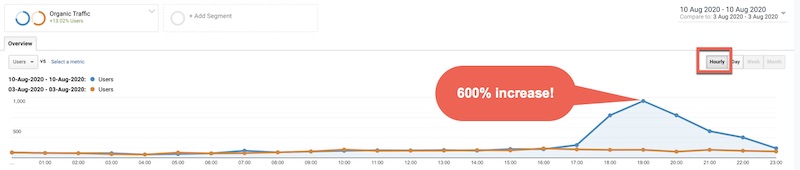
Twitter/X Post
View original post on Twitter/X
The way Google operates is roughly divided intograb", "Index" and "Ranking", the three stages are closely linked. This time everyone thought that the ranking algorithm had been changed, but it was later confirmed that there was a problem in the indexing stage.few weeksGary also mentioned another problem in a podcast that seemed to be an index problem, but was actually an indirect result caused by a problem with a program in the crawling process.
link:SER report / Gary explanation retrieval system (Caffeine)
Rich Results Q&A & Video
This video by Daniel Waisberg explains what rich results are, best practices, how to use GSC to diagnose results...etc. Recently, Daniel published another article to answer other questions related to Rich Results. Some of the questions are very common myths and doubts, including:
- Will the website get a ranking improvement because it has structured data?
- Can product structured information be added to the category page of an e-commerce website?
- Are there any benefits to putting a schema markup that is not supported by Google?
- What kind of content can be put into structured data? Are there any restrictions?
link:Rich Results & Search Console Webmaster Conference Lightning Talk
Free SEO Activity: Science of Search
Science of Search is a one-day online event organized by BrightonSEO in the UK. The time is around 4pm on 08/21 in Taiwan. You don’t have to stay up late to listen to it. I recommend it!

link:event registration
Online SEO seminar hosted by Google:Unconference
In order to promote communication between webmasters and SEOs, Google held this online discussion. Each session will have a theme and the host will lead the discussion. However, since it was a seminar rather than a lecture, and the number of people was limited to 500, the author unfortunately did not win the ticket.
This type of group discussion often appears in foreign seminars. I have participated several times and found it quite good. The purpose is to encourage everyone to participate and put forward their own opinions on this topic, rather than just sitting there and listening.
Twitter/X Post
View original post on Twitter/X
SEO Mythbusters: Canonicalization
The myth buster in this episode is about Canonicalization (consolidation of duplicate URLs). I think the topic is well chosen. The main axis ofcanonicalization is how search engines determine whether the content on different web pages is the same or different.. It sounds simple, but in practice it is not, for exampleIf the content may have only slight differences, is it considered duplicate content? How to integrate the same content appearing on different web pages at the same time?...etc. Points discussed in this episode include:
- canonical tag in the process of canonicalizationis just one of the signals, not a command, Google has other signals used to determine
- What happens when the content is inconsistent but there is canonical, or the content is consistent but there is no canonical?
- canonical vs redirect
- Website canonical preference vs user preference?
Official Video: Mobile First Indexing
This is a new video from Google WMConf Lightning Talks, in which Martin Splitt explains the problems that websites may encounter when using Mobile First Indexing. The content of the video is relatively basic, but if you are still a little confused about this concept, you can take this opportunity to clarify it.
Official Video: How Google Optimizes Search Results Pages
Google's purpose is to help users find information, and this video introduces how Google continues to optimize search results so that information can be delivered in a more efficient way. There is interesting information in the video: "In 2019, Google made more than 3,620 improvements to Search."
If you want to go to India to create a people card, please help me search for "darren huang" to see if my file is still there XD