Happy New Year, everyone! December brought more Google Search changes and announcements than I expected. With ChatGPT taking off, more people also realized that AI is not as far from maturity as we may have thought. The final two items—one exploring AI applications in SEO and another surveying what content marketers think about AI—are both fascinating.
Lastly, I owe everyone an apology. After wrestling with the decision for a long time, I have decided to discontinue the paid newsletter and issue prorated refunds. I explain the details at the end of this issue.
- [Update] A New Helpful Content Update and Link Spam Update
- [Update] Infinite Scrolling Comes to Desktop SERPs
- [News] E-A-T Becomes E-E-A-T with Experience
- [Official] Google Launches the Search Status Dashboard
- [Official] Google Search's Visual Elements Gallery
- [Test] “Content Ideas” Appears in GSC
- [Tool] Screaming Frog v18 Update
- [Research] A Survey of 755 Link Builders
- [Recommended Reading] Generative AI and Its SEO Applications
- [Research] AI and Content Marketing Survey
[Update] A New Helpful Content Update and Link Spam Update
In the final month of 2022, Google announced two algorithm updates: the “Helpful Content Update,” launched on December 5, and the “Link Spam Update,” launched on December 14.
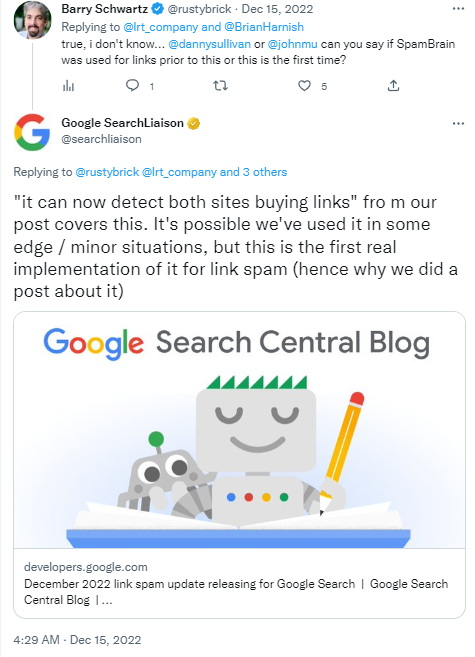
The second update is especially noteworthy, as many people in the community reported significant volatility. This was the first time Google truly used SpamBrain to target link spam. The announcement also said that, in addition to trying to identify “sites buying links,” Google would begin detecting “sites used for the purpose of passing outgoing links” and would “nullify” or “neutralize” those links. In other words, Google did not mention penalties, and there would be no notification in GSC, but a site could still see traffic volatility when links previously considered beneficial lost their value.
Links: Report spam to Google / Search Engine Roundtable coverage
[Update] Infinite Scrolling Comes to Desktop SERPs
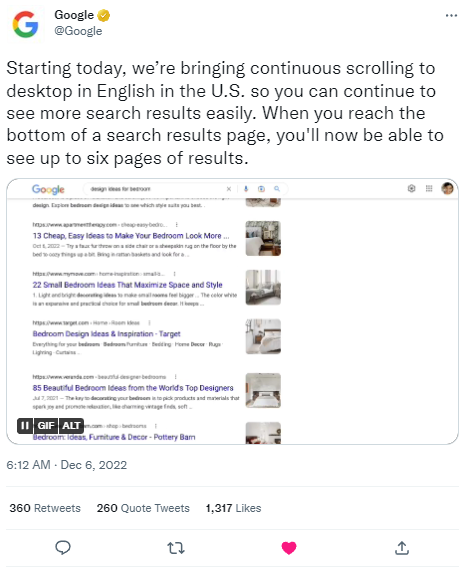
In late December 2022, desktop search results also began using infinite scrolling, allowing users to scroll through as many as six pages. It initially rolled out to English-language search in the United States, but I expect it to reach other regions over time, just as the mobile version did after launching in October 2021.
Google also confirmed that infinite scrolling would affect ads in the same way it did on mobile: users would see ads after scrolling to the next page, while fewer ads would appear at the bottom of the page.
Link: The UX pros and cons of infinite scrolling
[News] E-A-T Becomes E-E-A-T with Experience
E-A-T—Expertise, Authoritativeness, and Trustworthiness—is an important set of criteria Google uses to evaluate webpages in its Search Quality Rater Guidelines. In mid-December, Google added Experience as another criterion, extending the concept from E-A-T to E-E-A-T.

There are two main reasons for adding Experience. First, firsthand experience is extremely valuable in ordinary product reviews, even when the content is not necessarily expert or authoritative. Second, with YMYL content involving money or health, someone searching for information about cancer might want to learn how other people coped with changes in their lives after cancer (experience), rather than read advice from medical experts (expertise).
Links: Official announcement / Search Quality Rater Guidelines
[Official] Google Launches the Search Status Dashboard
Google launched a Search Status Dashboard that divides Google Search into three parts: Crawling, Indexing, and Serving. When any of these areas experiences a widespread system issue, it will appear on the dashboard, giving everyone a place to check whether the problem is affecting more than just them.

The documentation for using the dashboard also says that when an issue is detected, Google's Search Relations and Engineering teams respond in four stages: “Detection and initial response,” “Investigation,” “Follow up,” and “Mitigation or fix.” If a problem comes up in the future, you can refer back to the definitions of each stage.
Links: Official announcement / Official documentation / Search Status Dashboard / Search status history
[Official] Google Search's Visual Elements Gallery
Web results on Google Search can take many different forms. To help people better define these elements, their names, and the ways to control them, Google created a visual elements gallery covering 22 common appearance features.
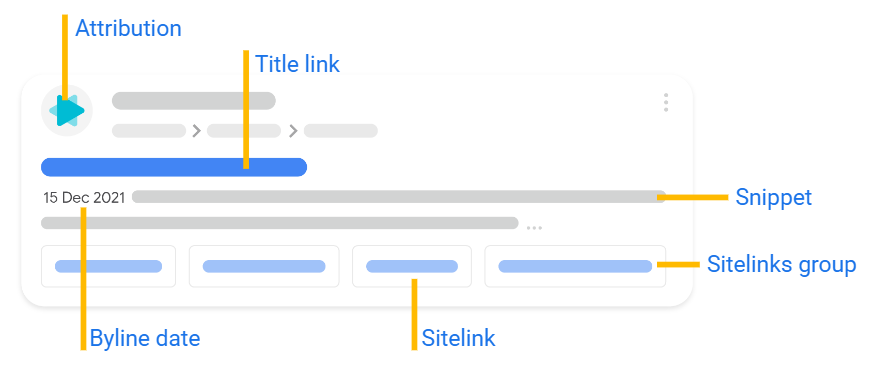
“Title link” is a term that emerged only after Google began changing webpage titles in 2021. The documentation also has a Chinese version. Some of its translations are a little odd, but at least it provides official terminology to follow for elements such as breadcrumbs, favicons, and sitelinks.
Links: Official announcement / Visual elements gallery documentation
[Test] “Content Ideas” Appears in GSC
A user overseas spotted a new “Content Ideas (experimental)” tab in GSC. It listed a range of content ideas and suggested that site owners use them to create content.
These ideas likely came from “Content Hub,” a platform covered in Issue 8 and Issue 24. Perhaps because usage was too low, Google decided to experiment with integrating it into GSC.

Link: Search Engine Land coverage
[Tool] Screaming Frog v18 Update
Screaming Frog reached version 18, and this major update brought three improvements that I find especially useful. The first was GA4 integration, which lets you retrieve GA4 data while crawling a site—an indispensable update for 2023. The second was PDF crawling. Broken links in PDFs are often overlooked because ordinary tools do not crawl PDF files. Finally, there were in-app updates. In the past, every minor update required downloading the app again from the website; from then on, you could skip that step and update it directly in the background.

Link: Update details
[Research] A Survey of 755 Link Builders
Although link building occupies a gray area, it is almost impossible to avoid the subject in SEO circles, and some people in the industry specialize in building backlinks for websites. This study surveyed 755 link builders and produced some interesting findings. I have highlighted a few below; if they catch your interest, take a look at the original report.


Link: Link building survey
[Recommended Reading] Generative AI and Its SEO Applications
I am sure everyone has seen plenty of ChatGPT and other generative AI applications over the past few weeks. These new technologies are bound to have a major impact on SEO in the future.
This WordLift article gives a broad overview of several things marketers can do with AI, including generating product descriptions, summarizing articles, and creating new images like the example below. That makes it especially useful for ecommerce sites.

If you have spent any time experimenting with these generative AI tools, you will know that writing prompts is itself a skill that takes practice. This article also explains several principles for writing good prompts in considerable detail, and I recommend giving it a read.
Link: Original article
[Research] AI and Content Marketing Survey
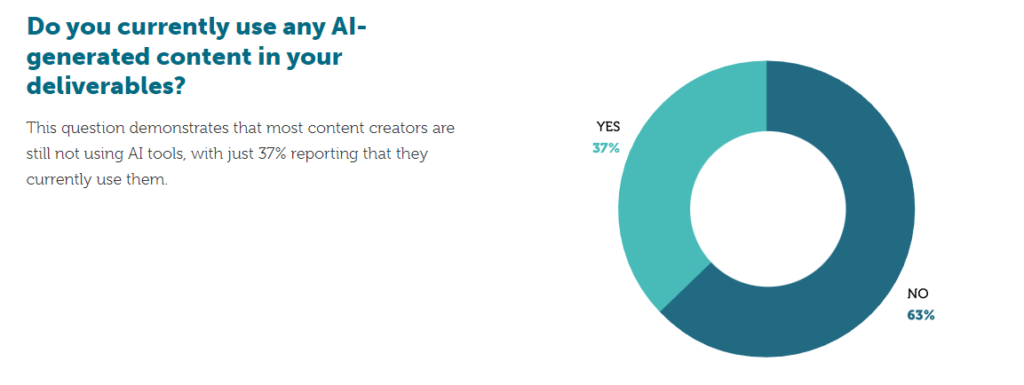
This survey of digital marketers and content creators explored how people expected increasingly mature AI technology to change the way they worked in the future. It is worth noting that the survey was conducted before ChatGPT was released, so after seeing what ChatGPT could do, I imagine everyone's sense of urgency climbed another notch.


Link: AI and content marketing survey report
Newsletter Discontinuation Notice
After running the paid newsletter for two years, I have decided to make it free, shorter, and monthly in 2023. The main reason is that the number of things I want to do grows in proportion to my age, while the time I have available moves in the opposite direction. I reached this decision after giving it a great deal of thought, and I hope everyone will understand.
Membership fees will be refunded on a prorated basis. I expect to finish processing the refunds by mid-January, before the Lunar New Year. Before then, I will organize the records and email everyone to confirm the refund amount and account details.
Finally, I wish everyone a rewarding new year!
Best,
Darren
Related reading
After AI Anxiety: From Worrying about Being Replaced to Starting to Understand Tools
A more personal record, talking about the uneasiness caused by AI, the impact of sharing tools with friends, and how your mentality changes after you really start to understand it.
uses Style Transfer, Few-Shot and LoRA for product description
A community post recording e-commerce product description experiments, from prompt words, example learning to LoRA fine-tuning, sorting out the cost and control of different methods.
GPT Getting Started in SEO: An Early Application Checklist
organizes SEO use cases in the early days of ChatGPT’s popularization, from prompt words, technical SEO, content analysis to cross-language reading, retaining observations from the time when the tool ecology was just beginning to change.