The content of this issue is mainly article recommendations. It will take some time to read them all. I will try my best to list the summaries for everyone, but I still hope that people who have time can read the original articles by themselves. The titles of the fourth and fifth points may seem a bit ordinary, but the content taught in them is worth reading. In the end, I personally think that the most rewarding part is the eighth point of Fuzzy Matching. Find some time to study this technology and its applications!
- [News] GSC adds CNAME verification method
- [Interesting article] Hidden website XML Sitemap
- [Tool] Google spreadsheet combined with GSC URL Inspection
- [Good article] Five ways to increase external links to e-commerce websites
- [Practical] Advanced GSC analysis application of Data Studio
- [Information] How CrUX data is recorded
- [Trick] Find internal linking opportunities with Screaming Frog
- [Learn] Fuzzy Matching and its SEO applications
- [Video] Does CMS (content management system) affect SEO?
- [Abstract] Interview with Barry Schwartz
[News] GSC adds CNAME verification method
GSC verification is divided into two types: domain or url-prefix. In the past, domain verification could only be completed using TXT records in DNS. Now it can be completed using CNAME. Personally, I don’t think this change makes much sense, because generally the permissions of TXT and CNAME records are the same, and you can change TXT if you have the permission to change CNAME.
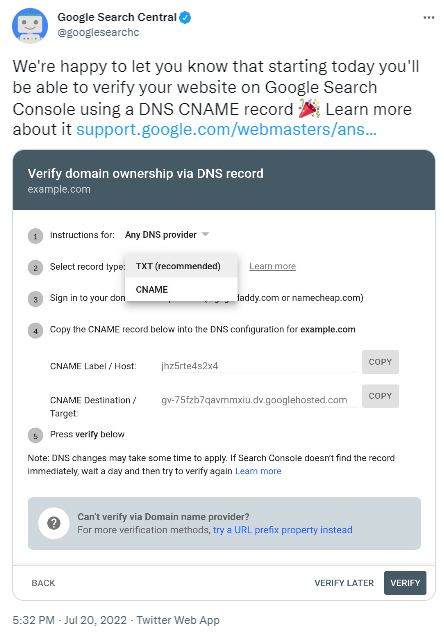
DNS domain name, which can be used to provide additional information about the domain. CNAME and TXT are just two of them. The other common ones are A, AAAA, NS... etc. If you are interested in learning more, you can refer to this articleChinese article。
[Interesting article] Hidden website XML Sitemap
We all know the importance of sitemaps for SEO. It makes Google crawl the website more efficiently. But at the same time, it also allows opponents to easily view the entire website, know the opponent's sitemap location and monitor it regularly, and can also know immediately when new products (pages) are launched.
This article talks about a lot of details about sitemaps. The main focus is on how to make sitemaps effective but not easily found by interested parties; but in other words, it also mentions several ways to find rival sitemaps. If you still don’t know how to do it, you can learn it!
One of the interesting things is the use of redirect, for example to notify GSC that the location of the site map is athttp://ohgm.co.uk/pastebin-sitemap, but clicking on it will be redirected to a completely different domain. This method will still be successful in GSC.

link:hide xml sitemap
[Tool] Google spreadsheet combined with GSC URL Inspection
Search Analytics for SheetsThis very practical Google spreadsheet plug-in has recently been updated. It can be combined with URL Inspection to spit out the results directly back into the spreadsheet, which is very practical!

This tool is quite simple to use. After authorization, you can get the above results with just a few clicks. It is worth mentioning that this function is still limited to 2000 times per day, and it will take some time to run.
If you are not familiar with this tool, in addition to easily capturing GSC data, it also has an automatic backup function. You can set automatic backup and notification every three months. It can also be completed in a few clicks. I recommend it to everyone!
link:tool official website / tool download Introduction to / website detection tool
[Good article] Five ways to increase external links to e-commerce websites
This article shares five e-commerce websites that can obtainBacklinkmethod, I haven’t shared this kind of basic article for a long time. Recently, I have been exposed to many e-commerce websites during my work, so it is particularly interesting to read. Although the methods in it are not completely unfamiliar, the structure and narrative method of Ahrefs’s article are very straightforward and easy. I recommend it to everyone!


link:Ahrefs e-commerce external link
[Practical] Advanced GSC analysis application of Data Studio
The title of the article is "Search Console: Data Studio template to run a risk-free analysis", to be honest, I'm a little confused.
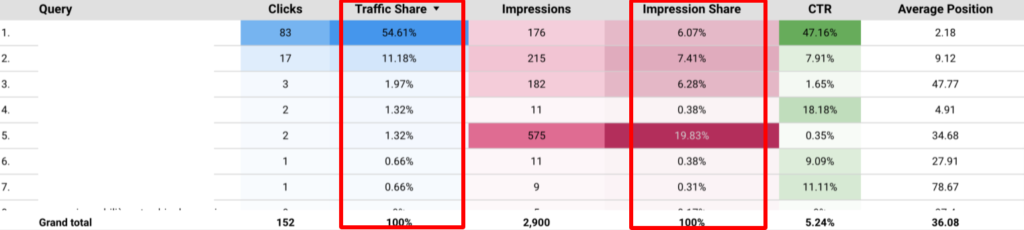
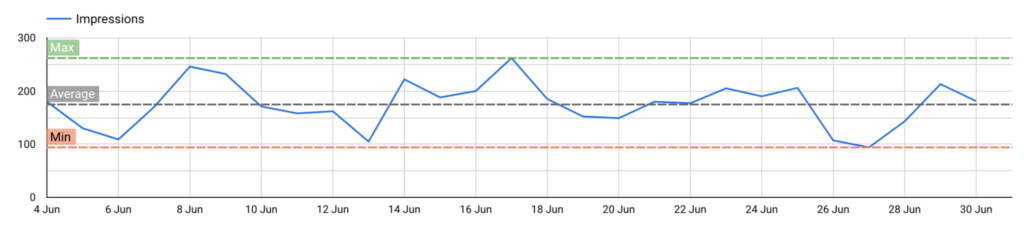
I recommend this article mainly because I consider myself fairly familiar with Data Studio, but I still learned a lot of new tricks after reading this article. Here are some screenshots of the techniques mentioned in the article.

link:Original text
[Information] How CrUX data is recorded
Chrome User Experience (CrUX)is a public data set provided by Google, which records the performance of Chrome users when browsing the web every month. Google published an article in mid-July explaining in detail how CrUX data is recorded. This is very detailed SEO-related knowledge. If you are interested, you can read the original text. Here are a few places that I personally find interesting: If the
- web page cannot be included, it will not be recorded in the CrUX data at the origin level.
- The domain (origin) and web page (page) must be popular enough to see their CrUX information. "Popular" means that the number of visitors must reach a minimum standard. The number will not be disclosed, but the standards for domain and web pages are the same.
- In page level data, Chrome will try to handle some common parameters (such as
utm_medium=emailor#main), but there is no guarantee that the parameter data can be completely cleared. - There are several Chromium platform data that will not be recorded in CrUX, such as the iOS version of Chrome and Microsoft Edge (same skeleton as Chrome)
- AMP web pages can be recorded correctly
link: HowCrUX records data
[Trick] Find internal linking opportunities with Screaming Frog
is a fairly simple and straightforward set of steps. Although the article mentions Screaming Frog, you can actually do it without purchasing the tool. The important thing is the principle behind it:
- Select keywords from SEMRush that the website ranks around 5~15. These words will often bring the greatest benefits if they are ranked higher.
- Use Screaming Frog’s Search function to crawl the website and list all web pages containing these words.
- These pages may be a good opportunity to put internal links to the target page to further improve the ranking.
- If the results show that not many web pages mention the target keyword, it is an opportunity to enrich content related to this topic.

If these tools are not available, GSC can be used instead of SEMRush to find target keywords, and for internal link opportunities use"target keyword" site:www.example.com, let Google help you determine which pages of the website mention these words.
link:Use Screaming Frog to identify internal linking opportunities
[Learn] Fuzzy Matching and its SEO applications
Fuzzy Matching refers to the use of mathematics to compare two strings, and then express the degree of similarity between them as 0~1, with 1 representing exactly the same. This concept has many uses in SEO, such as:
- Compares two columns of URLs and, for each URL in one column, selects the URL in the other column that is most similar to it. It can be used for redirect mapping when the URL changes, or when you have a bunch of 404 URLs and want to quickly determine the appropriate redirect location.
- Compare the content of a bunch of articles and find articles that may have similar content based on the words used in the articles to find possible internal link opportunities.
- Classification keywords, such as coca-cola and coca cola and cocacola, the spellings of these words do not exactly match, but it is easy to judge their familiarity with the help of fuzzy matching.

Someone in the SEO community recently wrotean article、Video, andtemplate, to show the application of Fuzzy Matching in SEO (the author first introduces the origin of this technology, if you are not particularly interested, you can skip it). The content is very comprehensive and extends to many previous articles, but I personally find it a bit difficult to read, especially the examples in the template are not very clear.
Most people only focus on vlookup or match, which can achieve exact matching. However, there are many situations in the SEO industry that require fuzzy matching. If you learn this skill, it will definitely come in handy one day. Therefore, I recommend that you read this article to at least understand its application and its limitations.
link:Fuzzy Matching Recommended Videos
[Video] Does CMS (content management system) affect SEO?
「website on Pixnet?」、「Should e-commerce choose Shopify or WooCommerce??」、「Is WordPress SEO friendly?"...Wait a minute, I think everyone must have encountered the problem in this episode. To put it simply and directly (also the answer given by John in the video),No, search engines don’t care how the web page is generated or what CMS is used behind it, they will only look at the final results.
Of course, this does not mean that CMS has no impact at all. Web pages produced by a poor CMS may have a lot of redundant code or cover ads that cannot be modified by users, which will affect SEO. In addition to the CMS itself, many additional plug-ins or plug-ins installed may increase the "burden" of the website.
But ultimately, from Google's perspective, these issues have nothing to do with the platform of the CMS itself. They only focus on the source code and web page experience returned by the final server.
[Abstract] Interview with Barry Schwartz
The guest in this episode is Barry Schwartz. I believe everyone has heard of this name. He is the founder of Search Engine Rountable and has been reporting SEO news for nearly 20 years! There is not much useful information related to SEO in this episode, but it is suitable for relaxed listening. Their interaction is quite interesting.
Barry is a well-known journalist in the SEO circle. He keeps a close eye on the words and deeds of several Google search spokespersons, as well as discussions on the community. I actually don’t follow him on Twitter because it is easy to be overloaded with information, and no new things in the SEO circle can escape his monitoring. Gary said that they were actually very grateful to Barry for watching what they said so closely, because it made Google pay more attention to any external remarks and be careful not to be taken out of context. ,
SEO is actually just a side job for Barry. He founded a software company, rustybrick.com, with his twin brother when he was 14 years old. He spends about two hours doing SEO-related things before work every day. He browses the day's feed in 30 minutes, and then writes for an hour. On average, an article takes about 4 to 8 minutes to complete, but the key point is that he has persevered for more than 15 years.
If you want to understand this character or watch the funny dialogue between him and Gary, this episode is very good!
link:verbatim draft
It’s been two months since I moved back to Taiwan, but I feel like my life and work are not on track yet, and I need to work harder!