The e-newsletter has come to its 60th issue! This time there are more official announcements and content, as well as some useful tools, teaching articles, and SEO experiments. My favorite is the Chrome DevTools tutorial in the fourth point. I personally benefited a lot from reading it. The other articles also gave me some perspectives that I had never thought of before. I hope everyone feels as inspired as I did when reading it!
- [Official] Video collection report officially launched
- [Official] Google algorithm major update
- [Analysis] Possible reasons why GSC sees a lot of impressions but few clicks
- [Practical] Use Chrome DevTools to detect the impact of performance optimizations
- [Tool] Use AI to write Regex syntax
- [Good article] 11 Google Sheets formulas that are very practical for SEO
- [Experiment] Removing structured data of low-scoring product reviews caused an increase in traffic
- [Good article] Analyze the "pattern" of keywords
- [Video] Source HTML (before rendering) vs Rendered HTML (after rendering)
- [Abstract] How to avoid content being indexed by Google
[Official] Video collection report officially launched
in this year’sGoogle I/Ohas noticed the new Video Indexing Report in GSC. Recently, in early July, it was officially announced that this new report will be launched for more people to use in the next few months. This report will tell youHow many included pages have video content, and how many of them are "included" video content;If there are videos that cannot be included, what is the reason?。

In addition, when the URL Inspection Tool detects that there is video content on the inspection URL, it will also have an additional section to list the details of the video, including the video URL, image URL, inclusion status, and problems encountered during inclusion.
link:official announcement / Video Content Best Practices / Video Indexing Report official document
[Official] Google algorithm major update
Google itself has launched a page to sort out all "officially announced" algorithm updates since January 2020. But please note that Google has said they will have it in 2020 aloneMore than 600,000 algorithm tests, so the actual algorithm updates are much more than the number in this list.

If you see significant fluctuations in traffic and wonder whether there are unannounced algorithm updates, you can refer toMarie Haynesor The two web pages ofMozare relatively well organized. Or this one by Search Engine Roundtablewasthereagoogleupdate.com website, you can select a date to see if there are any news discussing algorithm updates.
In addition, major SEO platforms have also made free tools for ranking monitoring to observe fluctuations and guess whether there are algorithm changes. I haven't closely observed whether the algorithm has been updated, but I will refer to it if necessary.SEMRushand This tool byMoz.

[Good article] Possible reasons for seeing a lot of impressions but few clicks in GSC
Brodie’s article is about the doubts that many SEOs have. Occasionally, we will see a large number of exposures to a certain webpage in GSC, but the click-through rate is surprisingly low. This is actually related to how GSC records data. Every link on the search results, not just the general web page results, will be recorded in GSC. Therefore, these large amounts of exposure may come from the results of extraordinary web pages on the SERP.


In addition to the above two examples, there are also twitter carousel, knowledge graph... etc., which may cause a sudden large amount of exposure to web pages. If you’re in doubt but can’t see the results yourself, try using a VPN or SEMRush’s SERP Screenshots tool.
[Practical] Use Chrome DevTools to detect the impact of performance optimizations
this articleis highly recommended for people who want to become proficient in Technical SEO. It talks about several common areas where web page performance can be optimized, but more importantly, it introduces in considerable detail how to use Chrome's developer tools to determine these problems.
The following are several articles that introduce what Chrome DevTools can do. I hope it will attract interest in this article and read it~
- Change the browser's network environment to slower 3G, making it easier to see optimization items such as layout shift.
- Find out which font is used on the web page and which CSS file is controlled by it
- Use Local Overrides to test the impact of changes without having permission to change the website
- See the proportion of JS and CSS files that are not used
- See the native size of the image and its actual size on the screen
- ...etc

[Tool] Use AI to write Regex syntax
was there a while agoFacebookintroduced the syntax for organizing Regex (regular expressions) on Google spreadsheets, which received a lot of response. It seems that everyone has written regex before and wanted to hit a wall.
Recently I saw this AutoRegex tool. You can enter a description and let GPT-3 automatically generate the Regex formula for you. Of course, if the conditions are very complex, manual inspection and adjustment are required, but after playing with it personally, the results returned in simple cases are quite accurate.
The following are several test results. Registration takes about 3 seconds to complete. I recommend everyone to give it a try!
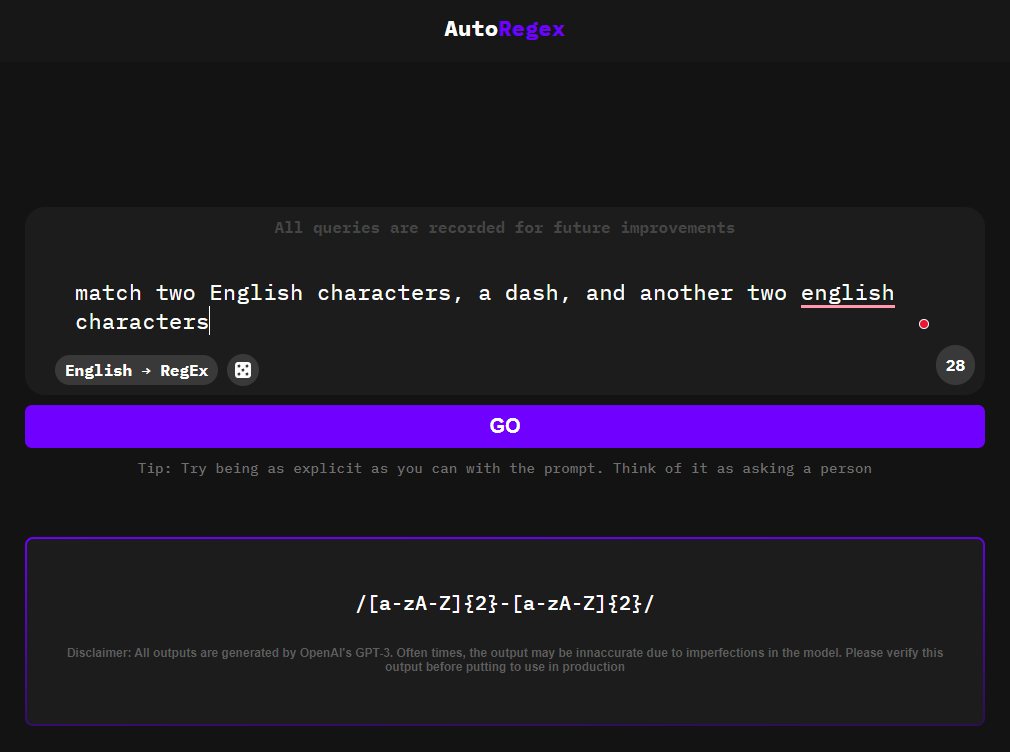
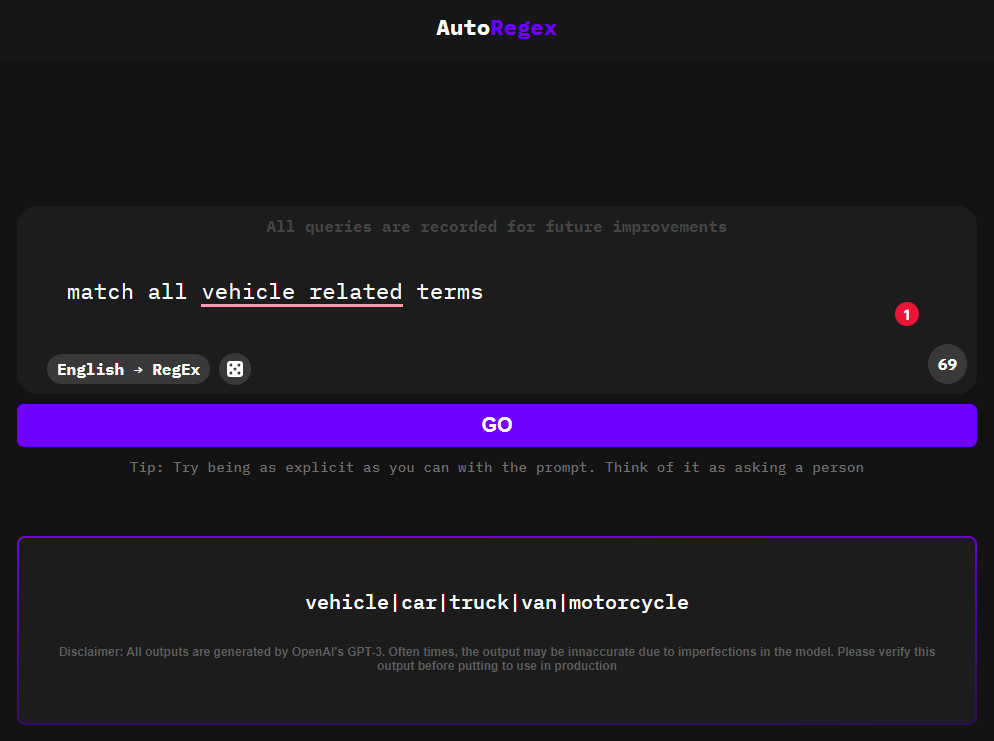
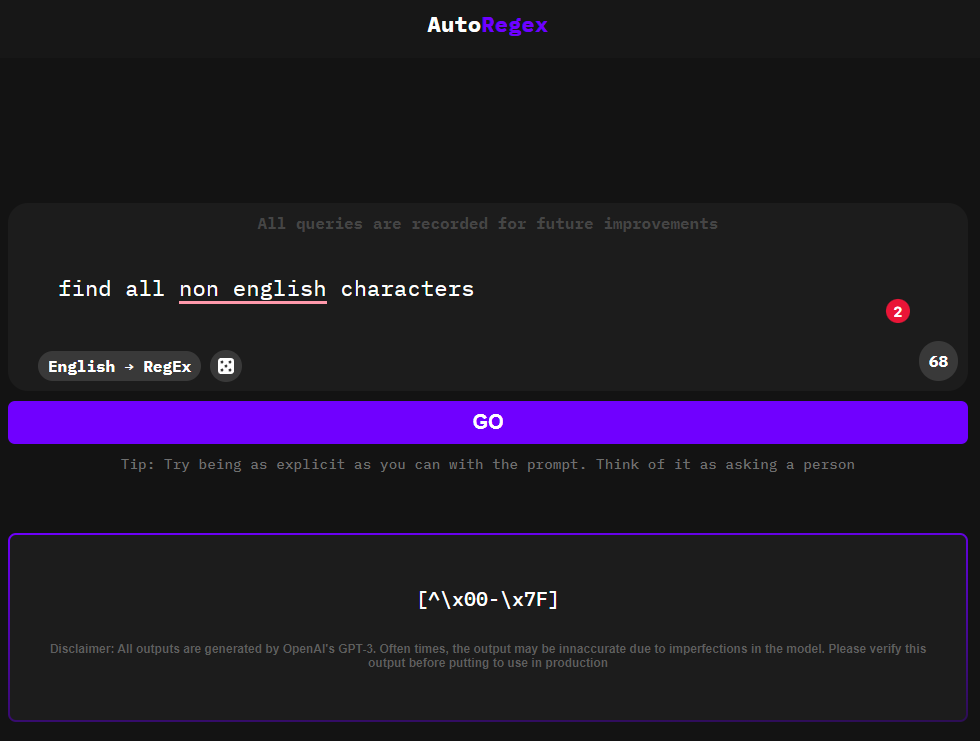
link:autoregex.xyz
[Good article] 11 Google Sheets formulas that are very practical for SEO
This article introduces 11 Google Sheets built-in formulas that are very useful when doing SEO data analysis, starting from the more basic onesvlookup、concatenate、lower, which relatively few people knowgoogletranslate、flatten、sparkline。
There are pictures in the article, so you can quickly understand the use. It is recommended that whether you are a novice or an expert in spreadsheets, you can take a quick look at it, maybe you can learn a trick or two (likeflattenI didn’t know this formula before~).

sparklineMake quick charts
flattenConvert the qualities in a matrix into a column of datalink:11 useful formulas in Google spreadsheet
[Experiment] Removing structured data of low-scoring product reviews caused an increase in traffic
This test on the SEMRush website is very interesting. Many people will pursue structured data and rich results, but if the product's rating is not good, what is the reason why putting structured data will make its click-through rate lower?

The tested e-commerce website has more than 500,000 products. They tested all products with a rating of three or less (out of five).
TheaggregateRatingtag was removed, and the result was an increase of nearly 21.7% in organic traffic within 21 days. The confidence level of the experiment was as high as 99%.
Personally, I think it is a pity that there are no public ranking changes, but friends who run e-commerce websites may wish to try this strategy.
link:The impact of removing low product review tags on SEO
[Good article] Analyze the "pattern" of keywords
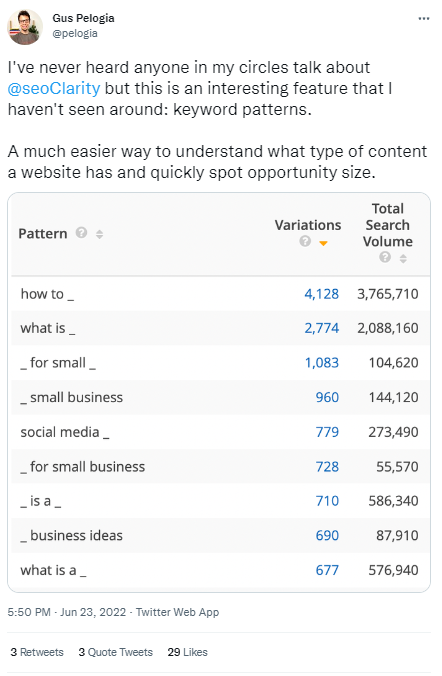
One step when analyzing keywords is classification. The purpose is to classify words with the same concept but different words into a cluster, so as to see which "topic" has a higher search volume, and which replacement words should be used when writing to express the same concept.
However, the classification method introduced in this article is quite different. What they want to classify is the pattern of words used by users when searching, and use this to determine the template for the website's copy title. For example, more people search for{location}{room type} for rentor{room type} for rent {location}, based on the search volume of the two templates, determine whether the page title should be "Taipei Suites for Rent" or "Suites for Rent in Taipei".
[Video] Source HTML (before rendering) vs Rendered HTML (after rendering)
"When you enter a URL and press the Enter key, what happens behind the scenes to allow the user to see a web page?" This is a very basic question for SEO, because we need to understand how Googlebot reads web pages.
Martin explains this concept very well in this video. There are also some more advanced things, such as Source HTML, Rendered HTML, the difference between DOM, the concept of Render Tree... etc. I recommend that you spend nine minutes watching this video.
[Abstract] How to avoid content being indexed by Google
This episode discusses how to publish content online without having it indexed in full or in part by Google so that anyone can see it in search results.
can be prevented by using robots.txtcrawler capture, but it does not actually prevent inclusion. Although in most cases, web pages that have not been crawled will not be included, but Google can use other signals such as external links to know what the web page may be related to without crawling, and still include it. Gary saidwe will still index the URL, but not the content of the page。
also mentioned
For this meta tagnoarchive, John said that in order for a search engine to operate, the web page must be stored somewhere. Noarchive only controls it so that no one can see that the web page is cached in the search results. The search engine can still access the web page very quickly. In addition, if only part of the information does not want to be included, you can also use
The labelnosnippet,
Finally, there is a piece of trivia that I only learned after listening to this podcast episode, which is that if you disallow the location of images and videos in robots.txt, they will not be included, but PDF and HTML may.
link:verbatim draft
Recently started usingShareXThis open source screenshot tool may have less than 1/4 of its functions, but I can feel that it is quite powerful. I recommend it to everyone!