Backlinks are one of the important signals Google uses to rank websites, and anchor text comes along with them. Anchor text is not a very complicated concept, nor is it usually something that can be manipulated deliberately. For an ordinary business or website owner, the concept may not be especially important because, in the vast majority of cases, a site that grows naturally will not have problems with its anchor text.
This article looks at anchor text mainly from an SEO perspective: what healthy anchor text looks like, what can go wrong, and some knowledge and interesting stories related to it. The content is all simple enough to understand after reading it once. Knowing these things may even protect you in the future by helping you spot whether an online marketing company you hired is using questionable tactics.
What Is Anchor Text?
Anchor text is called 錨點文字 in Traditional Chinese and often 鏈接錨文本 or 錨文本 in mainland China. It is the text—or image—that you can click to go to another webpage. Anchor text accompanies a link and is usually blue and underlined. For example: Home.Looking at anchor text from an HTML perspective:
<a href="https://darrenhuang.com/">Home</a>Here, https://darrenhuang.com/ is the webpage I want to link to, while the text between <a> and </a>—Home—is the link's anchor text.
How Anchor Text Relates to SEO
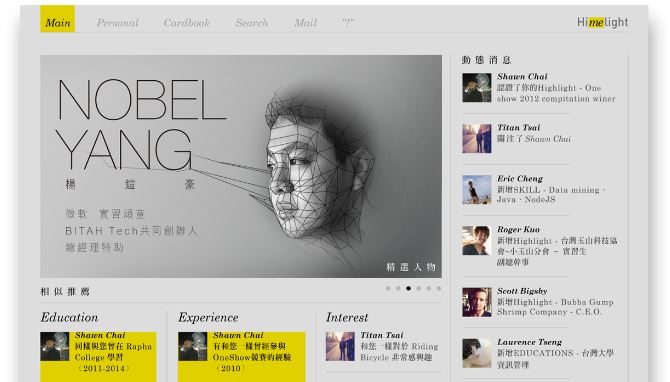
Links are the foundation of the web's structure and one of the signals search engines use to determine rankings. If you try to see this from Google's perspective, it makes perfect sense for Google to use anchor text to understand roughly what the linked page is about.Example: Himelight is a great resume-writing website I discovered recently.The anchor text in the sentence above is “resume-writing website.” Both a reader and a search engine would expect the link to lead to a... resume-writing website.
Think again about Google’s goal. If many links pointing to https://himelight.com/ use anchor text such as “resume writing,” “personalized resumes,” and “how to write an impressive resume,” Google can easily infer that the Himelight webpage is strongly related to resumes. When people later search for terms related to “personalized resumes,” Himelight’s website will be more likely to appear!
Types of Anchor Text
Anchor text helps Google understand your website, but a site has little control over the anchor text other people use when linking to it. Some common types of anchor text are described below.Brand Name
This is the most common type of anchor text: the company's or brand's name is the clickable text in the hyperlink.Example: KKday is a travel website.
“Naked” URLs
The anchor text itself is the URL of the linked website.Example: The URL of Matt Cutts's blog is https://www.mattcutts.com/blog/.
Not-Very-Helpful Anchors / Generic Anchor Text
This type of anchor text is also very common. It usually consists of a call to action and gives search engines very little help in determining what the linked website contains.Example: I wrote an article about backlinks. Click here.
Image Anchors
If the link itself is an image—meaning that clicking the image leads to another webpage—Google will probably use the text in the image's alt tag as the anchor text.Example:<a href=“https://moz.com/rand/”><img alt=“Rand Fishkin” src=“XXX”/></a>
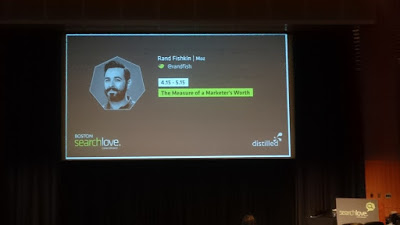
Here, Rand Fishkin can be treated as the link’s anchor text.
Keyword-Match Anchor Text
Example: Himelight is a great resume-writing website I discovered recently.But whenever Google can use a signal to understand a website, some SEOs will try to manipulate it.
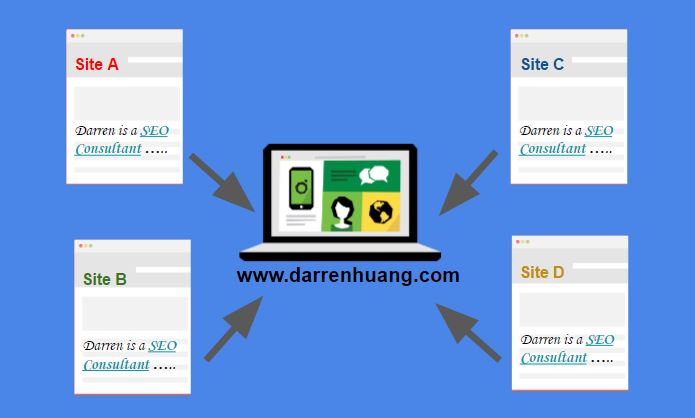
In the situation shown above, many links use “SEO Consultant” as their anchor text. This is called exact-match anchor text. When a high proportion of backlinks use the same keyword as their anchor text, there is a strong chance that the website placed those links itself. Links should arise when other people mention your site naturally, and it is impossible for everyone to use the same keyword whenever they mention a website.
The ideal situation for keyword-match anchor text looks like this:
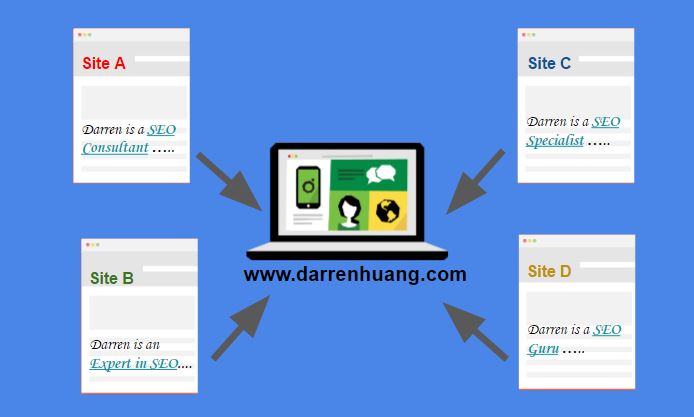
Every inbound link uses slightly different anchor text—SEO Consultant, SEO Specialist, and so on—yet Google can still tell roughly what the website is about.
(The image is purely an example and an aspiration of mine. I still have so much to learn about SEO!)
Hybrid Text
Hybrid anchor text combines a brand name with a keyword and is generally considered the most effective type of anchor text.Example: I have recently been reading Simo Ahava's articles about Google Tag Manager quite often.The anchor text above contains both a brand name—the person's name, “Simo Ahava”—and the keyword “Google Tag Manager,” further strengthening the connection between them.
The image below is very interesting. Google’s suggested searches show a brand-plus-keyword result, perhaps at least partly because many links to the website use this kind of hybrid anchor text.

The Right Way to Think About Anchor Text
Suppose you use a tool to analyze the anchor text of a website's backlinks and discover that other people link to your site with “click here,” images without alt tags, naked URLs, and so on. Please remember that this is completely normal.Anchor text is also just one tiny, tiny part of the ranking signals. I have seen people recommend contacting article authors and asking them to make their anchor text more “SEO-friendly”… Personally, I do not think this is worth the extra time and effort. If the article’s overall topic or context is strongly related to the linked site, Google can easily understand the connection!
(Further reading: Co-Occurence&Co-Citation)
An Anchor Text Curiosity: Google Bombing
Around 2004, when Google's algorithm was not yet sophisticated enough to distinguish human manipulation from natural behavior, opponents launched an online attack against George W. Bush during the U.S. presidential election.They created many links to George W. Bush’s page on the White House website, all using the same anchor text: “Miserable Failure.”
A few weeks later, when people searched for Miserable Failure, George W. Bush’s page ranked first in the search results—even though the page almost certainly did not contain that keyword!
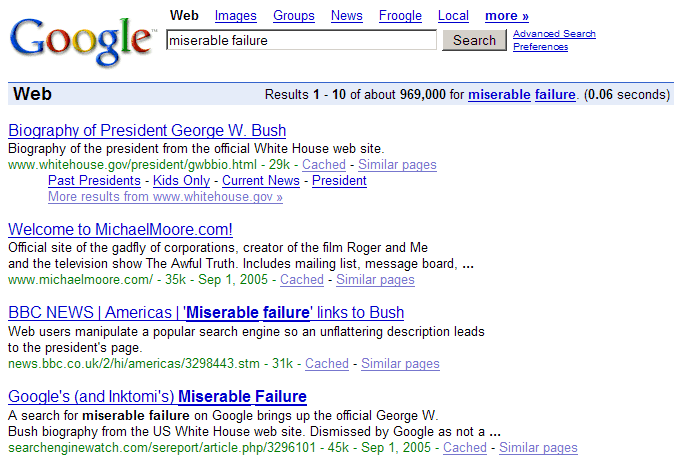
This was neither the first nor the only Google Bomb, but it is probably the most famous story~
What Can SEOs Do?
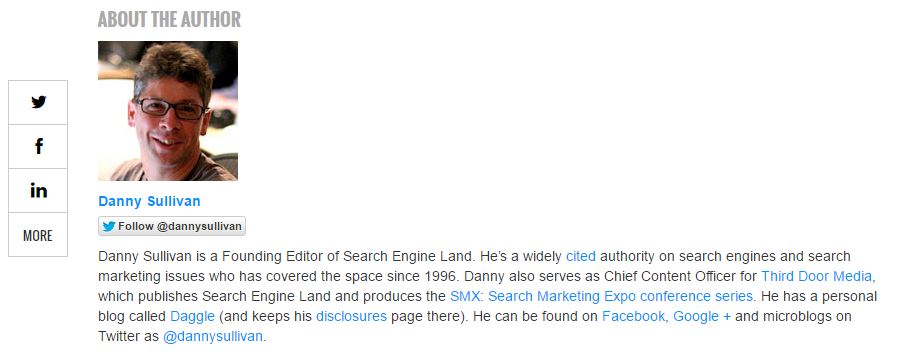
One of Moz's WBF episodes mentioned several ways SEOs can influence anchor text. Although anchor text is not—and should not be—something you can manipulate, there are still a few small techniques that may encourage other people to use keyword-rich anchor text when linking to your site.- If you represent a company or are a somewhat well-known person, include a few keywords and a link in your bio. When you give a talk, are interviewed, write a guest article, and so on, the other party will often add a short bio about you to their website. You can also try changing the bio from time to time and rotating in different keywords.
- When emailing journalists or influencers to pitch your article or content, do not simply write a paragraph and drop the article’s URL at the end. Instead, try giving them a sentence with hyperlinks on a few keywords because, in many cases, they will copy and paste what you wrote directly.
- I wrote an article about backlinks. Please see: www.example.com.
- I wrote an article about backlinks. Please take a look.