
At the end of 2018, I took a shot at Amazon's SEO Product Manager role. Although I made it to the third-round onsite interview and was invited to fly to the Seattle headquarters for a full day of interviews with the entire SEO team, unfortunately, I did not get the job.
The interview experience was incredibly valuable. The team I spoke with was responsible for a website that receives tens of millions, or even hundreds of millions, of visits a day. The level of responsibility and organizational complexity was on a scale that most people rarely get to encounter. I decided to document the experience and share it with everyone.
If you want to skip straight to the Amazon SEO interview questions, you can click here.
If you have any thoughts or feelings after reading, feel free to leave a comment! And if you know of a good SEO opportunity—full-time or contract, in Taiwan, the United States, or anywhere else—you are always welcome to email me and chat~~
The Amazon SEO Product Manager Opening
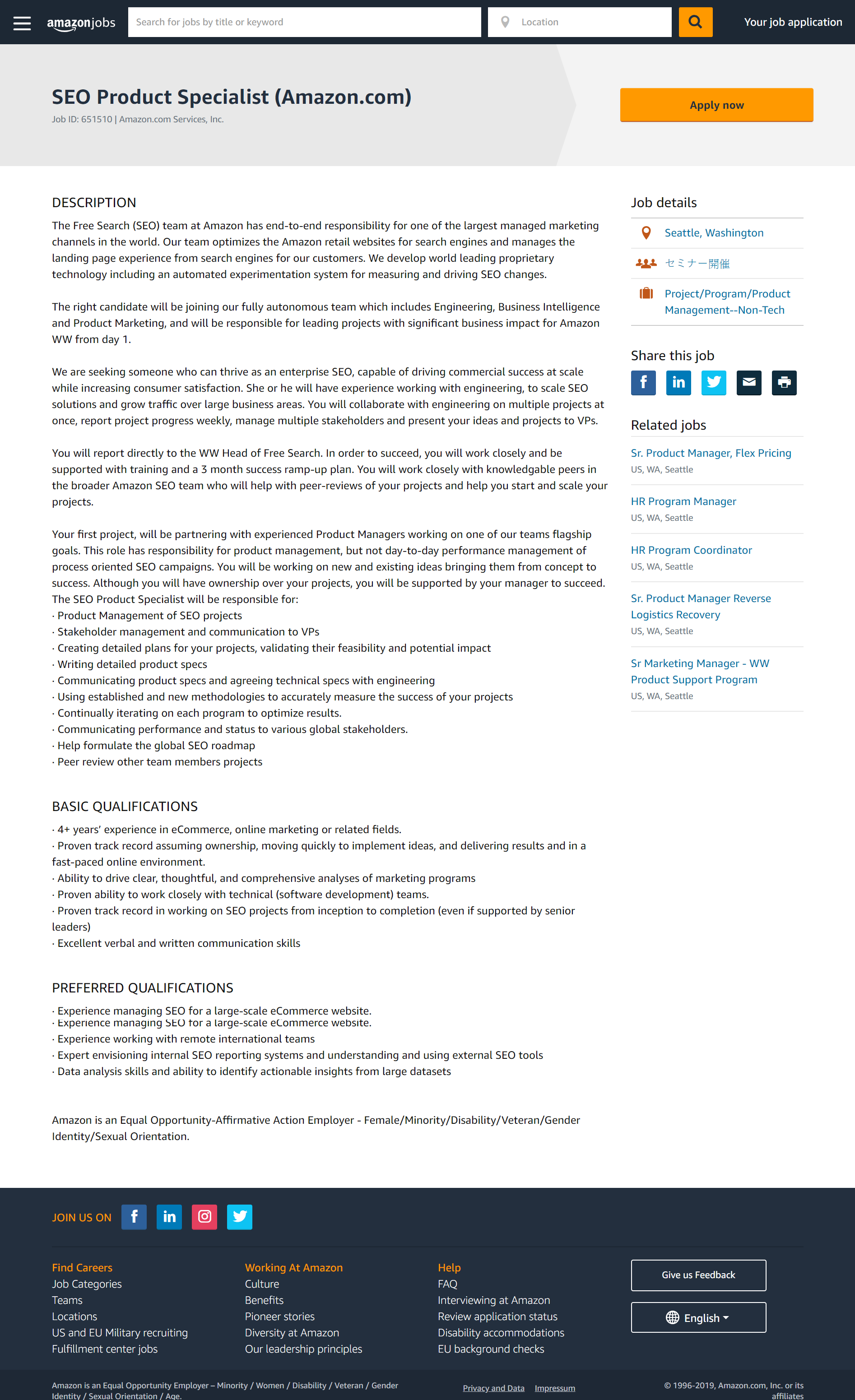
For some reason, the internal and external titles for an Amazon role may be different. Although the posting above says Product Specialist, the internal title was indeed Level 5 Product Manager.
This role was not about Amazon's own product search engine. It was about managing the SEO performance of www.amazon.com, the world's largest e-commerce website, on Google and other search engines. The basic qualifications included roughly the following:
- More than four years of experience in e-commerce, online marketing, or a related field
- The ability to work closely with engineers
- Experience leading a project from its initial concept through the final product
- Experience working with a large e-commerce website
- Data analysis skills
These requirements were not actually that different from those of other jobs. It is just that when everything is applied to a website at Amazon's scale, the complexity speaks for itself.
Amazon's Interview Process
After I submitted my application on September 30, I somehow skipped the recruiter screening. My first phone interview was on October 25, directly with Amazon's Head of SEO, who would have been my manager. My second interview was on November 9 with a Senior SEO Product Manager. Both phone interviews lasted more than an hour, and the conversations were very enjoyable~
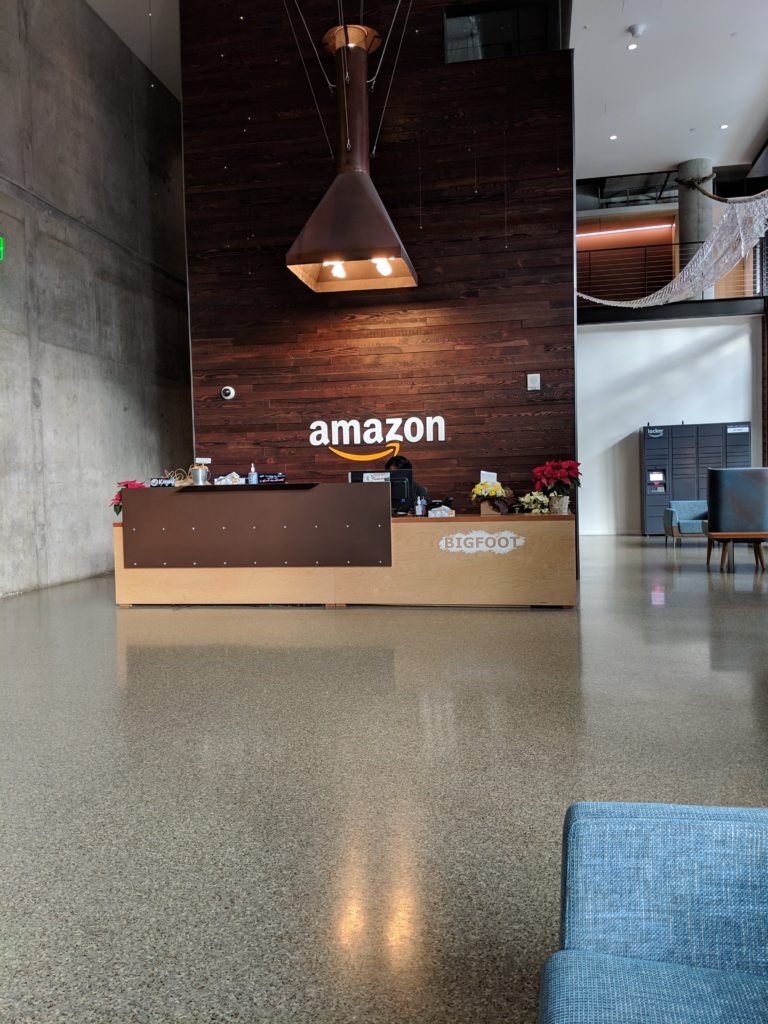
Because of the Thanksgiving holiday in the United States, the onsite interview was scheduled for December 10 at Amazon's Seattle headquarters. Amazon covered my airfare, hotel, and transportation. They even generously booked me a suite, which honestly made me feel incredibly honored.
The onsite interview lasted a full day, from around 10:00 a.m. to 3:30 p.m. I had five one-on-one interviews in total. At lunch, a “Lunch Buddy” took me out to eat and chat. This lunch companion had no influence on the interview, so I could relax over lunch and learn about Amazon's culture from an ordinary employee.
The five people who interviewed me all had impressive backgrounds: a Head of Engineering who had been at Amazon for 13 years, my prospective manager's manager—the Global SEO Leader—two Senior SEO Product Managers, and a “Bar Raiser.”
Amazon's Interview Culture
1. Bar Raiser
The Bar Raiser is a distinctive part of Amazon's interview process. Amazon assigns someone whose work is completely unrelated to yours to interview you. The goal is to observe candidates from an outside perspective, see whether they fit Amazon's culture, ensure that they can raise the overall standard of the team, and prevent the company from hiring an unsuitable employee simply because it is in a rush to fill the role.
My Bar Raiser came from the Compliance team, and that was also the interview I struggled with the most... She was not entirely familiar with some basic internet concepts, and as a non-native English speaker, I could not effortlessly dress up my stories with polished language. The conversation felt very halting, and I kept having to add more and more explanation to make sure she understood me.
2. Behavioral Questions
Besides the Bar Raiser, another characteristic of Amazon interviews is their fondness for behavioral questions. For example, if they want to know how you handle disagreements with coworkers, an Amazon interviewer will not simply ask, “How do you resolve conflict?” Instead, the question will be framed as, “Tell me about a time when you had a conflict with a coworker at work.”
In other words, you are unlikely to hear questions such as “What are your strengths and weaknesses?”, “What are your plans for the next three to five years?”, or “How many gas stations do you think there are in the United States?” Most answers are expected to draw on your past experience.
3. The “STAR” Method

The STAR interview method was not invented by Amazon, but anyone who has looked for work in the United States is probably familiar with it. Amazon expects candidates to use this format when answering the behavioral questions described above. STAR stands for:
- Situation: Briefly describe the problem and circumstances
- Task: Explain what you needed to do in that situation
- Action: Describe the action you took
- Result: Explain the impact of your action
4. Amazon's Leadership Principles
The final cultural feature of Amazon interviews is the company's Leadership Principles. Amazon wants every employee to have the qualities of a leader. Almost every interview question is designed to uncover whether you possess one of those qualities, such as Customer Obsession, Think Big, or Ownership.
There were 14 principles in total, all clearly listed at the link above, and there were also plenty of articles about them online. I will not list them one by one here, but if you are interested, feel free to leave a comment and discuss them.
Amazon SEO Product Manager Interview Questions
Amazon's interview questions were not uniquely unusual, but the way they asked them was. In addition to the behavioral format described above, every question was explored extremely, extremely deeply. In an interview lasting about an hour, an interviewer might ask only “one or two questions,” then keep drilling into your answers with follow-up questions.
These are some of the questions I was asked:
- Give an example of an SEO experiment you conducted
- What was the most impactful SEO project you worked on?
- Describe an SEO project that failed
- Tell me about a time when you led an entire project from start to finish
- Give an example of how you used a creative approach to solve an SEO problem
- Describe a situation in which you nearly failed to deliver something within a limited amount of time
Those questions sound very standard, right? But after you answer them using the STAR method, the interviewer keeps following up based on your answer:
- “When did this happen?”
- “Do you have another, more recent example?”
- “How could you improve your approach or apply it elsewhere?”
- “Why did you think this was important?”
- “Why did you choose this example to answer my question?”
- “What difference did it make that you handled this rather than your coworker?”
The follow-up questions came in every imaginable form, and they really left me scrambling. Looking back, I should have prepared more. Even when I knew what I wanted to say, improvising in English on the spot sometimes made me ramble in a way that sounded unnatural.
Technical SEO Questions
Of course, besides behavioral questions, an SEO role still requires technical questions to assess a candidate's professional knowledge. (That was also the main thing I wanted to share in this post, though somehow I have already written this much...)
Below are three technical SEO questions I was asked, along with my answers. I hope you will focus on the questions and try thinking through them yourself; treat my answers only as a reference! If you have a different view or idea, I would love for you to leave a comment. I genuinely enjoyed these three questions when I was asked them and would really like someone to discuss them with!
1. Missing Keywords in URLs vs. Page Speed
Engineers have found that, for Amazon's product search pages, removing keywords from the URL can shave a tiny amount of time off the database query used to generate the URL. Doing so, however, would require removing product keywords from the URL. How would you make that tradeoff?
I went back and forth with the interviewer to clarify many details. The assumptions were that the speed improvement was certain, that 100% of the resources needed to execute the project were available, and that the decision should focus specifically on search engine rankings.
My answer was to run an A/B test first, determine the change's effect on organic traffic, and then decide whether to roll it out completely. Of course, the interviewer did not let me off that easily. They asked for many more details, including “How would you divide the A/B test groups?”, “How long should the test run, and why?”, “Why choose organic traffic rather than rankings or another metric?”, and “What obstacles might arise during the process?”
I was very glad that, just a few weeks earlier, I had happened to read about an SEO experiment Airbnb ran during a site redesign. My answer drew heavily on ideas from this article, which I strongly recommend!

Update: After publishing the article, I briefly discussed this question with experienced SEO practitioner William Formosa. He pointed out that Amazon had already found ten years earlier that every additional 0.1 seconds of latency reduced sales by 1%. In addition, the SEO value of having a keyword in the URL is vanishingly small, so he favored improving speed.
I completely agree with that view. In similar situations, I would normally recommend prioritizing the user experience without a second thought. During the interview, however, I did not dare give an overly absolute answer. Even if removing the keyword had only a 0.001% impact, at Amazon's scale that could still mean tens of thousands of visits. That is why I first asked whether they had other higher-priority work and, once it was clear that the question was specifically about the SEO value of “keyword in URL vs. a 0.001-second speed improvement,” I answered that we should run an A/B test and let the data speak.
2. Should the Product Search Filters Be Made Stricter?
Amazon's product search pages occasionally return results that are not very relevant. For example, when someone searches for “round wooden table,” our search system may show some square wooden tables. Those square tables may be best-selling products, but their appearance does not actually match the searcher's intent. Engineers say they can make the product-filtering system stricter so that the search results are more precise. Should we do it?
My answer to this question was also to run an A/B test before deciding. This time, though, the test would not focus on SEO; it would use user behavior as the basis for the decision. In other words, the question was whether stricter filtering would improve the user experience.
Besides conversion rate and click-through rate, I suggested using “the time between a user's Amazon search and their first click on a product” as a metric. If that time dropped significantly during the test, it would indicate that stricter filtering helped users find products more quickly.
This “time-to-first-interaction” metric seemed to catch the interviewer's interest. They followed up with several more questions, so I think it earned me some points. I did not invent the metric on the spot; it came from a CNBC report about the Google Search team that mentioned the concept.
3. How Would You Analyze a Decline in Organic Traffic?
We have noticed a downward trend in the site's organic traffic: it has fallen by 3% week over week for three consecutive weeks. How would you begin identifying the cause?
I said that I would compare the trend against other metrics to see whether I could identify which part of the traffic was being lost, then analyze it further. I threw out a long list of possible dimensions and indicators: geography, product category, rankings, promotions, online and offline advertising, seasonality, and so on.
I do not think I answered this question very well. My response was not well organized, and the interviewer kept pressing: “What if none of the things you just mentioned reveals any insights?” When I suggested reviewing past site changes that might have affected SEO performance, the interviewer answered very directly: “That is not really possible. At a company as large as Amazon, different departments make all kinds of changes to the website every day. Those changes do not all go through the SEO team first, so the team cannot track all of them, and they are difficult to analyze.”
Looking back, I could think of still more metrics to compare, but I kept feeling that the interviewer would simply ask what the next step would be if those metrics also revealed nothing. I still do not know whether the interviewer expected me to name some missing key factor or wanted to hear a completely different way of thinking.
Reflections
Although I was very disappointed not to receive an offer, I still felt fortunate to have reached the final round. After all, in terms of years of experience, e-commerce experience, and in-house experience at a large company, I was not an especially close match for the qualifications.
What I learned throughout the process was priceless. On most company websites, it is easy to spot areas where SEO is weak or where other work should take priority. On a site at Amazon's enormous scale, however, the SEO team has to obsess over the tiniest details—such as whether a keyword appears in a URL versus a 0.001-second improvement in page speed.
Many generous people helped me during this interview process, so I hope this article can help you too. If you plan to apply for an SEO role at Amazon in the future, feel free to send me a private message and arrange a time to chat. I would be happy to share more details.
Related reading
After AI Anxiety: From Worrying about Being Replaced to Starting to Understand Tools
A more personal record, talking about the uneasiness caused by AI, the impact of sharing tools with friends, and how your mentality changes after you really start to understand it.